Nana Banana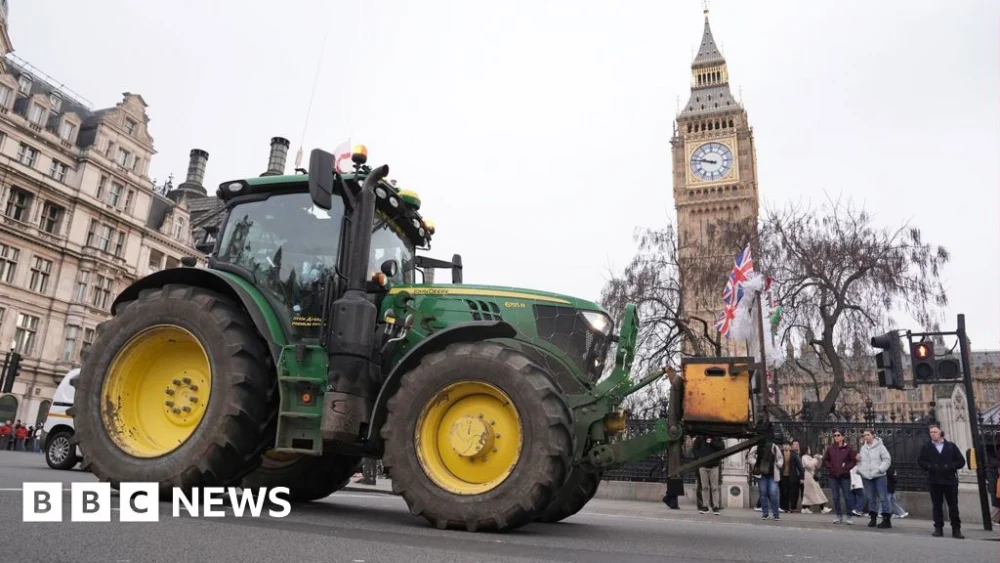
The original plan, first announced in Chancellor Rachel Reeves’ Budget last year, had aimed to impose a 20% tax on inherited agricultural assets exceeding £1 million, effective from April 2026. This marked a radical departure from the long-standing 100% tax relief on agricultural property that had been a cornerstone of British tax law since the 1980s. The initial proposal, designed to generate an estimated £520 million annually by 2029, was framed by the government as a measure to protect smaller farms while simultaneously curbing the use of farmland as a tax loophole by wealthy investors. However, its immediate reception was one of widespread alarm and anger across rural Britain.
In a strategically timed announcement, released after MPs had departed Parliament for the Christmas recess, Environment Secretary Emma Reynolds confirmed the policy shift. "We have listened closely to farmers across the country and we are making changes today to protect more ordinary family farms," Reynolds stated, acknowledging the intense pressure her department and the Treasury had faced. She further elaborated on the revised rationale: "It’s only right that larger estates contribute more, while we back the farms and trading businesses that are the backbone of Britain’s rural communities." The timing of the announcement, coinciding with a parliamentary break, drew criticism from some who perceived it as an attempt to mitigate immediate political fallout.
The original 100% Agricultural Property Relief (APR) was introduced primarily to prevent the fragmentation of family farms and to ensure their continuity across generations, recognising the unique nature of agricultural businesses where significant capital is tied up in illiquid assets like land and machinery. Farmers argued that removing this relief, or even significantly reducing it, would force many family-run operations to sell off parts of their land or assets to cover the tax bill, jeopardising their viability and the nation’s food security. They contended that their assets, though potentially high in value, often yield narrow profit margins, making a substantial inheritance tax burden unaffordable without asset stripping.
The National Farmers’ Union (NFU) had been at the forefront of the opposition, mobilising its members and articulating the severe implications of the proposed tax. Tom Bradshaw, Head of the NFU, welcomed the government’s revised stance, telling BBC Radio 5 Live that the adjustment "takes out many family farms from the eye of a pernicious storm." While expressing relief, Bradshaw also indicated that the fight for comprehensive support for the agricultural sector would continue.
Gavin Lane, president of the Country Land and Business Association (CLA), a prominent organisation representing landowners, farmers, and rural businesses, echoed this sentiment. "The government deserves credit for recognising the flaws in the original policy and changing course," Lane remarked. However, he cautioned that "this announcement only limits the damage – it doesn’t eradicate it entirely." Lane highlighted a critical concern for many of his members: "Many family businesses will own enough expensive machinery and land to be valued above the threshold, yet still operate on such narrow profit margins that this tax burden remains unaffordable." This suggests that even with the raised threshold, a significant segment of the agricultural sector will still face considerable financial strain.
Individual farmers, like Ben Ardern, a third-generation beef and dairy farmer from Buxton, Derbyshire, who has actively organised protests against the tax, saw the move as "a step in the right direction." Speaking to the BBC, Ardern passionately argued for a complete exemption for genuine family farms. He urged the government to "drop it [the tax] for family farms… and just tax the people who have got the money to tax." Ardern drew a clear distinction between traditional farming enterprises and larger, often corporate entities: "The big corporations who have just buried money into land – they’re not farmers, they have just done it to avoid tax. Farmers haven’t bought land to avoid tax, we’ve bought land to farm it and grow food." His perspective encapsulates the deep-seated resentment among many farmers who felt unfairly targeted by a tax ostensibly aimed at wealthy tax avoiders.
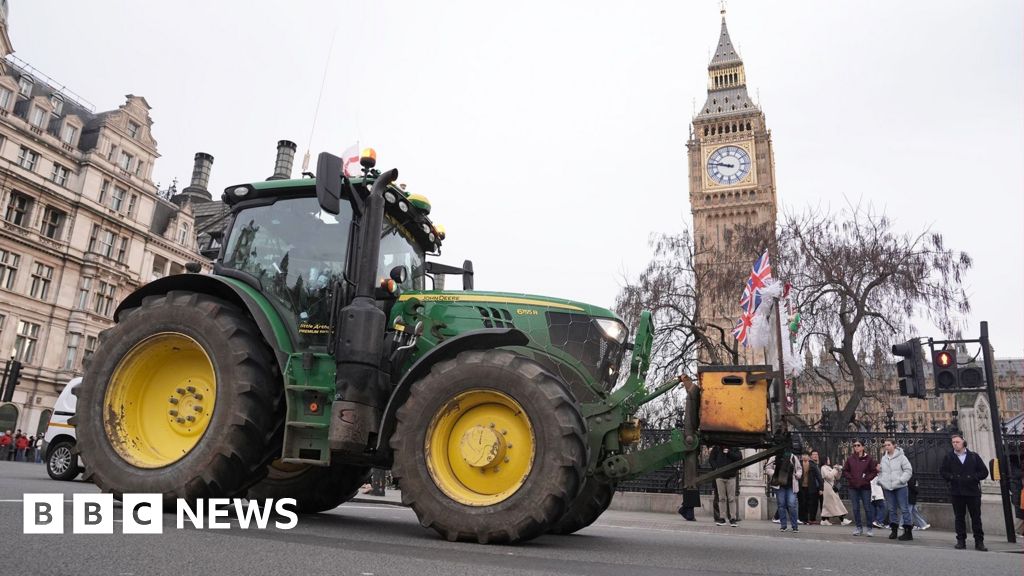
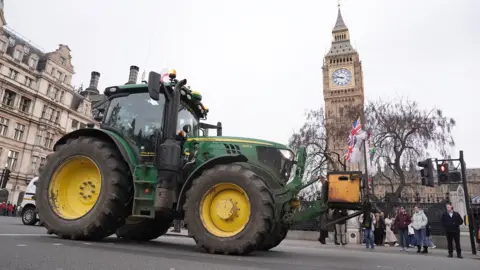
The 14 months since the initial proposal have been punctuated by regular, often visually striking, protests by farmers outside Parliament. Tractors, banners, and impassioned speeches became a common sight in central London, symbolising the rural community’s unwavering resolve. These demonstrations, coupled with relentless lobbying, clearly contributed to the government’s re-evaluation.
Beyond the fields, political pressure mounted within the governing Labour party itself. Several Labour MPs representing rural constituencies voiced their concerns, fearing alienation of a vital voter base. At a recent parliamentary vote on the original plan, a dozen backbenchers abstained, signalling their unease, and one, Markus Campbell-Savours, directly defied the party whip by voting against the government. Campbell-Savours subsequently faced suspension, now sitting as an independent MP, a stark illustration of the internal divisions the policy provoked. John Whitby, a Labour MP and member of the Rural Research Group of backbenchers, hailed the government’s climbdown as "fantastic news," underscoring the relief felt by those who had championed the farmers’ cause.
However, the timing of the U-turn also generated frustration within party ranks. One Labour source described it as "bizarre," adding that many MPs would be annoyed as "they were made to vote for it so recently." This suggests potential damage to party cohesion and trust, particularly for those who defended the original policy only to see it reversed.
Opposition parties swiftly reacted, seeking to capitalise on the government’s perceived weakness. Conservative leader Kemi Badenoch took to social media, declaring, "This fight isn’t finished." She asserted that "Other family businesses are still affected by Labour’s tax raid, and we will keep pushing until the tax is lifted from them too," indicating a broader concern for small and medium-sized enterprises beyond agriculture.
Liberal Democrat spokesperson Tim Farron MP condemned the government’s handling of the situation. "It is utterly inexcusable that family farmers have been put through over a year of uncertainty and anguish since the government first announced these changes," Farron stated. He called for a complete repeal of the tax, vowing that "if they refuse to, Liberal Democrats will submit amendments in the new year to bring it down." This positions the Liberal Democrats as champions of rural interests, a traditional stronghold for the party.
Reform UK deputy leader Richard Tice also weighed in, criticising the government’s "cynical climbdown" as "better than nothing" but ultimately insufficient. Tice argued that it "does little to address the year of anxiety that farmers have faced in planning to protect their livelihoods," and with "British agriculture hanging by a thread, the government must go further and abolish this callous farms tax." Reform UK’s strong stance resonates with a segment of the electorate critical of government intervention and taxation.
The revised policy now includes a raised threshold of £2.5 million. Furthermore, coupled with an existing exemption that allows farmers to pass on assets to their spouses tax-free, this new concession means a couple could effectively transfer up to £5 million in qualifying agricultural assets without incurring any inheritance tax. For assets valued above the new £2.5 million threshold, a 50% relief will be applied to the remaining taxable portion, a significant improvement from the original proposal which offered a flat 20% tax above £1 million.
According to government figures, these changes are expected to drastically reduce the number of estates in the UK projected to pay more inheritance tax in the 2026/27 financial year. Under the original plans, approximately 2,000 estates would have been affected; this number is now estimated to fall to around 1,100. A Treasury source confirmed that changing the thresholds would cost the government £130 million in foregone revenue, but adamantly stated there were "no plans" for the policy to be scrapped entirely. "The principle of reforming the tax system remains," the source maintained. "It’s right that the wealthiest estates pay their fair share, but smaller farms will get help." This suggests the government is still committed to the underlying objective of the tax, albeit with a significantly softened approach.
This climbdown on farm inheritance tax is the latest in a series of policy reversals by the government since its election in July 2024. Earlier this year, the government eased previously announced cuts to winter fuel payments and notably backtracked on plans to implement £5 billion of cuts to the welfare bill. These repeated U-turns highlight a government seemingly sensitive to public and internal party pressure, perhaps indicative of a cautious approach as it navigates a challenging political landscape. While the farming community and its political allies celebrate this partial victory, the broader implications for governmental policy stability and the long-term future of agricultural taxation remain a subject of ongoing debate and scrutiny.




 George Anjay
 Nakalama John
 Ramos Leo