
 atisusanti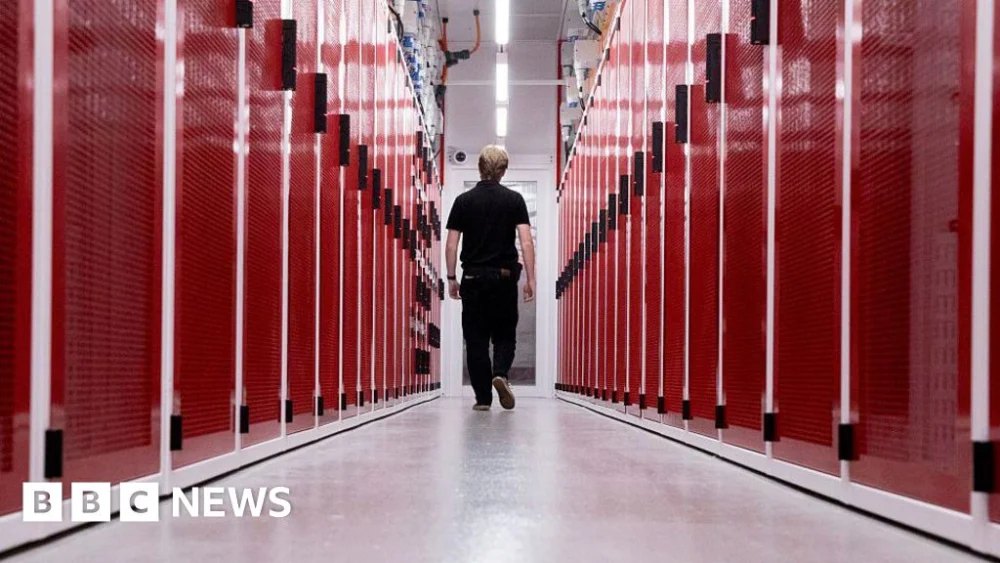
The monolithic data centre, a colossal monument to digital computation, might one day be dwarfed by the pocket-sized power of the smartphone, according to Perplexity CEO Aravind Srinivas. In a recent podcast discussion with host Prakhar Gupta, Srinivas posited a future where advanced, personalized AI tools will seamlessly operate on the very hardware already residing within our personal devices. This paradigm shift would liberate us from the current model, which relies on data transmission to and from vast, remote data centres and their attendant computational power. Early indicators of this trend are already visible: Apple’s AI system, Apple Intelligence, leverages specialized chips within its latest products to execute certain features, promising enhanced speed and superior data privacy. Similarly, Microsoft’s Copilot+ laptops incorporate on-device AI processing capabilities.
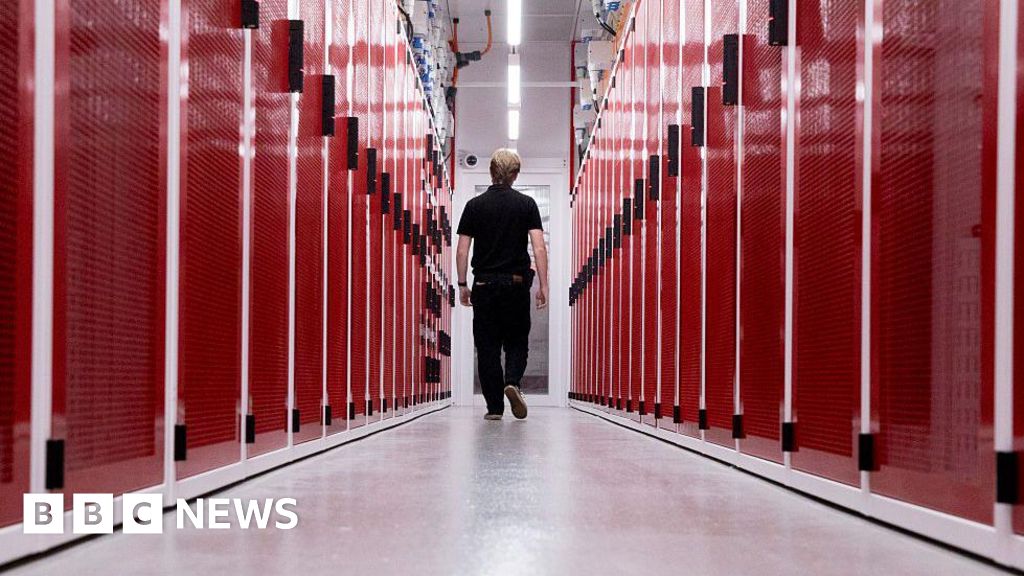
However, these cutting-edge functionalities are currently confined to premium-tier devices, and the majority of contemporary gadgets lack the processing prowess to handle such demanding AI tasks. Jonathan Evans, director at Total Data Centre Solutions, notes that the widespread adoption of powerful and efficient AI on local devices remains a long-term prospect, contingent on future technological advancements. Despite this, the data centre industry, far from shrinking in terms of demand, is experiencing an unprecedented surge in its expansion. Data centres, traditionally conceived as sprawling edifices crammed with high-performance computers, are the backbone of a vast array of digital operations. Beyond their critical role in powering AI, they facilitate everything from video streaming and online banking to extensive data storage. Indeed, it’s a safe assumption that any online service you utilize relies on a data centre somewhere on the globe, with large corporations owning their facilities while smaller entities lease capacity.
Yet, a few years ago, an intriguing anomaly emerged: a compact data centre, no larger than a washing machine, operating in Devon, UK. Remarkably, the waste heat generated by this diminutive facility was ingeniously used to warm a public swimming pool. This was my first encounter with a data centre that defied the conventional image of a colossal warehouse, and initially, I harboured considerable skepticism. Since then, similar, albeit often less publicised, instances have come to light. In November 2025, a British couple shared their innovative solution for home heating: a small data centre ingeniously housed within their garden shed. Merely a month later, a conversation with a university professor revealed a powerful GPU – a graphics processing unit crucial for AI acceleration – discreetly situated beneath his desk, its computational efforts contributing to the warmth of his office.
Concurrently, major technology corporations are channeling billions of dollars into the construction of massive data centre complexes worldwide. In the UK alone, approximately 100 new facilities are currently under development. The insatiable energy demands of these data centres have raised significant environmental concerns, prompting a growing debate about their ecological footprint. Nvidia CEO Jensen Huang has aptly dubbed data centres as "AI factories," underscoring their indispensable role in fostering the rapid evolution of artificial intelligence. For a considerable period, the AI sector adhered to an apparent exponential "scaling" principle, which dictated that increased computing power invariably led to superior AI performance, though this trend appears to be decelerating.
However, a growing chorus within the tech industry is beginning to question the fundamental necessity of housing all AI processing within remote, gargantuan data centres. Evans suggests a compelling case for the deployment of smaller, "edge" data centres strategically located near densely populated areas. Such a distributed architecture would significantly reduce latency, thereby enabling faster response times for users. Mark Bjornsgaard, the visionary behind DeepGreen, the company responsible for the swimming pool data centre, boldly proclaims, "Small is definitely the new big." He advocates for repurposing every public building into a compact data centre, forming a vast, interconnected network that, as a beneficial byproduct, could provide localized heating solutions. His vision extends to conceptualizing entire cities, like London, as nascent, yet-to-be-built, distributed data centres.
Amanda Brock, head of the business organization OpenUK, echoes this sentiment, predicting that the current "data centre myth will be a bubble that will burst over time," though she refrains from pinpointing a specific timeframe. She proposes the innovative repurposing of derelict buildings and vacant retail spaces into smaller, more localized data centres. Looking beyond terrestrial solutions, some are exploring the boundless potential of outer space. Avi Shabtai, CEO of Ramon Space, a firm at the forefront of this technological frontier, asserts that "Space offers a unique opportunity to rethink data structure, where small, scalable data centres in orbit can deliver efficiency, performance and flexibility."
Returning to Earth, Brock aligns with Perplexity’s Srinivas in anticipating a reduced reliance on colossal data centres. She envisions processing capabilities migrating to handheld devices, set-top boxes, or even domestic routers. This shift could be further accelerated by a trend towards not only shrinking data centres but also miniaturizing the AI tools themselves. The era of Large Language Models (LLMs), while marked by considerable hype, has also revealed their propensity for errors, a consequence, in part, of their extraordinarily broad operational scope. As AI ethics campaigner Ed Newton Rex astutely observed, an AI meticulously designed to detect early signs of cancer should not be burdened with the capability to compose Taylor Swift-esque song lyrics.
Businesses are increasingly embracing this principle, opting for bespoke enterprise AI tools. While these specialized solutions may incur higher costs, they are trained on proprietary data, ensuring that this information is not integrated into broader training datasets for other products. Crucially, they are optimized to perform tasks specific to the company’s operations. These more focused, private AI tools often exhibit superior accuracy and require less computational power, making on-premise deployment a more feasible option. Dr. Sasha Luccioni, AI and Climate Lead at machine-learning firm Hugging Face, notes a discernible shift: "We are already seeing a paradigm switch between large models taking huge resources, to smaller models being more bespoke and running more locally and tailored to business uses."

However, the proliferation of numerous small data centres raises pertinent questions regarding national security. Professor Alan Woodward from Surrey University, a distinguished computer security expert, offers a counterargument: "The counter argument here is that small targets have less impact if they are penetrated." He points out that "Larger centres can be big points of failure, as we’ve seen recently with huge AWS [Amazon Web Services] centres going down." Furthermore, Luccioni highlights the significant environmental advantages of decentralizing away from large data centres, which are "taking more and more resources." She concludes that "It makes sense to not use them all of the time."


 George Anjay
 Nakalama John
 Ramos Leo
 Roy Suryo
 Nana Banana