
 Nana Banana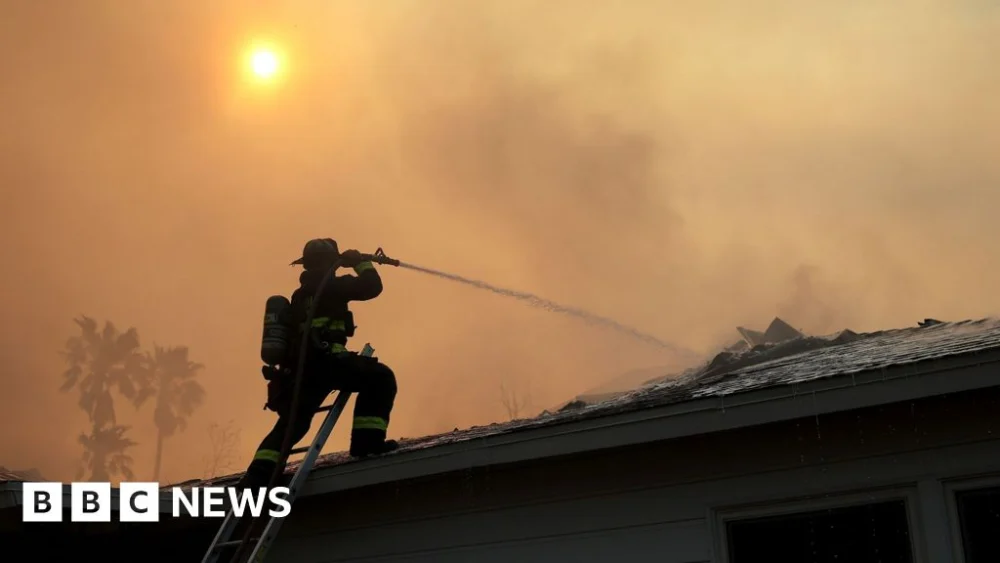
Despite the natural cooling effect provided by La Niña, 2025 remained significantly warmer than any year a mere decade ago. This stark reality underscores the pervasive and accelerating impact of humanity’s unchecked carbon emissions, which continue to trap heat in the atmosphere. Climate scientists unanimously warn that this underlying warming trend will inevitably lead to a cascade of further temperature records and an escalation of extreme weather events, unless global emissions are drastically and immediately reduced.
"If we project twenty years into the future and cast our gaze back at this period of the mid-2020s, we will undoubtedly perceive these years as relatively cool in comparison to what lies ahead," stated Dr. Samantha Burgess, deputy director of Copernicus, emphasizing the alarming trajectory of planetary warming. The global average temperature in 2025 registered more than 1.4C above "pre-industrial" levels, a baseline typically defined by temperatures in the late 1800s, before industrialization led to the widespread burning of fossil fuels and the significant release of greenhouse gases. This calculation, derived from both Copernicus and Met Office data, places the world precariously close to the 1.5C warming limit enshrined in the 2015 Paris Agreement.
While the precise figures for global average temperatures may vary slightly between major climate monitoring groups, primarily due to minor differences in how the pre-industrial baseline is calculated, there is an unequivocal consensus among the scientific community regarding the planet’s long-term warming trend. "We possess a profound understanding that if we persist in pumping greenhouse gases into the atmosphere, the concentrations of those gases will continue to escalate, and the planet will respond by warming further," explained Prof. Rowan Sutton, director of the Met Office Hadley Centre, highlighting the fundamental physics driving climate change.
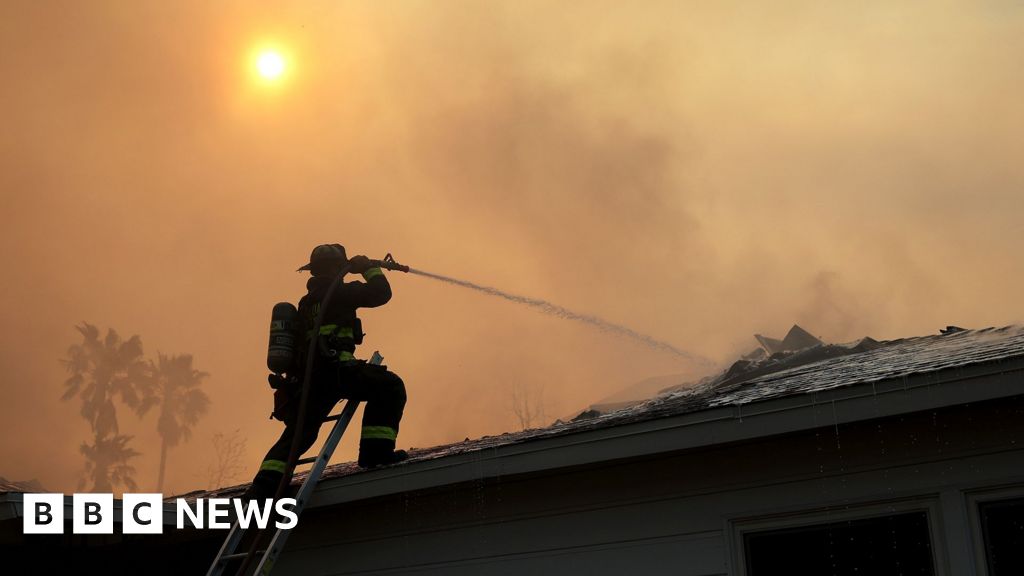
Even with 2025 not claiming the title of the hottest year on record, the year was still plagued by a series of devastating extreme weather events, many of which bore the unmistakable fingerprints of global warming. The catastrophic Los Angeles fires in January 2025, for instance, ravaged vast swathes of California, causing immense property damage, ecological destruction, and displacing thousands. Experts have since confirmed that the intensity and spread of these wildfires were exacerbated by prolonged drought conditions, high temperatures, and strong winds—all factors amplified by climate change. The California Department of Forestry and Fire Protection estimated the fires as one of the most expensive weather-related disasters in US history, with recovery costs soaring into the tens of billions of dollars.
Similarly, the ferocious Hurricane Melissa, which struck in October 2025, brought widespread devastation across the Caribbean, with Haiti suffering particularly severe flooding and infrastructure collapse. Scientific analyses have shown that warmer ocean temperatures, a direct consequence of global warming, fuel more intense hurricanes, leading to stronger winds and heavier rainfall, thereby increasing their destructive potential. Images from Petit Goave, Haiti, showed residents sifting through debris in front of their submerged homes, a stark reminder of the human cost of climate-fueled disasters.

These events, coupled with other extreme weather occurrences around the globe in 2025—such as unprecedented heatwaves in parts of Europe and Asia, and severe drought conditions in regions of Africa—paint a clear picture of a world grappling with the escalating impacts of a changing climate.
The sustained warmth observed over the past three years brings the world alarmingly close to breaching the international target set by nearly 200 countries in 2015. The Paris Agreement aimed to limit the rise in global temperatures to well below 2C above pre-industrial levels, with an ambitious aspirational goal of limiting it to 1.5C. Exceeding the 1.5C threshold is anticipated to trigger much more severe and irreversible consequences of climate change, from accelerated sea-level rise and increased biodiversity loss to more frequent and intense extreme weather events. "Looking at the most recent data, it appears increasingly likely that we will exceed that 1.5-degree level of long-term warming by the end of this very decade," warned Dr. Burgess, underscoring the urgency of the situation.
While the long-term warming trend is unequivocally driven by human activities, individual years can experience slight variations in temperature due to natural climate phenomena. The El Niño-Southern Oscillation (ENSO) cycle is a prime example, involving periodic shifts between El Niño and La Niña conditions in the Pacific Ocean. El Niño phases are characterized by warmer-than-average sea surface temperatures in the central and eastern equatorial Pacific, typically leading to a boost in global average temperatures. Conversely, La Niña phases feature cooler-than-average sea surface temperatures in the same region, usually exerting a cooling influence on global temperatures.
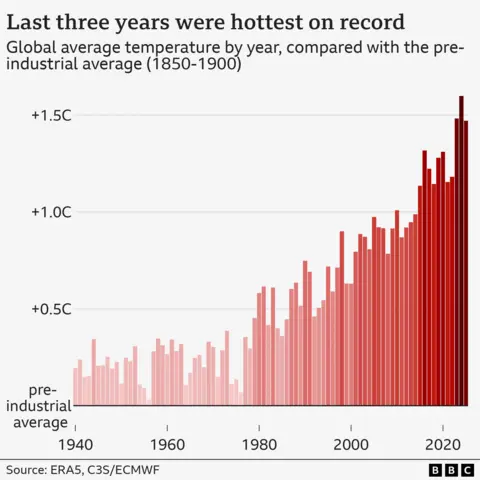
The record warmth of 2024, and to a lesser extent 2023, was significantly amplified by a powerful El Niño event. The subsequent return of La Niña conditions in 2025 was expected to suppress global temperatures more substantially. However, the fact that 2025 remained among the top three warmest years on record, despite this natural cooling factor, is "a little worrying," according to Dr. Zeke Hausfather, a climate scientist at Berkeley Earth in the US. This suggests that the underlying human-induced warming signal is so strong that even a natural cooling phenomenon could only temper, not reverse, the overall heat accumulation.
The dramatic jump in global temperatures witnessed in 2023, which continued into 2024, surprised many scientists, sparking intensive speculation about factors beyond just carbon emissions and El Niño. Theories under investigation include potential changes in cloud cover patterns and the concentration of tiny atmospheric particles known as aerosols. These aerosols, often produced by industrial activity, can reflect sunlight back into space, thereby exerting a cooling effect. Recent changes, such as stricter regulations on shipping fuel that reduce sulfur emissions, might have inadvertently led to fewer reflective aerosols, contributing to increased warming. "The persistence of extreme warmth into 2025, even with La Niña, suggests that there might be some mysteries that we haven’t fully solved regarding the precise mechanisms of recent warming," Dr. Hausfather added, highlighting the ongoing scientific inquiry into these complex interactions.
Prof. Sutton concurred, noting, "We are observing rapid warming at the upper end of our longer-term expectations." However, he cautioned that whether the exceptional warmth of the last three years holds significant implications for the very long-term climate sensitivity "is not yet clear," emphasizing the need for more data and continued research before drawing firm conclusions.

Despite these scientific nuances and ongoing investigations, the fundamental message from the climate community remains resolute: the planet is warming at an unprecedented rate due to human activities, and the consequences are already unfolding. While scientists expect more temperature records to be shattered in the years ahead, they adamantly stress that the future impacts of climate change are not predetermined or immutable.
"We can profoundly influence what transpires next," affirmed Prof. Sutton. This influence can be exerted "both by mitigating climate change – that is, by drastically cutting greenhouse gas emissions to stabilize warming – and of course, also by adapting, by making society more resilient to the ongoing and unavoidable changes." The path forward, therefore, involves a dual strategy: urgent global action to decarbonize economies and transition to sustainable energy sources, coupled with robust investments in adaptation measures to protect communities and ecosystems from the impacts that are already locked in. The dip in 2025 serves not as a moment for complacency, but as a stark reminder of the scale of the challenge and the diminishing window for decisive action.
Additional reporting by Jess Carr




 Nakalama John
 atisusanti
 Ramos Leo
 Roy Suryo
 George Anjay