Ramos Leo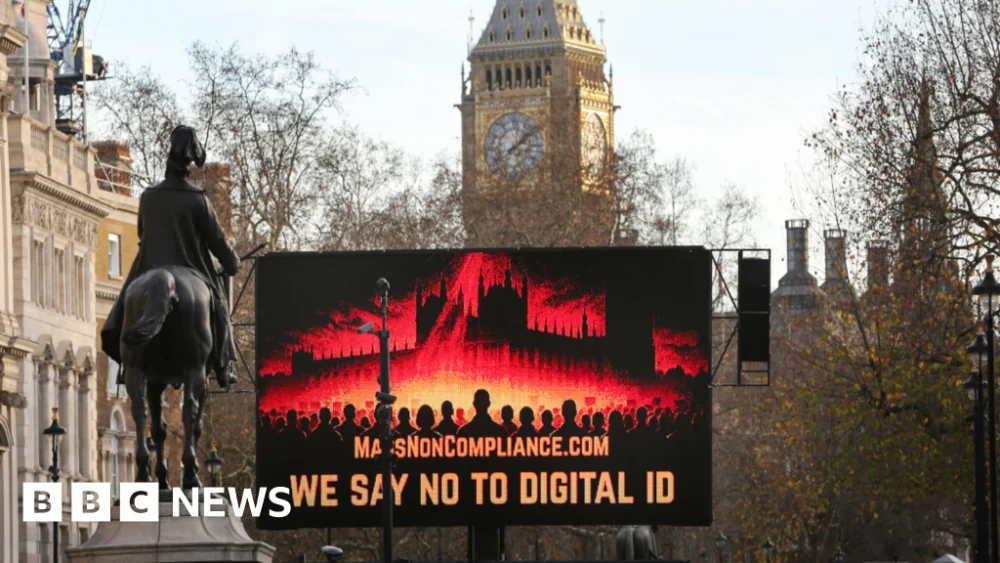
Politics, at its core, is a perpetual ballet of compromise, negotiation, and strategic retreat. For seasoned Labour MPs, this is a fundamental truth of parliamentary life: to champion the policies they believe in, they often must endure, and sometimes even publicly advocate for, measures they find less palatable. It’s a delicate balance, a necessary concession for the greater good of party unity and governmental progress. However, the recent government U-turn on the contentious issue of digital ID for right-to-work checks has pushed many within the Labour benches beyond their limits of tolerance, leaving them privately questioning the value of their loyalty and the integrity of their public pronouncements. The recurring pattern of policy reversals, far from being seen as agile governance, is increasingly perceived as a symptom of deeper malaise, prompting widespread frustration and a profound sense of disillusionment among the party’s elected representatives.
The latest volte-face by Downing Street, concerning a policy that would have compelled individuals to sign up for a digital ID scheme to verify their employment eligibility, has struck a particularly raw nerve. For many, it represents not just a single policy shift, but a troubling continuation of a trend that undermines their credibility. As one North East MP, who secured their seat for the first time in the 2024 general election, articulated with a mixture of exasperation and candour, Labour MPs now face "a choice between loyalty and dignity." This stark dilemma encapsulates the core of their predicament: should they continue to toe the party line, dutifully defending government initiatives in media appearances, House of Commons debates, and conversations with constituents, only to be left looking "daft" when Number 10 inevitably reverses course? The personal and political cost of this perceived inconsistency is becoming increasingly difficult to bear.
Another new MP, previously a model of public loyalty, echoed this sentiment with palpable frustration. "There’s no point defending anything remotely difficult the leadership announces," they confided, "because it’s likely to be rowed back on. Whatever the merits of individual policy, we’re in a position where we can’t ever say for sure it’ll happen. Absolutely ridiculous." This statement speaks volumes about the erosion of internal confidence. When MPs feel unable to genuinely champion their own government’s agenda, the fabric of party discipline and shared purpose begins to fray. It breeds a cautious, almost cynical approach to new policy announcements, where the initial reaction is often one of skepticism rather than endorsement. The public image of a united, decisive government is fractured, replaced by one of indecision and reactive policy-making.
My show on BBC Radio 5 Live provided a platform to gauge the sentiment across the Parliamentary Labour Party (PLP). In the days following the digital ID reversal, I reached out to dozens of Labour MPs and ministers, uncovering a spectrum of reactions, though the overarching mood was one of concern. Some expressed genuine disappointment at the abandonment of an idea they had supported, seeing it as a missed opportunity for modernization. "I’m probably one of the few Labour MPs who supports digital ID," one admitted, reflecting on the potential for streamlining processes and enhancing security. However, they quickly added a critical caveat: "I think we sold it badly though from start." This highlights a recurring criticism: even policies with perceived merit are undermined by poor communication and an inability to build public consensus.
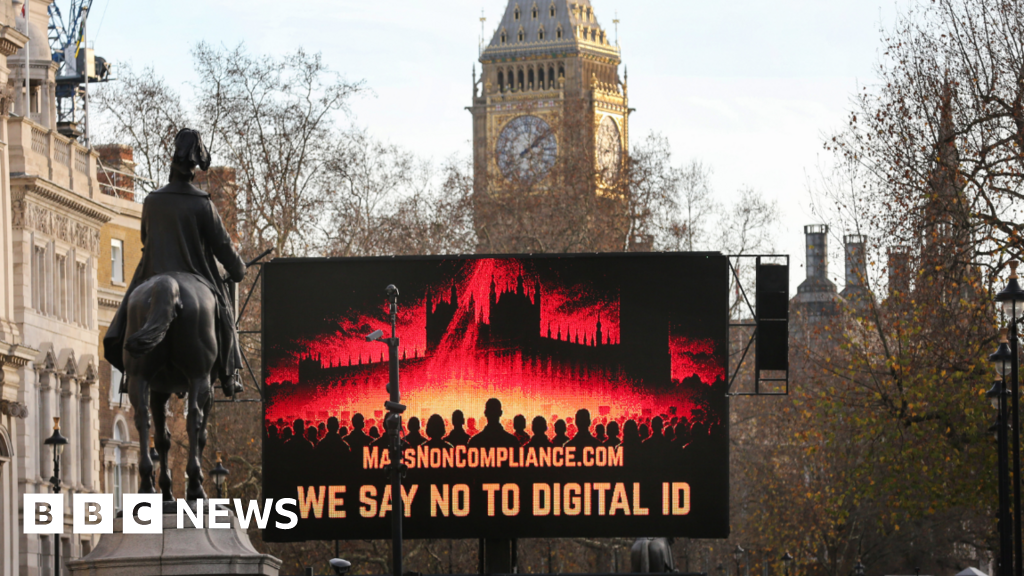
Another MP, clearly exasperated by the perceived lack of strategic coherence, lamented, "Why are we U-turning on this? Pick what you think is right and argue for it. It’s all 12-dimensional chess. We’re too simple to understand. Problem is everyone else is too." This quote encapsulates a profound frustration with what is seen as overly complex or opaque decision-making within the leadership, divorced from the practicalities of public communication and parliamentary debate. The sense that policies are formulated without a clear, defensible rationale leaves MPs feeling ill-equipped to articulate their government’s vision, leading to a perception of weakness and inconsistency among the electorate. The political landscape depicted in the accompanying Getty Images photograph, with a large screen displaying "We Say No To Digital ID" in front of the iconic Elizabeth Tower, vividly illustrates the public opposition the policy faced, further underscoring the communication failure.
Conversely, a significant number of MPs expressed relief, even satisfaction, at the policy’s demise. A minister, speaking anonymously, was unequivocal: "It was unpopular and expensive. It should never have been announced without being costed first." This critique points to a more fundamental flaw in the policy-making process, suggesting a lack of due diligence regarding both public reception and financial implications. The implication is that the government is rushing policies out without proper scrutiny, setting them up for inevitable failure. A backbencher offered a more cynical political analysis: "It was clearly meant to appeal to Reform-leaning voters, but in fact had the opposite effect." This suggests a miscalculation in targeting specific demographics, alienating traditional Labour supporters while failing to win over new ones, highlighting a strategic misstep in an already challenging political environment.
‘Dead on arrival’
Amidst the chorus of criticism and relief, a small, steadfast minority attempted to frame the policy reversal as a natural, healthy part of democratic governance. "They were still consulting," one loyalist insisted, attempting to put a positive spin on the situation. "Changing things with public mood is how consultation works. It’s all fine." This perspective suggests that the government is merely responsive to public feedback, demonstrating flexibility rather than weakness. However, it must be stated that this viewpoint is distinctly a minority one within the PLP. The prevailing sentiment is instead one of widespread anger and dismay at the clumsy and often humiliating manner in which policy reversals are handled.
This latest digital ID U-turn has not occurred in isolation; it follows closely on the heels of other high-profile reversals, including adjustments to business rate rises for pubs and controversial inheritance tax changes for farmers. This pattern of retreat has created a pervasive sense of instability and strategic drift. One minister, who had initially supported the digital ID initiative, expressed profound disappointment, telling me: "Sadly it was dead on arrival due to the utterly hopeless and half-hearted way in which it was announced. No attempt to prepare the ground, no out-riders, no strategy for winning the argument." This indictment goes to the heart of governmental competence. It speaks to a profound failure in political communication, where a policy, irrespective of its merits, is doomed from the outset by its botched presentation. "It almost felt like a reluctant concession rather than a front-foot policy or campaign," the minister continued, illustrating the lack of conviction perceived even within the government’s own ranks. "Arguably the worst bit of comms since July ’24, and that’s a very crowded field… This really was a case study in how not to do politics." This damning assessment suggests a systemic problem with the government’s communication strategy, or lack thereof, causing internal frustration to boil over.
‘Inevitable’
Long-serving Labour MPs, drawing on years of parliamentary experience, offered a more fundamental critique, laying the blame squarely at the feet of the prime minister’s inner circle for a perceived lack of long-term strategic planning. "The problem comes from having had no deeply considered policy programme that the government came in to implement," one veteran MP observed. "They are constantly chasing after policies and trying to implement them without stress-testing them against backbenchers and the public." This paints a picture of a government adrift, reacting to events and public sentiment rather than proactively shaping its agenda with a clear vision. It suggests that policies are often conceived in isolation, without adequate consultation or foresight, leading to predictable public backlash and subsequent U-turns.
Another MP summarized this sentiment pithily: "This one was inevitable. Policy making on the hoof inevitably sees the horse fall at the first fence." This powerful analogy highlights the inherent instability of reactive policy-making. When policies are developed without robust foundational work, without a clear understanding of their implications or public reception, they are inherently fragile and prone to collapse under the slightest pressure. The repeated U-turns, therefore, are not just isolated incidents but symptoms of a deeper structural problem within the government’s approach to governance.
So, what now for a Labour Party grappling with these internal tremors? Several MPs pointed to recent comments from Wes Streeting, the Health Secretary, who is widely seen as a potential frontrunner to succeed Sir Keir Starmer. Streeting’s assertion that the government should strive to "get it right first time," made just hours before the digital ID about-turn, resonated deeply. His words, whether intentionally or not, appeared to directly critique the very pattern of policy reversals that is causing such disquiet. For many, Streeting’s comments served as a subtle but potent signal, highlighting the leadership vacuum and the perceived need for a more decisive and consistent approach.
Some MPs went further, hinting at the most profound change of all: a change in leadership. The level of frustration has reached a point where fundamental questions about Sir Keir Starmer’s stewardship are being openly discussed, albeit still in hushed tones. "The PLP [Parliamentary Labour Party] are utterly sick to death of being marched up the hill," one MP declared, their voice thick with exasperation. "They’re trying to clear the decks to reset, but we all know the reset that’s now required." This statement is a thinly veiled, yet unambiguous, call for a change at the top. The "reset" they speak of is not merely a policy adjustment but a fundamental re-evaluation of the party’s direction and leadership. The constant U-turns, the perceived lack of strategic clarity, and the resulting erosion of credibility are pushing many to believe that a more radical change is necessary to restore the party’s fortunes and internal morale.
Another furious MP, expressing a profound sense of disappointment, articulated a similar sentiment, lamenting that it was Sir Keir himself who had ultimately ditched the digital ID policy. "I’d hoped that the PM’s successor would do it to signal a change of direction. We’ll have to find something else…" This quote is particularly telling, revealing a desire for a new leader to emerge and establish a fresh course for the party, distinct from the current administration’s perceived failings. The implication is clear: the current leadership is seen as too entrenched in a cycle of indecision and policy reversal to effectively steer the party forward. The search for a new "signal of change" indicates a deep-seated longing for renewed purpose and a more coherent vision.
The cumulative effect of these repeated U-turns is far more significant than the sum of their parts. It has fostered a climate of uncertainty, eroded internal trust, and sparked serious questions about the Labour Party’s strategic competence and the effectiveness of its leadership. While the political landscape is always shifting, the current mood within the PLP suggests that this latest U-turn may be a watershed moment, compelling the party to confront uncomfortable truths about its direction and potentially leading to a period of intense introspection and, for some, a demand for a radical new beginning.
Listen to Matt Chorley live from Westminster, weekdays from 14:00 on BBC Radio 5 Live.




 Roy Suryo
 Nakalama John
 atisusanti