
 Nana Banana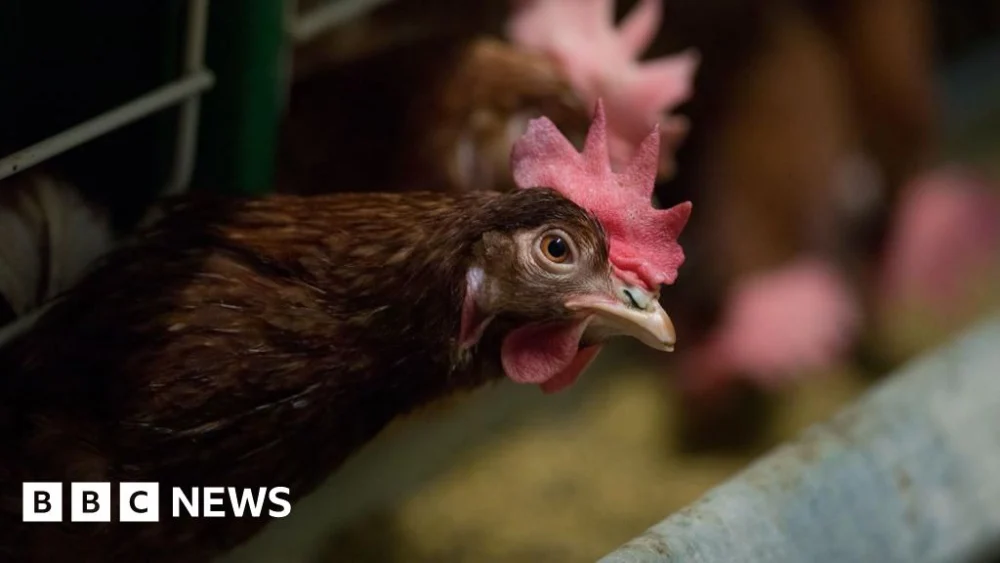
Environment Secretary Emma Reynolds heralded the package of reforms as "the most ambitious animal welfare strategy in a generation." This bold declaration underscores the government’s commitment to strengthening protections for a wide range of animals, from livestock to companion animals and wildlife. The strategy builds upon previous actions, which include improvements to zoo standards, efforts to curb puppy smuggling, and measures to protect livestock from dog attacks. Now, the focus is squarely on ending confinement systems for farmed animals, clamping down on cruel practices, and addressing contentious issues like trail hunting.
One of the cornerstone proposals targets the use of hen cages. While conventional battery cages for individual hens have been banned in the UK since 2012, an estimated 20% of the nation’s egg-laying hens are still housed in ‘enriched colony cages’. These systems, though providing slightly more space and amenities like perches and nesting areas compared to their predecessors, still severely restrict the birds’ natural behaviours. Hens in these cages often cannot fully stretch their wings, dust bathe, or forage freely, leading to chronic stress and physical ailments. The government’s new animal welfare strategy explicitly states its intention to "transition to non-cage systems and consult on phasing out enriched ‘colony’ cages," signalling a clear move towards entirely cage-free egg production.
Animal welfare organisations have widely applauded this commitment. The RSPCA, a leading voice in animal protection, estimates that approximately 80% of egg-laying hens in the UK are already free-range. David Bowles, the RSPCA’s head of public affairs, suggested that removing the remaining 20% of hens from caged systems should not present a "massive commercial problem" for the industry, given the existing market shift towards higher welfare eggs. This transition, while requiring investment and adaptation from producers, is seen as a natural progression aligning with evolving consumer preferences and ethical considerations. The move will solidify England’s position as a leader in humane egg production, potentially influencing global standards.
Beyond poultry, the strategy also addresses the welfare of pigs, specifically focusing on the use of farrowing crates. These crates are metal enclosures designed to contain pregnant sows during birth and the initial weeks of nursing. Their primary purpose is to prevent the sow from accidentally rolling over and crushing her piglets, a significant concern for farmers given the economic implications of piglet mortality. However, the design of these crates severely restricts the sow’s movement, preventing her from turning around, walking more than a few steps, or performing natural maternal behaviours such as nest building. This prolonged immobility can cause significant stress, lameness, and discomfort for the sow.
The government’s strategy pledges to work with the farming industry to "explore how to transition away from the use of farrowing crates to alternative systems." These alternatives often include more spacious farrowing pens, which allow sows greater freedom of movement while still incorporating features to protect piglets, such as "piglet-safe zones" or temporary crating systems that allow the sow to move for most of the farrowing period. The National Pig Association (NPA) has indicated it will be "following the next steps closely" and is already exploring more flexible systems, acknowledging the industry’s own drive towards improved welfare practices. However, transitioning away from farrowing crates presents significant challenges, including the need for new infrastructure, potential increases in piglet mortality rates if not managed carefully, and higher production costs for farmers. The consultation process will be crucial in finding practical and economically viable solutions.
Another significant welfare concern highlighted in the strategy is the outlawing of controversial fast-growing breeds of broiler chickens, often referred to by animal welfare campaigners as "Frankenchickens." These birds are selectively bred to reach slaughter weight at an incredibly rapid pace, typically in just a few weeks. While efficient for meat production, this accelerated growth often comes at a severe cost to the birds’ welfare. Many suffer from painful skeletal problems, lameness, organ failure (particularly heart issues), and struggle to move due to their disproportionately large bodies. By aiming to curb these low-welfare dog breeding practices, the government intends to address the root causes of suffering in intensive chicken farming, promoting healthier, slower-growing breeds that experience a better quality of life.
The proposed reforms have been met with broad support from animal welfare groups. Anthony Field, head of Compassion in World Farming UK, stated that the government was "raising the bar for farmed animal welfare," acknowledging the comprehensive nature of the strategy. However, the National Farmers’ Union (NFU) has voiced a critical concern: the potential for unfair competition from imported goods. NFU President Tom Bradshaw emphasized that if domestic farmers are required to adhere to higher welfare standards, increasing their production costs, then imported food must be produced to equivalent standards. He warned that failing to do so would lead to British farmers facing a significant disadvantage, potentially driving them out of business or encouraging a race to the bottom in terms of animal welfare overseas. "If we don’t implement the changes that we want to have in our production systems here within our import standards, then all we do is export our industry overseas," Bradshaw told BBC Radio 4’s Today programme.
In response, the Department for Food and Rural Affairs (Defra) affirmed its commitment to not lowering food standards and upholding high animal welfare as part of its trade approach. Defra stated it would "always consider whether overseas produce has an unfair advantage and any impact that may have." This commitment aims to reassure British farmers that their efforts to improve welfare will not be undermined by cheaper, lower-standard imports, though the practicalities of enforcing such equivalency in complex international trade agreements remain a significant challenge.
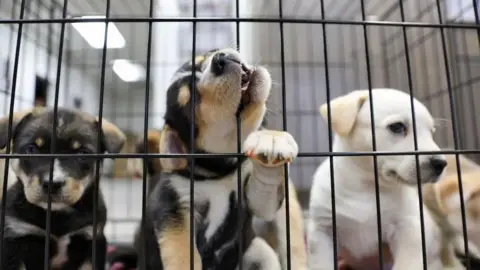
Beyond farmed animals, the strategy also targets practices affecting companion animals and wildlife. A significant commitment is to end puppy farming. This term describes the unethical practice of breeding dogs in poor conditions, often in large numbers, solely to maximise profits. Puppy farms typically involve cramped, unsanitary environments, inadequate veterinary care, and bitches bred repeatedly with little recovery time. The resulting puppies often suffer from long-term health issues, behavioural problems, and genetic predispositions due to poor breeding practices and lack of early socialisation. While it is not currently illegal to breed a large number of dogs, breeders selling three or more litters a year in England, Wales, and Northern Ireland must obtain a licence after an inspection. The government’s plan includes launching a consultation on introducing a new registration scheme for all dog breeders, irrespective of litter numbers, and significantly improving the health and welfare standards required for these licences. The RSPCA hailed a potential puppy farm ban as a "real game-changer," pledging to work closely with the government to draft robust legislation with "no loopholes." This move reflects a strong public desire for responsible dog breeding and an end to the exploitation of animals for profit.
The government is also looking to ban the use of snare traps in the countryside. Snares are wire nooses designed to catch animals, often by the neck or leg. While sometimes used for pest control, they are highly controversial due to their indiscriminate nature, often catching non-target species like badgers, deer, or domestic pets. Animals caught in snares can suffer prolonged periods of pain, fear, and injury, sometimes leading to slow deaths from strangulation, starvation, or predation. The proposed ban aligns with growing calls from welfare groups to replace such cruel devices with more humane and targeted pest control methods.
Finally, the strategy confirms a consultation on a proposed ban on trail hunting in 2026. Trail hunting emerged following the 2004 ban on fox hunting, with participants claiming to follow an artificial scent trail laid ahead of hounds. However, critics, including Environment Secretary Emma Reynolds, argue that it is often used as a "smokescreen" for illegal fox hunting, allowing participants to evade the law. Reynolds explicitly stated, "we know sometimes it is used as a smokescreen for fox hunting," highlighting the enforcement difficulties of the current legislation. The government’s determination to go further by banning trail hunting aims to close this perceived loophole and ensure the spirit of the original ban is upheld.
This move has ignited fierce opposition from rural communities and organisations like the Countryside Alliance. Tim Bonner, chief executive of the Countryside Alliance, described it as "unbelievable" that the government would dedicate more parliamentary time to hunting, calling it a "pointless and divisive issue" and "completely unnecessary." He warned that "people across the countryside will be shocked that after Labour’s attack on family farms and its neglect of rural communities it thinks banning trail hunting and snares used for fox control are a political priority." Echoing this sentiment, Conservative chairman Kevin Hollinrake labelled the ban an "attack on rural Britain and British culture," accusing the government of "punishing the law-abiding majority who support legal trail hunting." The debate over hunting remains a deeply entrenched and politically charged issue, highlighting the cultural divides within the UK.
The comprehensive nature of England’s new animal welfare strategy signals a significant shift towards a more compassionate approach to animal management. While praised by welfare advocates as a generational step forward, it also poses considerable challenges for farmers and rural communities, demanding adaptation, investment, and careful consideration of economic impacts and traditional practices. The success of these reforms will ultimately depend on effective implementation, robust enforcement, and the ability to balance animal welfare improvements with the needs of various stakeholders.




 Roy Suryo

 Nakalama John
 atisusanti
 Ramos Leo
