
 George Anjay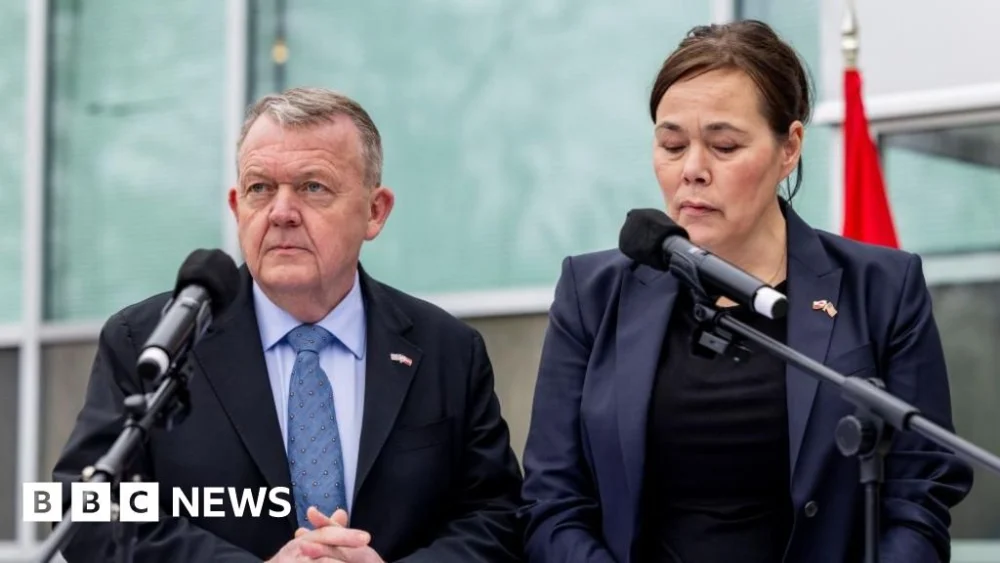
Denmark’s foreign minister has declared a "fundamental disagreement" with the United States over Greenland following a high-stakes meeting at the White House, underscoring a significant diplomatic rift that has rattled European allies and fueled tensions within NATO. Lars Løkke Rasmussen, speaking after discussions with Vice President J.D. Vance and Secretary of State Marco Rubio, characterized the talks as "frank but constructive." However, he emphatically stated that President Trump’s insistence on "conquering" Greenland was "totally unacceptable" and that Denmark had "made it very, very clear that this is not in the interest of [Denmark]." President Trump, for his part, reiterated his persistent desire to acquire the resource-rich Arctic island, a stance that has provoked widespread concern across Europe and raised anxieties about the stability of the transatlantic alliance.
The hour-long meeting, involving representatives from the US, Denmark, and Greenland, failed to produce a major breakthrough. Nevertheless, all parties agreed to establish a high-level working group tasked with discussing the future of the autonomous Danish territory. Rasmussen highlighted that the US had crossed "red lines" and that the upcoming working group meetings, scheduled for the coming weeks, would aim to forge a compromise. He indicated that Denmark and Greenland remain open to the possibility of the US expanding its military presence on the island, acknowledging that "it’s productive to start discussions at a high level." Rasmussen also conceded that there was "an element of truth" in Trump’s assertion that security in the Arctic needed bolstering to counter the growing influence of Russia and China. However, he dismissed the president’s claims regarding the presence of Russian and Chinese warships around Greenland as "not true."
Despite its sparse population, Greenland’s strategic location between North America and the Arctic makes it an invaluable asset for early warning systems against missile attacks and for monitoring maritime traffic in the region. President Trump has consistently argued that acquiring Greenland is crucial for US national security. The United States already maintains a significant military presence, with over 100 personnel permanently stationed at its Pituffik base in northwestern Greenland, a facility that has been under US operation since World War II. Existing agreements with Denmark grant the US the authority to deploy as many troops as it deems necessary to Greenland.
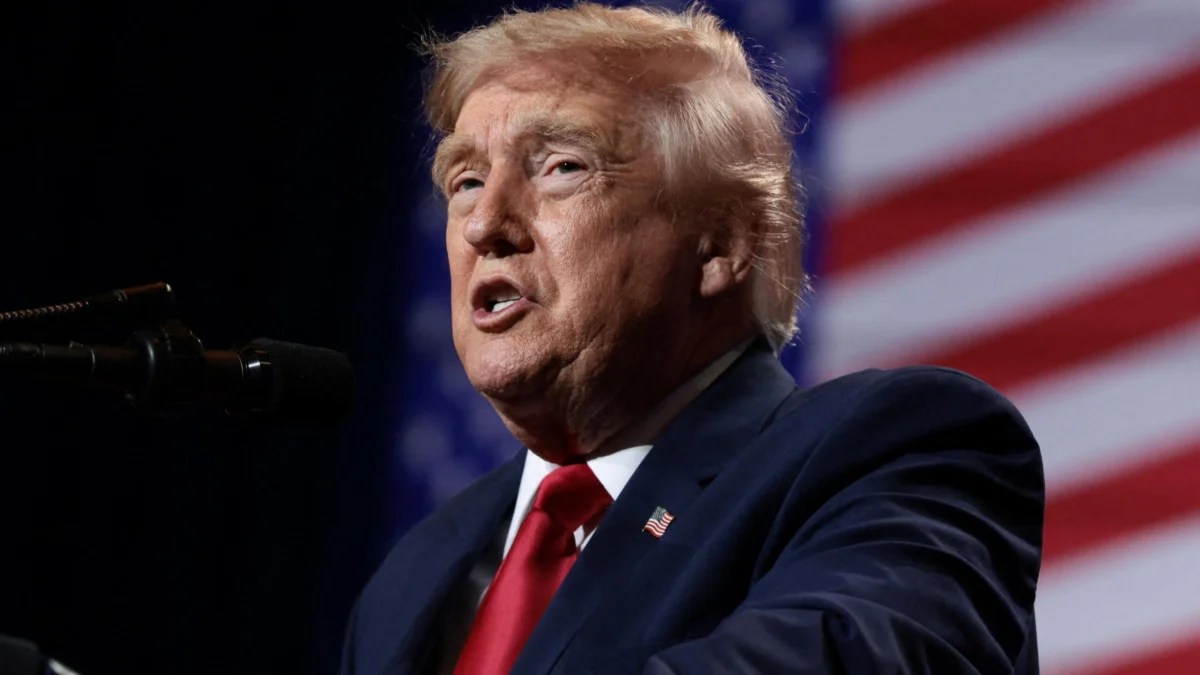
Following the White House discussions, Vivian Motzfeldt, the Minister of Foreign Affairs of Greenland, conveyed that the territory was amenable to enhanced cooperation with the US but firmly opposed any form of takeover. "We have shown where our limits are," Motzfeldt stated. Neither Vance nor Rubio offered immediate comments after the meeting. President Trump, however, informed reporters in the Oval Office that "We need Greenland for national security." He elaborated, stating, "The problem is there’s not a thing that Denmark can do about it if Russia or China wants to occupy Greenland, but there’s everything we can do," implying that the US cannot rely on Denmark to defend the island.
The diplomatic exchanges occurred against a backdrop of European allies swiftly demonstrating their support for Greenland. On Wednesday, Sweden pledged to deploy armed forces to the territory at Denmark’s request, while France’s foreign minister announced plans to open a consulate on the island the following month. Germany, in a statement to the BBC, declared its intention to dispatch a "reconnaissance team" to Greenland to "explore the general conditions for possible military contributions to support Denmark in ensuring security in the region." Denmark affirmed that its military expansion in Greenland would proceed "in close co-operation with allies," citing that "geopolitical tensions have spread to the Arctic."
The White House talks represented the latest round in ongoing diplomatic engagements concerning President Trump’s escalating interest in Greenland. The president has not ruled out the possibility of using military force to seize the island, a point he again declined to clarify when questioned on Wednesday. Alternative strategies reportedly under consideration include purchasing the territory, though both Denmark and Greenland have consistently maintained that the island is not for sale. Since assuming office, Vice President Vance has been a vocal critic of Denmark’s administration of Greenland, having visited the island shortly after taking his post.
President Trump has championed control of Greenland as vital for his proposed missile defense system, "Golden Dome." He posted on social media early Wednesday, asserting, "It is vital for the Golden Dome that we are building. NATO should be leading the way for us to get it." Public opinion polls indicate that a majority of Greenland residents are opposed to coming under US control. Similarly, most Americans do not support US acquisition of Greenland. A Reuters/Ipsos poll released on Wednesday revealed that only 17% of Americans favored the US seizing Greenland, with 47% expressing opposition to Trump’s initiative.
These recent discussions about Greenland follow a pattern of assertive US military operations, including those in Venezuela and against ISIS targets in Syria. President Trump has also threatened military action to quell Iran’s crackdown on widespread protests. The US military’s presence in Greenland, particularly at Pituffik, has been a long-standing arrangement, highlighting the strategic importance the US places on the region. The deepening geopolitical landscape in the Arctic, marked by increased Russian and Chinese activity, has amplified concerns about regional security and the potential for greater international competition. Denmark’s firm stance against any unilateral US action, while remaining open to cooperative security measures, underscores the complex balancing act it must perform to protect its sovereignty and interests in the Arctic. The establishment of the high-level working group offers a potential avenue for de-escalation and constructive dialogue, but the fundamental disagreement over Greenland’s future remains a significant hurdle. The international community will be closely watching the progress of these discussions and the potential implications for Arctic stability and NATO cohesion.



 Roy Suryo

 Nakalama John
 atisusanti
 Ramos Leo
