Nakalama John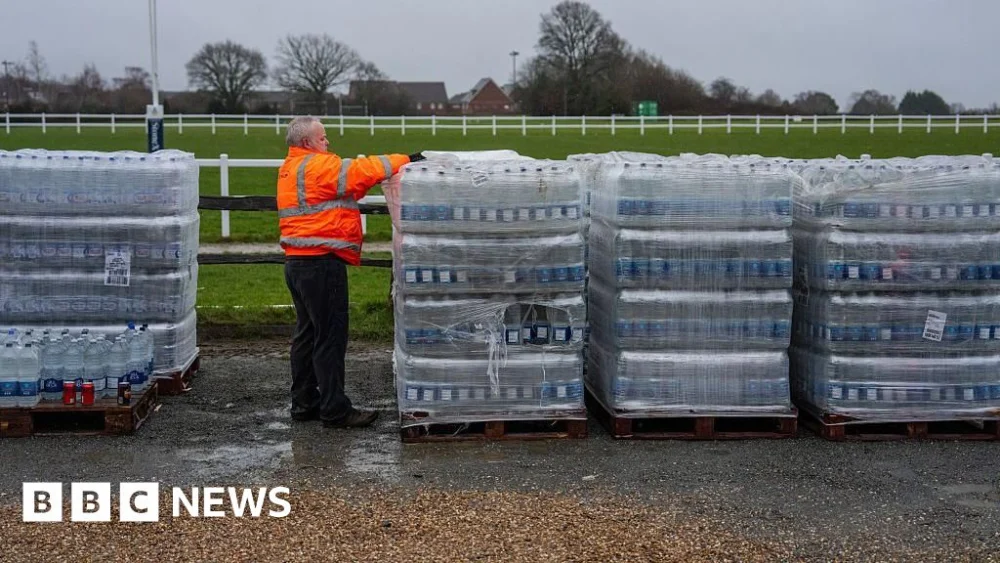
The water services regulator, Ofwat, has launched a comprehensive investigation into South East Water (SEW) following widespread and persistent disruptions to water supplies across significant swathes of Kent and Sussex. This new inquiry will scrutinise the company’s adherence to its licence conditions, specifically focusing on its obligation to deliver high standards of customer service and support during times of crisis. The decision comes after weeks of "miserable" conditions for residents and businesses, culminating in a critical situation where at its peak, an estimated 30,000 people were left without water, with approximately 10,000 properties still experiencing outages at the time of the investigation’s announcement.
The latest wave of supply problems, which have plagued the region for the "last six weeks" and intensified in the run-up to the festive period, prompted an urgent review by the Prime Minister, who deemed the situation "clearly totally unacceptable" and directly requested Ofwat to examine the company’s licence. This political intervention underscores the severity and public impact of the ongoing failures. The regulator’s enforcement director, Lynn Parker, articulated the profound disruption caused, stating, "The last six weeks have been miserable for businesses and households across Kent and Sussex with repeated supply problems. We know that this has had a huge impact on all parts of daily life and hurt businesses, particularly in the run up to the festive period. That is why we need to investigate and to determine whether the company has breached its licence condition."
South East Water, which serves approximately 2.2 million customers across parts of Kent, Sussex, Surrey, Hampshire, and Berkshire, acknowledged the investigation, affirming its commitment to "always fully co-operate with any investigation by our regulators and provide any information required." However, the company faces mounting pressure not only from the regulator and government but also from its increasingly frustrated customer base.
This latest investigation by Ofwat is distinct from, but undoubtedly linked to, another ongoing inquiry into South East Water’s supply resilience. That earlier investigation aims to determine whether the company has failed in its fundamental duty to develop and maintain an efficient water supply system. The confluence of these two investigations paints a concerning picture of systemic issues within SEW’s operations, suggesting problems not just with incident response but also with underlying infrastructure and long-term planning.
The current crisis, which saw a significant escalation following Storm Goretti and a subsequent power cut at a vital pumping station on a recent Saturday, has exposed critical vulnerabilities in SEW’s network. While such external events can trigger disruptions, the prolonged nature and widespread impact of the outages point to an insufficient ability to recover and maintain supply. Matthew Dean, SEW’s incident manager, provided updates on Thursday morning, reporting some progress in restoring supplies. Water had been successfully returned to all 16,500 properties in East Grinstead, and approximately 2,000 properties in the Loose and Coxheath areas had also seen their services resume. However, significant challenges persisted, particularly in Tunbridge Wells.
In Tunbridge Wells, 6,500 properties reliant on a boosted system remained without water. This critical situation arose after the levels in the area’s primary drinking water storage tank plummeted below the threshold required for booster pumps to operate effectively. To allow the tank to replenish, SEW implemented a new recovery plan on Wednesday evening, which involved keeping local booster pumps switched off for an additional 36 hours. This measure, while necessary for long-term recovery, meant an extended period of outage for thousands of households. Overall, Dean confirmed that approximately 8,500 properties across Kent were still without a consistent water supply.
The ongoing disruption has had profound consequences for daily life. Residents have faced the arduous task of sourcing alternative water supplies, often relying on bottled water stations or deliveries. Businesses, particularly those in hospitality and retail, have reported significant losses, especially during what should be a bustling festive season. The lack of reliable water supply impacts everything from basic hygiene and cooking to heating systems and commercial operations.
Mike Keil, chief executive of the Consumer Council for Water, voiced the anxieties of the affected customers, noting that SEW customers were "feeling anxious and uncertain every time they turn on the tap." He emphasized the broader message sent by Ofwat’s action: "Launching this investigation sends a signal not only to SEW but to all water companies that how you treat people during disruption matters." Keil further stressed the urgency for a swift resolution, stating, "We want to see this investigation conducted swiftly as customers of SEW are impatient for change after suffering repeated service failures, compounded by poor communication."
The quality of communication from South East Water has been a recurring point of contention. Many customers reported receiving inadequate, delayed, or conflicting information, exacerbating their frustration and uncertainty. In times of crisis, clear and consistent communication is paramount for maintaining public trust and enabling residents to make informed decisions. The perceived lack of transparency has only deepened the sense of abandonment felt by those without water.
In an effort to mitigate the immediate impact, South East Water mobilised extensive resources. The company stated it would be deploying 26 tankers to directly inject water into its network, a critical measure to boost pressure and replenish local supplies. Furthermore, teams were reportedly working "around the clock" to identify and fix leaks and bursts, which can significantly deplete system pressure and contribute to supply issues. Despite these efforts, some customers were advised that their supplies might not return until Friday, almost a week after the initial problems began on Saturday.
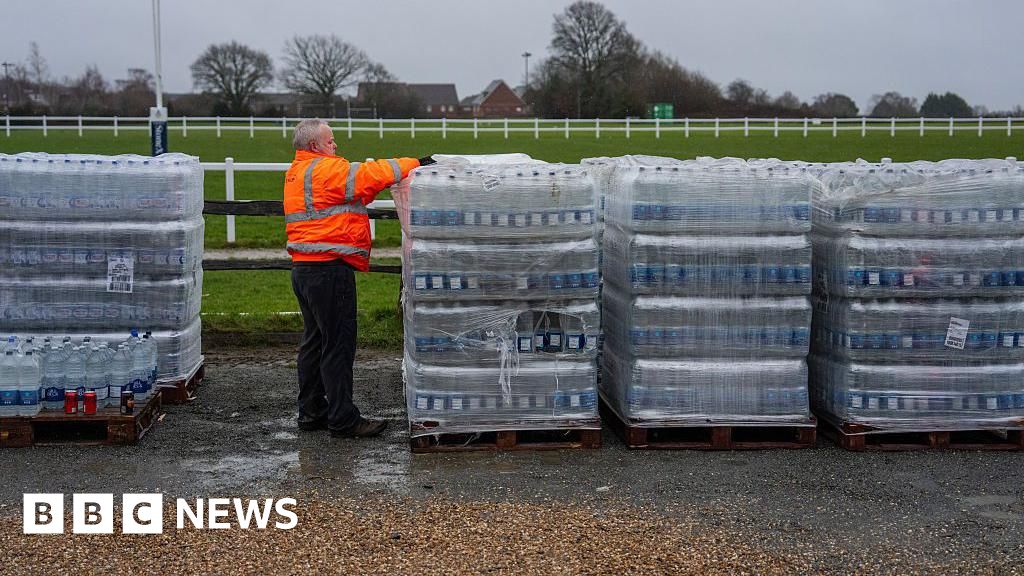
The company’s strategy for bottled water distribution has also been under intense scrutiny. While over 25,000 deliveries had been completed, primarily to customers on its priority services register – individuals who are elderly, have medical conditions, or other vulnerabilities – the sheer scale of the problem necessitated additional measures. On Thursday, SEW announced the opening of four bottled water stations at key locations: East Grinstead Sports Club, Tunbridge Wells Rugby Football Club, Odeon Cinema in Tunbridge Wells, and Mote Park Leisure Centre in Maidstone. These stations provide a lifeline for many, though accessing them can be challenging for those with limited mobility or without private transport.
The ongoing "outage" had to be extended, according to SEW, because local drinking water storage tanks were not refilling at the anticipated speed. This suggests a more complex problem than simply fixing a single fault, indicating potential issues with the capacity of their network to recover from significant pressure drops or a lack of sufficient redundancy in their supply system. The goal was for customers to wake up to a consistent supply by Friday morning, but the company’s past struggles to meet restoration targets have left many sceptical.
This double investigation by Ofwat into South East Water – one focusing on customer service and the other on fundamental supply resilience – reflects a growing concern among regulators and the public regarding the performance of privatised water companies in the UK. Critics often point to underinvestment in infrastructure, high executive pay, and significant dividends to shareholders as factors contributing to network vulnerabilities and poor service. The impact of climate change, leading to more frequent and intense weather events like storms and prolonged droughts, further stresses an already fragile system, making robust and adaptable infrastructure more crucial than ever.
Should Ofwat’s investigations find South East Water in breach of its licence conditions, the company could face substantial fines, which are typically used to benefit customers through reduced bills or investment in services. Furthermore, enforcement orders could be issued, compelling SEW to implement specific improvements to its infrastructure, customer service protocols, and contingency planning. The outcome of these investigations will not only have significant implications for South East Water but will also serve as a crucial benchmark for how other water companies are held accountable for their performance and their responsibility to provide essential services to the public. The repeated failures have ignited a broader public debate about the future of water provision in the UK and the regulatory framework governing it, with many calling for stricter oversight and greater accountability from utility providers.


 Roy Suryo

 atisusanti
 Ramos Leo