
 Nana Banana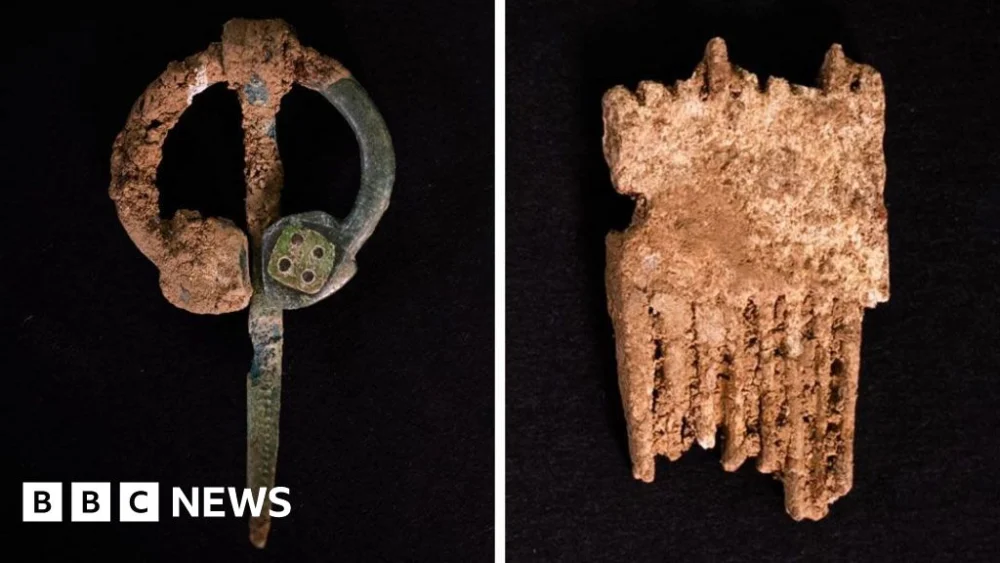
For four years, archaeological teams from Cardiff University, led by Dr. Andy Seaman, have meticulously worked to unearth the secrets held within the ancient burial ground. So far, a remarkable 58 skeletons have been uncovered, dating back some 1,500 years. What immediately struck researchers as unusual was the overwhelming prevalence of female remains among the interred, a demographic anomaly that has long puzzled experts. The current spate of discoveries, particularly the potential structure and the array of sophisticated artefacts, adds considerable weight to the burgeoning theory that this was once an early female religious community.
The skeletons themselves, though ancient, are remarkably intact and well-preserved, laid to rest in shallow graves carefully cut into the underlying limestone bedrock. Analysis of their bones and teeth indicates that these women, and the few men and children also found, endured hard lives, characteristic of the medieval period. Yet, this stark reality is juxtaposed with the evidence of wealth and luxury suggested by the objects discovered within and around the graves. This contrast has fueled the archaeologists’ determination to understand the true identity and societal role of these enigmatic individuals.
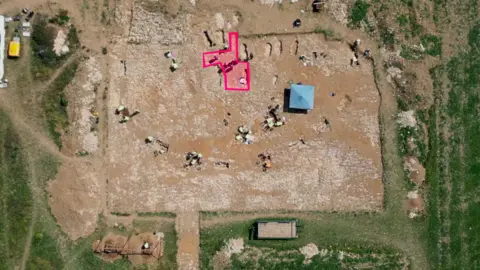
The latest dig has provided a pivotal piece of the puzzle: the faint, yet distinct, outline of a possible small building at the heart of the cemetery. Dr. Andy Seaman, from Cardiff University, explains the significance: "It’s producing fragments of building stone, so it might be structural. We might be thinking of a small shrine or a chapel." This structural evidence is a crucial indicator, pushing the research team towards a definitive conclusion about the site’s purpose. "I do think that we have a site which may be an early religious community," Dr. Seaman asserts, connecting the architectural find directly to the hypothesis of a monastic or conventual settlement.

The location of this potential building is highly telling. It occupies a central position within the cemetery, with graves clustered intimately around it. This arrangement suggests a profound desire among the deceased, or those burying them, to be interred as close as possible to this central feature. Cardiff University archaeologist Tudur Davies notes the unusual burial patterns: "It’s a highly desired location for people to be buried in. Sometimes two, three, four individuals have been buried on the same spot, again and again. There doesn’t appear to be as much of a taboo over putting bodies in the same place and just moving those still there to one side." This practice of multiple interments in the same coveted spot underscores the spiritual importance and reverence attributed to the central structure, reinforcing the idea of a sacred site.
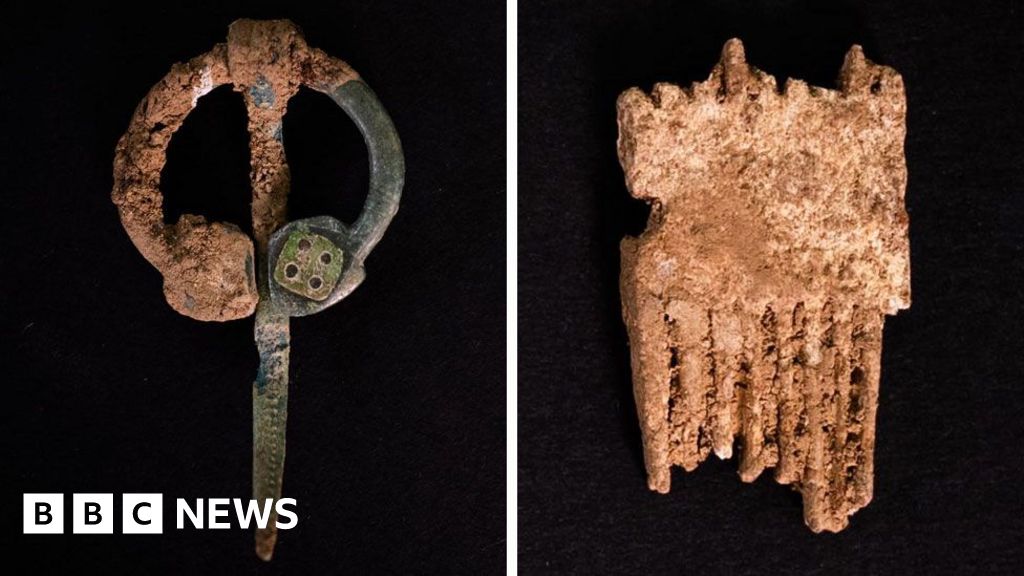
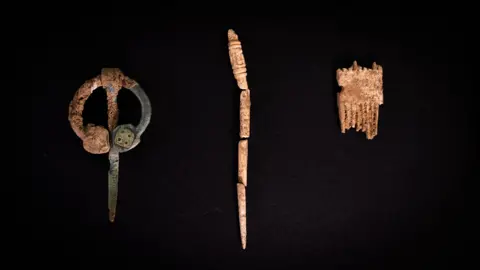
Beyond the structural clues, the artefacts recovered from the site offer invaluable insights into the daily lives, beliefs, and economic connections of the people buried there. These objects have been carefully transported to Cardiff University’s lab for conservation and analysis. Among the most striking finds is an ornate copper brooch. Conservator Nicola Emmerson is meticulously removing centuries of dirt, revealing its intricate details. "We’d have to do some more analysis, but it’s probably bronze," she explains. "Also we think it was possibly gilded, which would be a coating of gold over the top." The ends of the brooch were adorned with vibrant green enamel, a testament to the skill of its makers and the aesthetic values of its wearers. "This would have been a very decorative brooch. I think it’s a very special find for the site," Emmerson concludes, highlighting its likely high value and symbolic significance. A gilded and enameled brooch would have been a luxurious item, suggesting either the personal wealth of the woman it belonged to before entering the community, or the community’s access to valuable trade goods and skilled artisans.

Alongside this piece of medieval "bling," the team has unearthed other finely crafted items. These include a delicate pin made from bone, intricately carved with a detailed pattern, and a comb, skillfully fashioned from antler. These items, though domestic, speak to a level of artistry and attention to personal adornment within the community. Perhaps the most captivating of the decorative finds are the exquisite, multicoloured glass beads. Measuring a mere 3mm across, each bead is a miniature marvel of ancient craftsmanship. Their vibrant hues – dark red, orange, light blue, yellow, and green – suggest a sophisticated understanding of glass-making and dyeing. These tiny treasures were likely stitched onto clothing, perhaps as part of a habit or garment, or integrated into pieces of jewellery, adding a touch of elegance and personal expression to the wearers. The presence of such finely worked glass objects also hints at extensive trade networks, as glass production was a specialized craft, and the raw materials may not have been locally sourced. Fragments of other glassware were also found amongst the graves, further indicating a degree of material comfort or ceremonial use.
Crucially, the site has also yielded a variety of domestic items, providing a more holistic view of the community’s existence. "We have a quern stone for grinding flour for bread. We’ve got pottery and glass for eating and drinking," Dr. Andy Seaman points out. These utilitarian objects are critical because they demonstrate that the site was not merely a place of interment. "It’s clearly not just a place for the dead. There’s a living community here as well," he asserts. This blend of sophisticated decorative artefacts and practical tools like the quern stone suggests a community that was both spiritually focused and largely self-sufficient, managing its daily needs while also valuing beauty and personal expression. Dr. Seaman postulates that this was an "enclosed" community, living in close proximity to the cemetery, effectively separated from the wider medieval society. Such a lifestyle would have fostered a strong internal identity and a deep connection to their sacred grounds.
As the pieces of this medieval puzzle begin to coalesce, some profound questions remain. The presence of a few men and children among the predominantly female burials introduces complexity to the "female religious community" hypothesis. Were these men clergy, patrons, or perhaps family members of the women? Were the children offspring of some of the women, or perhaps orphans taken in by the community? These questions challenge the simplicity of the initial interpretation and open avenues for further research into the social dynamics of this early settlement.
Perhaps the most unsettling mystery concerns two women found buried in an entirely different manner: "tossed in a ditch," with one notably having her hands and feet tied. This stark contrast to the careful, reverent burials of the majority of individuals raises troubling questions about their fate. What actions could have led to such a dishonorable interment? Were they outcasts, criminals, or individuals who defied the community’s norms? This macabre discovery adds a dark, intriguing layer to the narrative, hinting at a complex system of justice or social exclusion within or outside the community.
The team’s ongoing research aims to determine if this site represents a very early example of Christianity in Wales. Dr. Seaman emphasizes the historical vacuum surrounding this period: "It’s a period where the history is not yet written. We don’t really understand early church sites… how they functioned, what they looked like, how they were organised." While later monastic traditions are well-documented, this earlier, formative period of history remains largely obscure. The Fonmon Castle site, therefore, offers an unparalleled and "really exciting opportunity" to shed light on the origins and development of religious communities in early medieval Wales. The archaeologists are keenly anticipating the insights that further excavations, scheduled to continue later this year in 2026, will bring, hoping to definitively solve the lingering mysteries of these remarkable women and their sacred dwelling.


 Roy Suryo

 Nakalama John
 atisusanti
 Ramos Leo
