
 atisusanti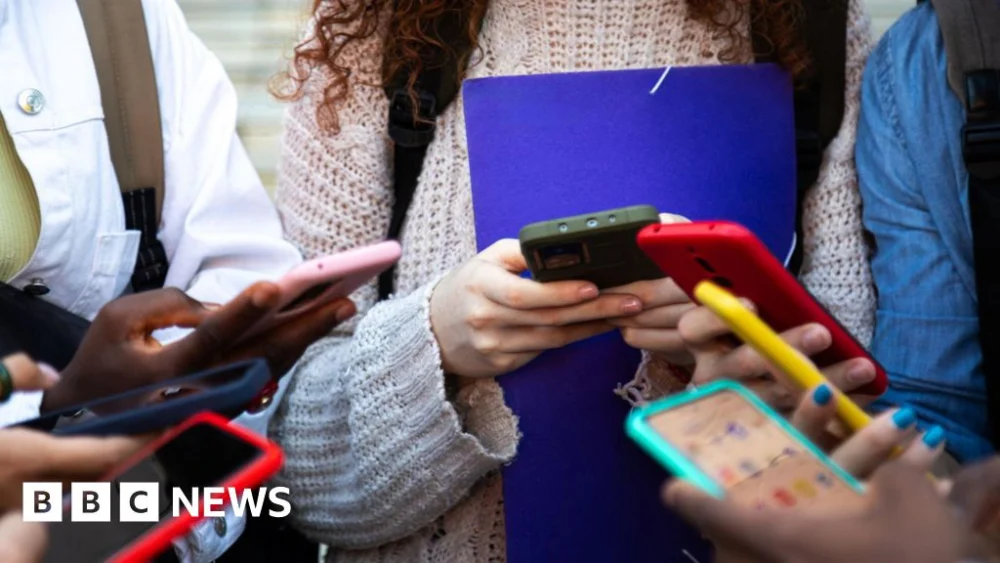
The Liberal Democrats have unveiled a nuanced proposal to safeguard children online, suggesting the implementation of film-style age ratings to regulate social media access for minors. This innovative approach aims to strike a balance between protecting young users from harmful content and addictive algorithmic designs, while avoiding the perceived heavy-handedness of an outright ban. Under the party’s plan, social media platforms deemed to employ addictive algorithmic feeds or host content unsuitable for younger audiences would be restricted to users aged 16 and over. Furthermore, sites featuring graphic violence or explicit pornography would be assigned an 18-plus rating, mirroring the classification system familiar to film audiences.
This Lib Dem initiative directly challenges the Conservative party’s stance, which has leaned towards a more restrictive policy. Prime Minister Sir Keir Starmer has recently indicated an openness to exploring an outright ban on social media for under-16s, stating that "all options are on the table" and expressing keen interest in observing the efficacy of a similar ban recently enacted in Australia. The Australian legislation, which took effect in December, mandates that major social media companies, including Facebook, Snapchat, Instagram, X, and TikTok, must implement "reasonable steps" to prevent children from accessing their platforms. To achieve this, these companies are empowered to utilize government-issued identification, biometric data such as facial or voice recognition, or sophisticated analysis of online behaviour to ascertain a user’s age.
The Conservatives, if elected, have pledged to adopt a policy mirroring the Australian model, proposing a ban on social media access for individuals under 16. Tory leader Kemi Badenoch has characterized the internet, and social media in particular, as a "Wild West" where children should not be present. However, Victoria Collins, the Liberal Democrats’ spokesperson for science and technology, has sharply criticized the Conservative’s "blanket ban" as a "blunt instrument that doesn’t work in a digital age," suggesting it signals a lack of trust in parents’ ability to guide their children’s online activities.
The Liberal Democrats champion their "tailored approach" as a more effective and adaptable solution for the rapidly evolving digital landscape. They argue that their proposed rating system would enable governments to swiftly categorize newly emerging social media platforms based on the inherent addictiveness or potential harmfulness of their content. Sir Ed Davey, the Lib Dem leader, has issued a clear ultimatum to social media giants: "if your platform spreads harmful content or relies on addictive and harmful algorithms, you should not be allowed anywhere near our children." He emphasized that this critical issue can no longer be deferred.
Under the Liberal Democrat proposal, popular platforms like TikTok, Instagram, and Facebook would be classified as unsuitable for under-16s unless these companies undertake significant modifications to their underlying code. These crucial changes would involve removing addictive algorithmic feeds and eliminating inappropriate content. The enforcement of these age ratings would be entrusted to Ofcom, the UK’s media regulator, which would be empowered to levy fines against companies that fail to comply with the new regulations.
The proposal is set to be formally introduced next week when the Liberal Democrats intend to propose it as an amendment to the Children’s Wellbeing and Schools Bill. This move will provide peers in the House of Lords with an opportunity to vote on the measure. Concurrently, a separate amendment, advocating for a complete ban on social media for under-16s, will also be debated. This amendment has been tabled by Lord Nash, a former Conservative education minister, and is co-sponsored by a notable group of cross-party peers, including Baroness Benjamin, a Liberal Democrat peer and former children’s television presenter; Labour peer Baroness Berger; and Baroness Cass, an independent member of the House of Lords and a practising paediatrician. Those involved in this alternative amendment express optimism regarding its potential passage.
The National Society for the Prevention of Cruelty to Children (NSPCC) has urged peers to reject a total ban, asserting that while action is undeniably needed, "a complex problem requires more than a blanket solution. Bans are not the answer." The NSPCC has voiced its support for the Liberal Democrats’ "film ratings" approach, arguing that children and young people should be protected but not "shut out from the online world and the benefits it can offer for connection, fun, learning and support."
The Molly Rose Foundation, established in memory of Molly Russell, who tragically took her own life at the age of 14 after being exposed to self-harm and suicide content on social media, has also expressed reservations about a blanket ban. The foundation has cautioned against "unintended consequences," including the potential for harmful content to be displaced to unregulated and less visible online spaces.
Concerns have also been raised by some social media companies regarding the practical feasibility and potential circumvention of a complete ban. Platforms such as TikTok and Instagram already have age restrictions in place, generally limiting access to users aged 13 and above. Many major platforms have also implemented protective measures for teenage users. For instance, Snapchat accounts for younger users are private by default, with public accounts only accessible to those aged 16 and over. Snapchat has indicated its intention to comply with the Australian ban but has voiced concerns that "disconnecting teens from their friends and family doesn’t make them safer – it may push them to less safe, less private messaging apps." This highlights the complex trade-offs involved in regulating children’s online experiences, with advocates for a nuanced approach emphasizing the need for careful consideration of all potential impacts.


 George Anjay
 Nakalama John
 Ramos Leo
 Roy Suryo
 Nana Banana