
 Nakalama John
A new year often brings with it the promise of fresh starts and renewed optimism. For the UK economy, the latest monthly figures present a complex picture, neither confirming a dramatic change of gear towards robust growth nor validating the most pessimistic forecasts of imminent decline and recession. The nation finds itself in a state of economic equipoise, a space between doom and boom, where the opportunity for a policy reset, a renewed sense of certainty, and, crucially, a shift in overall economic "vibes" feels particularly pertinent.
Amidst this intricate landscape, one singular metric stands out as an exceptionally potent barometer for understanding both the current state and the future trajectory of the UK economy. More than just a statistical indicator, it offers a profound insight into the nation’s collective psyche and, increasingly, its political leanings: consumer confidence. These long-running surveys are akin to placing the entire population on an economic psychiatric couch, probing deep into their anxieties, hopes, and spending intentions. Questions range from broad assessments of the economy’s future prospects to more personal reflections on household finances and the likelihood of making significant purchases, such as a new car or a major appliance.
The bedrock of this crucial insight is the GfK Consumer Confidence Barometer, a robust data source built upon consistently asked questions spanning five decades. Having reported on this metric for half of its existence, it is clear that while it remains an imperfect science, its fundamental methodology—calculating a net confidence number by subtracting pessimism scores from optimism scores—has consistently yielded telling patterns. Historically, these patterns were not merely interesting; they were vital predictors for incumbent governments. The adage "It’s the Economy Stupid" perfectly encapsulated the direct correlation between public economic sentiment and political fortunes.
However, something profoundly significant appears to have shifted. A chart, now reportedly circulating within the highest echelons of government, reveals an extraordinary and unprecedented divergence in consumer confidence trends. A quick narration of this chart illuminates the dramatic change. Traditionally, the headline net confidence number moved in a largely correlated fashion across all age cohorts. While younger individuals typically exhibited a sunnier disposition, which tended to dim with age—a predictable human tendency—all age groups generally reacted to major economic and political events in a similar manner.
The past decade provides ample evidence of this historical correlation. Following the 2016 Brexit vote, a period of prolonged uncertainty and economic adjustment, consumer confidence experienced correlated declines across all age groups. Similarly, the shock of the Covid-19 pandemic triggered a universal dip, followed by a correlated, albeit uneven, recovery. A particularly striking example of this collective response was the devastating impact of the Liz Truss mini-budget in 2022. This 45-day government’s fiscal proposals triggered an immediate and profound loss of confidence that reverberated across every demographic, pushing sentiment to historical lows. Indeed, up until late 2024, all these age-related confidence lines largely moved in tandem, rising and falling in sympathetic rhythm.
But late 2024 marks a dramatic and unprecedented divergence. The chart vividly illustrates a stark contrast: consumer confidence among the under-50s begins to rise, soaring for the under-30s to levels not witnessed since before the Brexit referendum. This demographic, often characterized by its youthful optimism and future-oriented outlook, suddenly finds a renewed sense of hope. Conversely, the bottom two red lines on the chart depict a precipitous collapse in consumer confidence among the over-50s and, particularly, pensioners. Their sentiment plunges back towards the depths seen during the tumultuous Truss era.
This raises a critical question: how can such a profound split occur? How can older generations, including pensioners, experience what feels like another collapse in economic confidence, while the young adult population simultaneously exhibits such marked positivity? The dotted line on the chart provides a compelling clue: it marks the 2024 General Election. While correlation does not definitively prove causation, the timing of this age-related break is undeniably striking, suggesting a powerful link between political outcomes and economic perceptions.
This phenomenon hints at a possible explanation rooted in political economy: the traditional flow of causality from economic sentiment to political sentiment may have reversed. Historically, how individuals felt about their personal finances and the broader economy heavily influenced their voting decisions. Now, it appears that how they voted, or how they perceive the political landscape, is increasingly shaping their feelings about their finances and the country’s economic outlook.
Younger demographics, who broadly align with the liberal left and have endured a rolling series of crises throughout the decade, are now expressing greater happiness and confidence. This surge coincides with the advent of a government they largely supported in the 2024 election. Conversely, older individuals, who predominantly voted Conservative and Reform, are registering profound unhappiness and skepticism. Their sentiment suggests a belief that the country has deteriorated even further than usual, irrespective of actual economic data.
One plausible contributing factor to this divergence, particularly for older demographics, could be the pervasive influence of social media. The algorithms of these platforms often create echo chambers, feeding users content that reinforces existing biases and emotions. For those prone to "doom-scrolling" or engaging with "rage magnets," a constant stream of negative news and politically charged commentary could be shaping a Mad Max-style dystopian outlook that directly translates into their reported economic pessimism.
Evidence from the United States lends credence to this theory. A consumer sentiment survey conducted during the transition between the Donald Trump and Joe Biden administrations at the end of 2020 revealed a sharp partisan divide. Economic confidence among Democrat respondents surged from 67 to 96, while Republican confidence plummeted from 100 to 59. The subsequent Biden administration frequently lamented what staffers termed the "Vibecession"—a widespread sense of economic malaise that persisted despite often robust underlying economic numbers. This American experience provides a powerful parallel to the current UK situation, suggesting that political affiliation can indeed colour economic perception to a significant degree.
Beyond political sentiment, there are also tangible economic factors at play that contribute to this age-based divergence. The rebound in confidence for younger generations notably coincides with the Bank of England’s decision to begin cutting interest rates. Lower interest rates are generally beneficial for young home seekers, making mortgages more affordable, and for jobseekers, as businesses are more inclined to invest and expand. Conversely, these rate cuts are less favourable for older savers, who often rely on interest income from their deposits, seeing their returns diminish. This creates a direct economic cleavage, where a policy beneficial to one group disadvantages another.
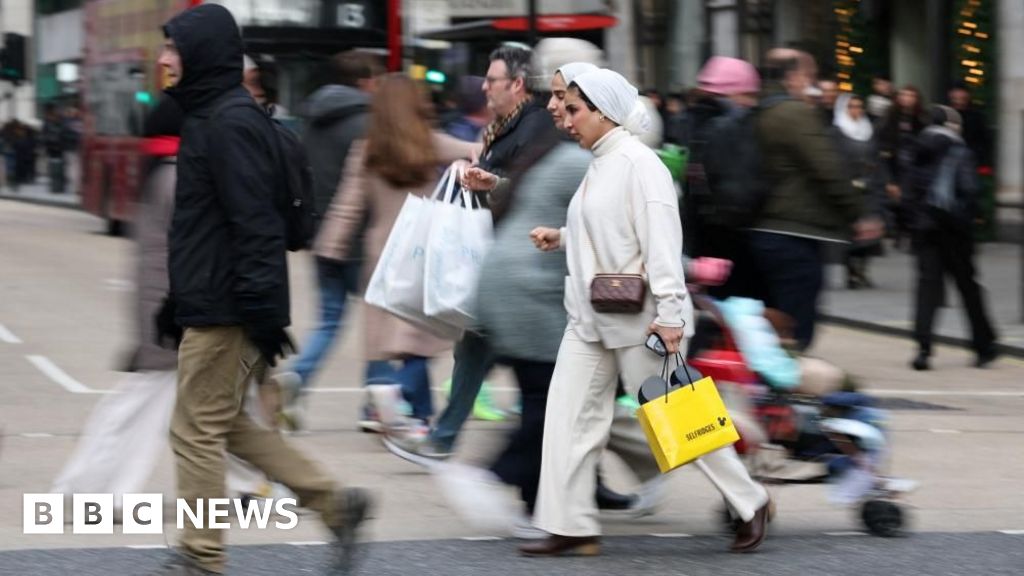
The consequences of this politically and economically charged picture are significant for the broader economy. The UK is currently experiencing a curiously high, almost double-digit, savings rate—an aberration reminiscent of pandemic-era behavior. This suggests that a substantial portion of older Britain, despondent about the country’s direction and economic prospects, is choosing to hoard its savings rather than spend. This reluctance to inject capital back into the economy acts as a drag on GDP growth, even as workers, particularly younger ones, are experiencing pay rises that, on average, outpace inflation. Their collective caution effectively dampens overall economic activity.
However, the early financial results emerging from businesses paint a more optimistic, nuanced picture that challenges the pervasive gloom. Many retail chains, for instance, have reported figures that defy the widespread pessimism. Even some bosses who vocally complain about National Insurance rises are simultaneously reporting healthy sales and profits, suggesting that the tax burden has been absorbed without significantly impacting their bottom line. Pub chains like Mitchells & Butlers "traded very strongly across the festive season with like-for-like growth of 7.7%." Similarly, Fullers celebrated an "outstanding five-week Christmas and New Year season across all parts of the estate," boasting an 8% increase on an already robust festive period the previous year. These examples indicate pockets of resilience and even thriving activity within the economy, perhaps fueled by the more confident younger demographic.
While challenges certainly remain, particularly concerning the elevated level of prices, inflation is demonstrably on a downward trajectory, moving steadily towards the Bank of England’s 2% target. The government is also making a conscious effort to mitigate cost-of-living pressures by limiting regulated price rises for essential services such as rail and water. Further interest rate cuts are anticipated, albeit gradually, and the cumulative impact of previous cuts will continue to filter through into the household sector, potentially stimulating spending and investment.
A "mortgage price war" could well be on the horizon, offering a much-needed boost to a housing market that has endured months of uncertainty and stagnation. The government, for its part, hopes to draw a definitive line under a tumultuous 2025, aiming for an "investment boom" characterized by recent announcements regarding projects like Heathrow expansion and a new northern train line. These initiatives are designed to inject real economic activity and foster a sense of progress.
Thus, a credible platform exists to defy the prevailing sense of doom. The question that looms large, however, and which the divergent consumer confidence chart so powerfully illustrates, is whether people’s now politically charged perceptions of economic confidence will act as a significant brake on this potential recovery. Can positive economic fundamentals and deliberate policy interventions truly overcome a deeply entrenched, age-segregated, and politically polarized outlook on the nation’s financial future? This remains the central, complex challenge for the UK economy in the years ahead.




 George Anjay
 atisusanti
 Ramos Leo
 Roy Suryo
 Nana Banana