
 Ramos Leo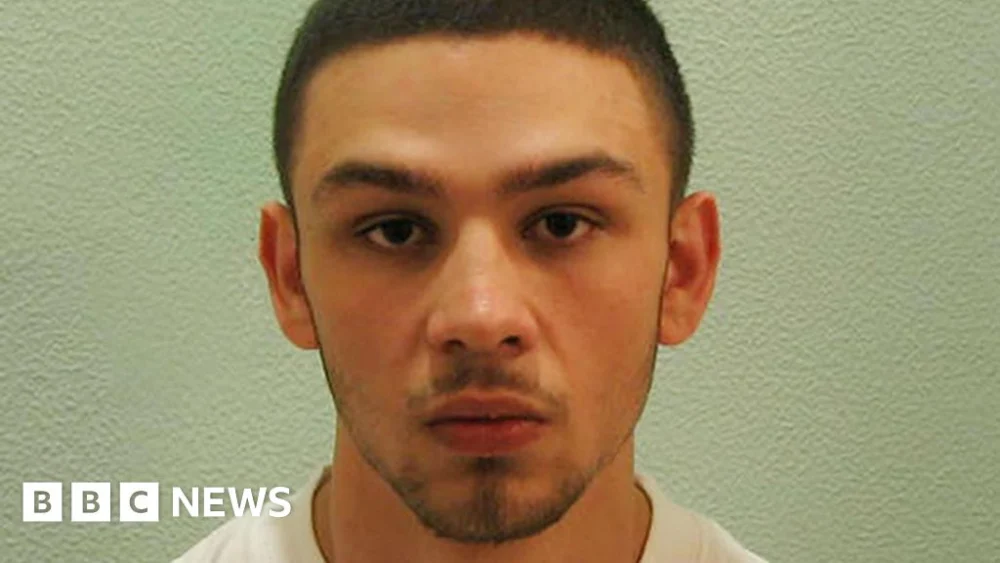
Fahri was handed a life sentence with a minimum term of 14 years in 2009 for the shocking killing. The tragic incident occurred in May 2008 at a bakery in Lee, south London, where Jimmy Mizen had gone to buy a birthday cake for his brother. Fahri, then 19, threw an oven dish at the teenager, which shattered upon impact, severing vital blood vessels in Jimmy’s neck and leading to his almost immediate death. The Mizen family, renowned for their forgiveness and dedication to community work in the wake of their unimaginable loss, have consistently campaigned for justice and accountability. Their steadfastness has been a poignant counterpoint to the ongoing challenges presented by their son’s killer.
After serving his minimum term, Fahri was released on licence in 2023. Such releases are conditional, requiring strict adherence to terms set by the Ministry of Justice, often including regular contact with probation officers, restrictions on associations, movements, and activities, all designed to manage risk and facilitate rehabilitation. However, his licence was revoked and he was recalled to prison by the Ministry of Justice last January following a series of explosive allegations published by The Sun newspaper. The report claimed Fahri was creating and performing drill music under the alias "Ten," a balaclava-clad artist whose lyrics allegedly contained veiled, and sometimes explicit, references to the murder of Jimmy Mizen. Drill music, a subgenre of hip-hop originating in Chicago and popular in the UK, often features dark, violent, and nihilistic lyrical content, frequently associated with gang culture and street violence. The suggestion that Fahri was using this medium to seemingly boast about or reference his heinous crime while out on licence sparked widespread outrage and raised serious questions about his rehabilitation and public safety.
Earlier this month, the Parole Board had made the recommendation that Fahri should be moved to an open prison. An open prison represents the lowest security category within the prison system, designed for prisoners who are deemed to pose a minimal risk to the public and are nearing the end of their sentences or preparing for eventual release. The purpose is to allow inmates to gradually reintegrate into society, often through opportunities for work experience in the community, building self-reliance, and demonstrating responsibility under less restrictive conditions. However, the Parole Board’s recommendation for Fahri was met with fierce opposition, culminating in Lammy’s decisive intervention.
A Ministry of Justice spokesman confirmed that Deputy Prime Minister Lammy’s decision to block the transfer was made specifically for "public protection." This phrase signifies that the Secretary of State assessed the potential risk to the public as unacceptable, overriding the Parole Board’s judgment that Fahri was suitable for the less secure environment. The power to override the Parole Board’s recommendation is reserved for exceptional circumstances, typically when the Secretary of State believes there is an overriding public safety concern that the Board may not have adequately addressed, or where the risk is simply too high. This rarely used power highlights the gravity of the concerns surrounding Fahri’s conduct.
In its decision summary, the Parole Board had acknowledged the contentious nature of Fahri’s activities. Fahri had initially given evidence disputing that his music was "about his own life," attempting to distance himself from the lyrical content. However, the Board noted that since his recall to closed prison, he had accepted he was indeed the artist known as "Ten." His failure to disclose his musical activities to his probation officer was unequivocally identified as a breach of his licence conditions. Fahri, now 36, claimed to have been unaware of these restrictions, a claim the Parole Board panel ultimately found to be untrue, casting further doubt on his candour and commitment to rehabilitation.
Despite these findings, the Board had rejected the possibility of re-releasing Fahri fully into the community, indicating their own continued concerns about his risk. Instead, they opted for the intermediate step of an open prison transfer. The Board’s reasoning stated that Fahri "needed to reflect" on "why he failed to be open and honest with the professionals managing his case," and suggested that this crucial period of reflection "could be achieved" within the environment of an open prison. This decision would have allowed Fahri a degree of freedom and responsibility not available in a closed facility, testing his ability to manage himself and comply with rules under less stringent supervision.
Lammy’s blocking of this move has been met with significant relief and strong approval from Jimmy Mizen’s mother, Margaret. Speaking to The Sun, she expressed her profound shock at the Parole Board’s initial recommendation. "I would much prefer this decision didn’t have to be made because he would have turned his life around. I’m really sad that he hasn’t," she stated, conveying the enduring pain and disappointment felt by the family. Her words underscore the Mizen family’s hope for genuine remorse and rehabilitation, a hope that Fahri’s actions have repeatedly undermined.
Mrs. Mizen further articulated that the reversal of the Parole Board’s decision demonstrates that Fahri had "not changed his attitude." Her conviction stems from a long history of Fahri’s deceptive behaviour. "He got into the witness box at his trial and lied through his teeth," she recounted, drawing a clear parallel between his conduct during the murder trial and his recent disingenuousness regarding the drill music. "Clearly, he hasn’t changed, and I’m glad the justice secretary has seen through it." This strong statement reflects the family’s deep-seated distrust of Fahri’s claims of rehabilitation and their belief that his underlying character remains unchanged. The Mizen family’s consistent advocacy has kept public attention on the case, ensuring that accountability remains at the forefront of the justice process.
When Jake Fahri was initially sentenced for the May 2008 murder, he was given a minimum 14-year prison term. This minimum term represents the earliest point at which a prisoner can be considered for release on licence, with such decisions typically made by the Parole Board, based on a comprehensive assessment of risk to the public. The conditions attached to such releases are designed to manage and mitigate any remaining risk.
The controversy surrounding Fahri’s drill music extended beyond his breach of licence. It was also revealed that two songs by the artist "Ten" had been played on BBC 1Xtra, a BBC radio station known for playing contemporary black music. The BBC later issued a statement confirming that it had been unaware of Fahri’s background at the time of broadcast. This incident highlighted the broader challenges faced by media outlets in vetting content, especially from emerging artists, and sparked discussions about editorial responsibility and the potential for platforms to inadvertently amplify voices linked to serious crime. The case of Jake Fahri and his attempt to re-enter society through the guise of a controversial music genre has brought into sharp focus the complex interplay between justice, rehabilitation, media ethics, and the enduring pain of victims’ families. Lammy’s decision serves as a powerful reminder of the ultimate authority vested in the Justice Secretary to safeguard public protection in high-stakes cases.



 Nakalama John
 atisusanti
 Roy Suryo
 Nana Banana
 George Anjay