Nana Banana
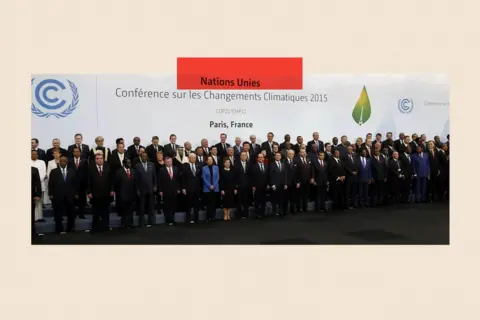
A photograph, taken a decade ago in the grand halls of Paris, now feels like a poignant relic from a bygone era. In it, dozens of global leaders, clad in dark suits, stand shoulder-to-shoulder before a colossal banner proclaiming COP21 Paris. At its heart, then-UK Prime Minister David Cameron beams, flanked by the future King Charles III, while China’s Xi Jinping stands nearby. To the far right, then-US President Barack Obama is deep in conversation, almost cut from the frame – a testament to the sheer number of dignitaries vying for space. This image captures a moment of unprecedented global unity and ambition, culminating in the landmark Paris Agreement, a treaty where nations collectively pledged to limit global warming to well below 2°C, ideally 1.5°C, above pre-industrial levels.
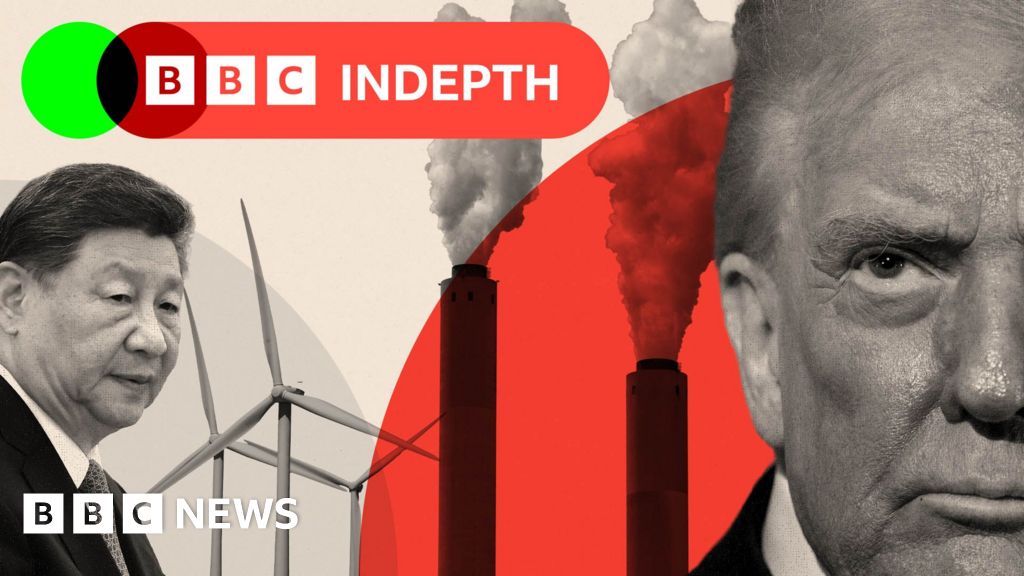
Fast forward to the family photograph taken just last Thursday at COP30, held in a humid town on the edge of the Amazon rainforest in Brazil. The contrast is stark, almost jarring. Xi and Modi, once central figures, were conspicuous no-shows, along with the leaders of approximately 160 other nations. Most notably, the US President Donald Trump was absent, his administration having entirely exited the formal UN climate process, with no high-level officials dispatched to the summit. The vibrancy of collective ambition seen in Paris seems to have dissipated, replaced by a more fragmented and less enthusiastic gathering.
This dramatic shift begs a crucial question: why convene a two-week-long multinational summit if so many key players, particularly from the world’s most powerful economies, are absent? Christiana Figueres, the former head of the UN’s climate process who guided the Paris Agreement to fruition, articulated a growing sentiment during last year’s gathering: the COP process, she argued, was "not fit for purpose" in its current form. Joss Garman, a former climate activist now leading the new think tank Loom, echoes this disillusionment, declaring, "The golden era for multilateral diplomacy is over." He suggests that climate politics has fundamentally transformed, becoming "more than ever about who captures and controls the economic benefits of new energy industries." With global carbon dioxide emissions continuing to rise despite 29 previous such meetings, the efficacy and relevance of yet another COP are under intense scrutiny.

Trump and the Climate ‘Con Job’
Donald Trump’s return to the political stage has profoundly reshaped the landscape of international climate action. On his first day back in office, he wielded his signature marker pen to formalize the US withdrawal from the Paris Agreement, a move that sent shockwaves through the global diplomatic community. His rhetoric remains unapologetically defiant, famously telling the UN General Assembly in September, "This ‘climate change’ – it’s the greatest con job ever perpetrated on the world. If you don’t get away from this green scam, your country is going to fail."
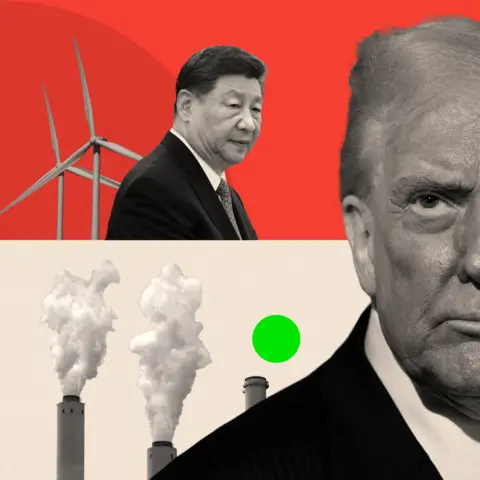
His administration’s policy agenda reflects this conviction. Restrictions on oil, gas, and coal have been systematically rolled back, opening vast federal lands and waters for new extraction projects. Billions of dollars in tax breaks have been funneled to fossil fuel firms, cementing their position in the national energy landscape. Internationally, Trump and his team have aggressively championed US energy dominance, urging governments worldwide to abandon their "pathetic" renewable energy programmes and instead purchase American oil and gas. This has often come with implicit threats of punitive tariffs for non-compliance, pushing key allies like Japan, South Korea, and European nations to commit to tens of billions of dollars in US hydrocarbon imports. The objective, as Trump himself has declared, is unequivocally clear: to make the US the "number one energy superpower in the world."
Simultaneously, his administration has systematically dismantled his predecessor Joe Biden’s clean energy agenda. Subsidies and tax breaks for wind and solar power have been drastically slashed, crucial permits withdrawn, and numerous clean energy projects cancelled. Funding for vital climate research has also been significantly cut. US Energy Secretary Chris Wright, defending the administration’s stance, argued in September, "Wind power in the United States has been subsidised for 33 years – isn’t that enough? You’ve got to be able to walk on your own after 25 to 30 years of subsidies." However, John Podesta, a senior climate adviser to both Obama and Biden, offers a stark counterpoint: "The United States is taking a wrecking ball to clean energy. They’re trying to take us back not to the 20th Century, but the 19th."
The impact of this policy shift extends beyond domestic borders. Last month, a landmark deal aimed at cutting global shipping emissions, a critical sector for decarbonization, was abandoned after the US, in concert with Saudi Arabia, successfully ended the negotiations. This illustrates the potential for a powerful nation to derail multilateral climate efforts. Many supporters of the COP process are deeply concerned that the US’s regressive path could lead other countries to scale back their own climate commitments. Anna Aberg, a Research Fellow at Chatham House’s Environment and Society Centre, acknowledges that COP is "taking place in a really difficult political context" given Trump’s position. She emphasizes, "I think it’s more important than ever that this COP sends some kind of signal to the world that there are still governments and businesses and institutions that are acting on climate change."
It’s too late to win at table tennis

Trump’s fossil-fuel-first strategy places the US on an undeniable collision course with China, which for decades has pursued a radically different path to global energy dominance – through an aggressive build-out of clean technology. In 2023 alone, clean technologies were the driving force behind roughly 40% of China’s economic growth, according to the climate website Carbon Brief. Even after a slight slowdown last year, renewables now account for a quarter of all new economic growth and constitute more than 10% of the nation’s entire economy.
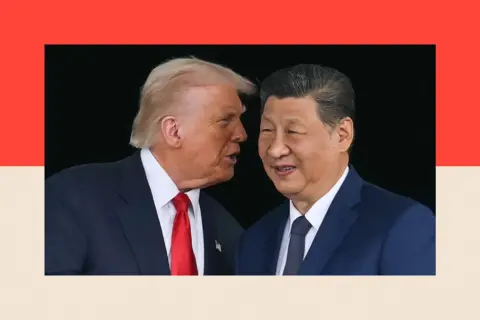
Crucially, like Trump’s America, China is engaging internationally far beyond mere participation in COP summits. It is actively exporting its entire energy model globally, investing heavily in renewable energy projects and infrastructure through initiatives like the Belt and Road, particularly in developing nations. This split creates a new geopolitical dynamic, transforming the climate debate from one primarily focused on environmental protection into a fierce economic competition between the world’s two superpowers for control of the most essential industry on Earth – energy.
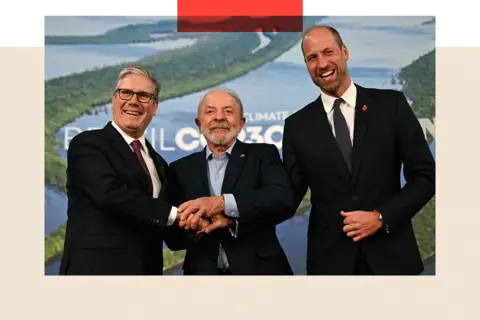
This leaves major emerging powers like India, Indonesia, Turkey, and Brazil, along with traditional allies like the UK and Europe, caught precariously in the middle. A government source from a major developed country, speaking at this year’s conference, highlighted the diplomatic tightrope: “Of all the things they’re most terrified of, the biggest is being seen to criticise Trump.” This fear underscores the immense political pressure exerted by the US.
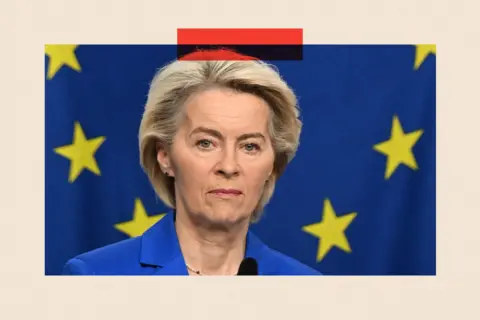
Against this backdrop, the President of the European Commission, Ursula von der Leyen, issued a stark warning last month. Europe, she cautioned, must not repeat the "mistakes of the past" and lose another strategic industry to China. She specifically cited the loss of Europe’s solar manufacturing base to cheaper Chinese rivals as "a cautionary tale we must not forget." Historically, Europe pioneered solar technology, only to see its industry largely undercut and displaced by China’s mass production capabilities. The European Commission forecasts that the global market for renewables and other clean energy sources will balloon from €600 billion (£528 billion) to a staggering €2 trillion (£1.74 trillion) within a decade, and Europe is determined to capture at least 15% of that burgeoning market.

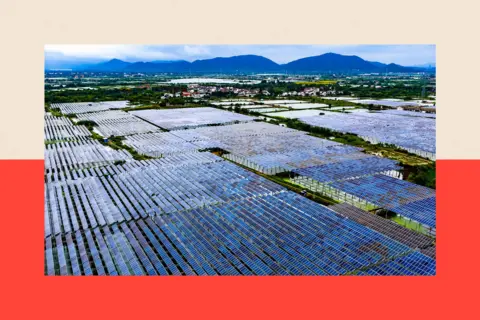
However, this ambition may prove to be too little, too late. Li Shuo, director of the China Climate Hub at the Asia Policy Institute, succinctly puts it: "China is already the world’s clean-tech superpower." Its dominance in the manufacturing of solar panels, wind turbines, electric vehicles (EVs), and advanced battery technologies, he states, is now "virtually unassailable." He employs a vivid analogy, likening it to attempting to beat the Chinese national team at table tennis: "If you want to surpass China, you had to get your act together 25 years ago. If you want to do it now, you have no hope." China currently produces over 80% of the world’s solar panels, a similar share of advanced batteries, 70% of EVs, and more than 60% of wind turbines – all at phenomenally low prices that make direct competition incredibly difficult for Western manufacturers.
The EU’s recent move to raise tariffs on Chinese EVs vividly illustrates the depth of this dilemma. Open the market, and Europe’s domestic car industry, a cornerstone of its economy, risks collapse. Close it, and green targets for emissions reductions may become harder to achieve due to the higher cost of alternatives. Joss Garman argues that while restricting Chinese market access might slow emissions reductions, "If we ignore questions about economic security, jobs, national security, that risks undermining public and political support for the entire climate effort."
COP: New Purpose or Pointless?
Given these tectonic shifts in global politics and economic priorities, the very purpose of the UN climate talks is being re-evaluated. Anna Aberg suggests that COP could evolve into an annual forum primarily for "holding to account" countries and other organizations, a role she believes remains "important." In this capacity, COP would serve less as a negotiation platform for grand new treaties and more as a mechanism to scrutinize existing commitments and foster transparency.
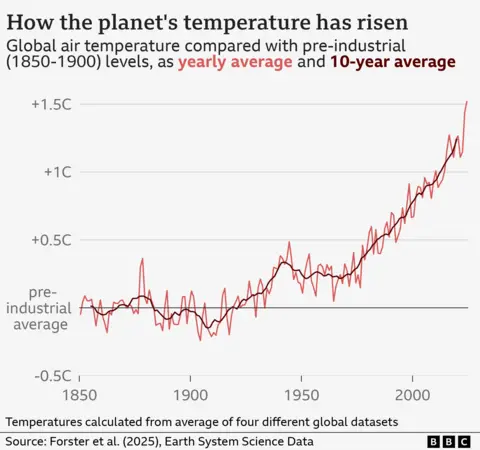
The urgency of this accountability is underscored by grim scientific realities. UN Secretary-General António Guterres has acknowledged that the 1.5°C target set in Paris will be breached, describing this as "deadly negligence" on the part of the world community. Last year, 2023, was the hottest ever recorded, with global average air temperatures more than 1.5°C above pre-industrial levels for the first time. While a single 12-month period isn’t considered a permanent breach of the Paris Agreement (which refers to long-term average warming), the 10-year average from 2015-2024 already stands at 1.24°C above pre-industrial levels, indicating a clear trajectory. A group of 60 leading climate scientists warned in June that the Earth could breach 1.5°C in as little as three years at current rates of carbon dioxide emissions, intensifying the debate over the need for annual gatherings.
Michael Liebreich, founder of energy consultancy Bloomberg New Energy Finance and host of the "Cleaning Up" podcast, questions the current format. "I think we need one big COP every five years. And between that, I’m not sure what COP is for," he states. He argues that it’s unrealistic to expect politicians to continually make more and more commitments without allowing time for industries to develop and for the "real economy to catch up." Liebreich advocates for smaller, more focused meetings dedicated to removing specific barriers to clean energy implementation. He also suggests that critical discussions around funding and investment should occur in more relevant venues, such as Wall Street, "where people can actually fund stuff," rather than in remote locations like the edge of the Brazilian rainforest.
Yet, despite the criticisms and declining leadership attendance, many argue for the continued necessity of the COP process. This year’s COP, for instance, aims to secure agreement for a multi-billion-dollar fund to support the world’s vital rainforests, including the Amazon and the Congo Basin – a concrete, tangible outcome. Michael Jacobs, who advised Gordon Brown on climate policy and is now a politics professor at Sheffield University, believes that sustained collective support for the process is crucial. "It’s a big political message, because Donald Trump is trying to undermine the collective process, but it’s also a message to businesses that they should continue to invest in decarbonisation because governments will continue to enact climate policies."
The UK’s Energy Secretary, Ed Miliband, also staunchly defends these meetings, acknowledging their often arduous nature – "It’s dry, it’s complicated, it’s anguished, it’s tiring," he says – but insists they are "absolutely necessary." He believes COPs have delivered real progress by compelling countries to engage with climate change and enact policies that have catalyzed the renewable energy revolution.
Ultimately, while many now accept there is a strong argument for scaling down these international gatherings or reforming their structure, the underlying choice for so many nations in attendance remains stark: to what extent will they align with a China-led clean energy revolution, or will they double down on a fossil-fuels-first agenda, as championed by the US? This fundamental divergence, observers say, means that the process of decarbonization in the coming years will be less about the grand, multi-country commitments that defined COPs of the past, and far more about bilateral, big-money deals struck between individual nations. This is the new reality that will likely shape the outcomes of this year’s summit and the future trajectory of global climate action.




 Roy Suryo

 Nakalama John
 atisusanti
 Ramos Leo