
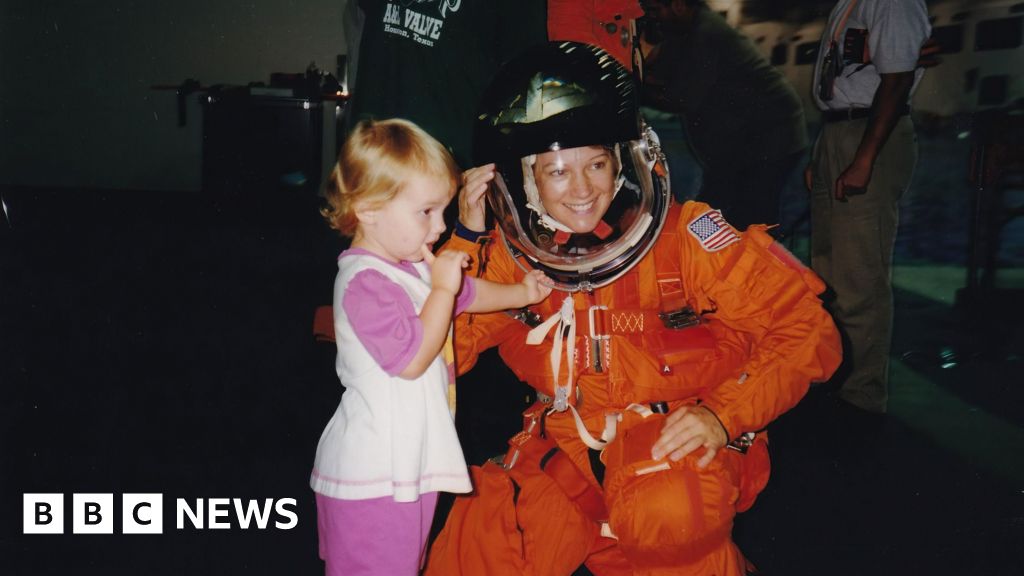
 Nana Banana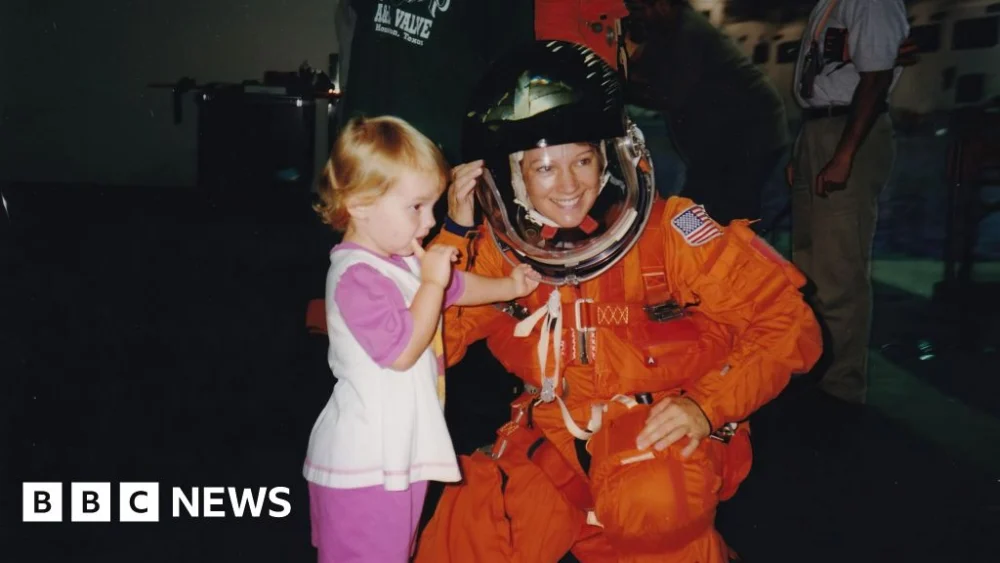
She’s the astronaut who not only smashed through the glass ceiling but kept on soaring, pushing the boundaries of human achievement and leadership. Eileen Collins, whose name deserves to be synonymous with pioneering spirit and steely resolve, made history as the first woman to pilot and command a Nasa spacecraft. Yet, despite her remarkable, transformative achievements, her story has, for too long, remained outside the mainstream spotlight. Now, a compelling feature-length documentary titled Spacewoman is poised to change that, chronicling her trailblazing career and bringing her extraordinary journey to a wider audience.
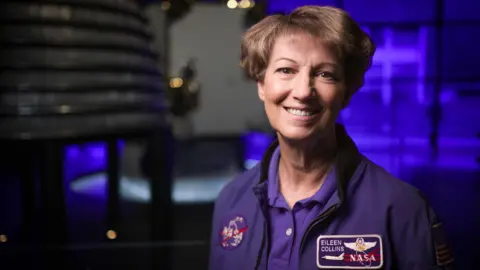
Meeting Collins at London’s iconic Science Museum, one is immediately struck by her unassuming demeanor. She is softly spoken, warm, and refreshingly down to earth, a stark contrast to the colossal feats she has accomplished. However, beneath this gentle exterior lies an undeniable sense of focus and determination, an inner steel forged through years of rigorous training and high-stakes missions. Her eyes, thoughtful and alert, betray the keen intellect and unwavering courage that propelled her to the pinnacle of space exploration.
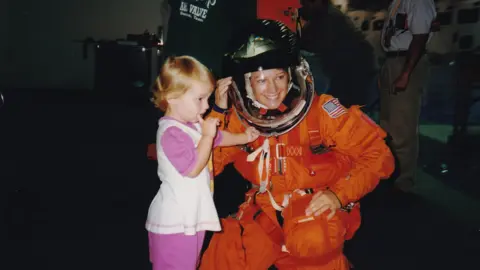
Her journey began remarkably early, sparked by a childhood fascination with the cosmos. "I was reading a magazine article on the Gemini astronauts. I was probably nine years old, and I thought that’s the coolest thing. That’s what I want to do," she recalls, a faint smile playing on her lips as she revisits that pivotal moment. In the early 1960s, the concept of a woman astronaut was almost unheard of, a notion confined to the realm of science fiction rather than scientific reality. The Mercury 13 women, though highly qualified, had been denied the opportunity to fly, reflecting the prevailing societal norms. Yet, even as a young girl, Collins possessed an unshakeable conviction. "Of course, there were no women astronauts back then. But I just thought, I’ll be a lady astronaut." It was a declaration of intent that would shape the entire trajectory of her life.
That little girl, however, didn’t just dream of being an astronaut; she set her sights even higher. She envisioned herself at the controls of a spacecraft, guiding humanity through the vastness of space. To achieve this audacious goal, Collins understood there was only one path: she had to join the military and become a test pilot, a profession then almost exclusively dominated by men. She enrolled in the U.S. Air Force, embarking on a demanding career that tested her limits. She flew T-38 Talon trainers, KC-135 Stratotankers, and eventually the C-141 Starlifter transport aircraft, accumulating thousands of hours in the cockpit. In an environment where she was often the only woman, Collins didn’t just fit in; she excelled, earning a reputation for exceptional skill, composure under pressure, and meticulous attention to detail. Her extraordinary performance and unwavering dedication ultimately led to her selection for the astronaut programme in 1990, a monumental step that brought her closer to her childhood dream. She was poised to fly the Space Shuttles, Nasa’s groundbreaking reusable "space planes," vehicles that represented the cutting edge of aerospace engineering.
Her first mission, STS-63 aboard the Space Shuttle Discovery in 1995, was a moment of profound historical significance. As the first woman to pilot a Space Shuttle, Collins carried not just the weight of the spacecraft, but the expectations of an entire generation. She was acutely aware that the eyes of the world, and particularly those of aspiring young women, were fixed upon her. "As the first woman to pilot the Space Shuttle, I worked very hard at that because I didn’t want people to say, ‘Oh look, the woman has made a mistake.’ Because it wasn’t just about me, it was about the women to follow me," she explains, her voice reflecting the immense responsibility she felt. "And I wanted there to be a reputation for women pilots that was: ‘Hey, they’re really good’." Her performance on STS-63, which included a rendezvous with the Russian Mir space station, was flawless, demonstrating an unparalleled command of the complex spacecraft and setting an indisputably high standard for those who would follow.
Her exceptional capabilities soon led to another groundbreaking promotion. In 1999, Collins was named commander of the Space Shuttle Columbia’s STS-93 mission, making her the first woman in history to command a U.S. spacecraft. This achievement wasn’t merely a personal triumph; it was a powerful symbol of progress, shattering another significant barrier in the historically male-dominated field of space exploration. The mission itself was critical, deploying the Chandra X-ray Observatory, a powerful telescope designed to study black holes, quasars, and high-energy phenomena in the universe.
Beyond her professional achievements, Collins was also a parent to two young children, a fact that frequently surfaced in press conferences and media interviews of the era. Journalists, often with a hint of astonishment, questioned how she could possibly balance such a demanding, high-stakes career with the responsibilities of motherhood. Collins, however, met these inquiries with characteristic candor and humor. She unequivocally declared that being a mum and a commander were "the two best jobs in the world." Then, with a knowing laugh, she offered a profound insight: "But I’m going to tell you it is harder to be a parent than to be a space shuttle commander. The best training I ever had for being a commander was being a parent – because you have to learn how to say no to people." She elaborated that both roles demanded decisiveness, the ability to manage complex situations, and the skill to prioritize effectively, often under pressure. Managing the schedules and demands of a crew, she quipped, was remarkably similar to negotiating with a strong-willed toddler. Her ability to navigate both roles with grace and competence further cemented her status as an inspiration, demonstrating that groundbreaking professional success and a fulfilling family life were not mutually exclusive.
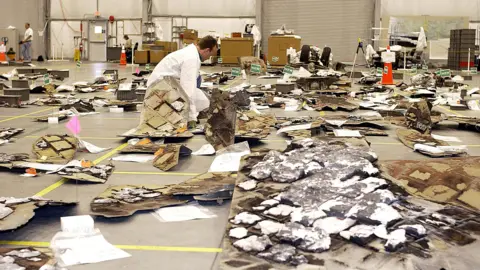
Nasa’s Space Shuttle program, while responsible for breathtaking highs in scientific discovery and engineering prowess, also endured some truly terrible lows. The inherent risks of spaceflight were tragically underscored in 1986 with the Challenger disaster, which saw the spacecraft break apart just 73 seconds after launch, claiming the lives of all seven crew members. The memory of that catastrophic failure lingered over every subsequent mission. Then, in 2003, the unthinkable happened again. The Space Shuttle Columbia, on its return journey, broke up in the skies over Texas, killing its entire crew of seven. A piece of insulating foam from the external fuel tank had broken loose during launch, striking and damaging the shuttle’s wing, critically compromising its heat shield. Columbia was unable to withstand the fiery re-entry into Earth’s atmosphere, disintegrating as the world watched in horror. Collins visibly shakes her head at the painful memory, her composure momentarily faltering as she recalls the loss of friends and colleagues, the raw grief that permeated the entire NASA community.
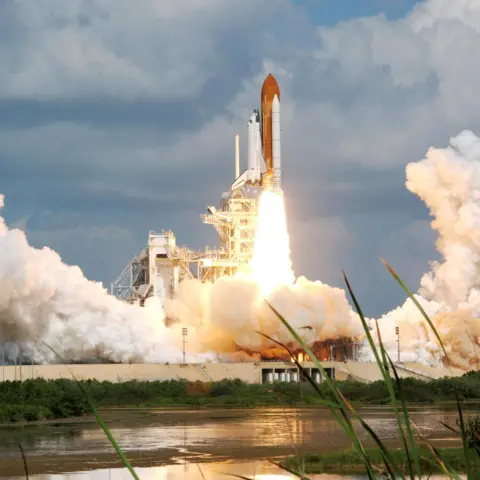
In the aftermath of the Columbia disaster, a monumental investigation was launched, leading to a temporary grounding of the entire Space Shuttle fleet. The future of human spaceflight seemed uncertain, shrouded in doubt and sorrow. It was in this somber, challenging atmosphere that Collins, with her unparalleled experience and leadership, was called upon to pick up the mantle. She was chosen to command STS-114, the "Return to Flight" mission, the first shuttle launch after the Columbia tragedy. The weight of expectation, the immense pressure to ensure the safety of her crew and restore confidence in the program, was almost unimaginable.
Did she ever consider quitting at that point, given the fresh memory of such profound loss? "People throughout the shuttle programme were counting on the commander to stick with it," she says quietly, her voice tinged with the gravity of that period. "I think quitting the mission would have been the opposite of brave… and I wanted to be a brave leader. I wanted to be a confident leader. I wanted to instill that confidence in other people." Her resolve was unwavering. She dedicated herself to the meticulous review of safety protocols, the implementation of new inspection techniques, and the exhaustive training required for such a critical mission. Her leadership was not just about technical expertise; it was about psychological fortitude, rebuilding morale, and instilling trust in a shaken organization.
When her mission finally took to the skies in July 2005, the nightmare scenario, eerily similar to Columbia, recurred. During launch, a chunk of foam again broke away from the external tank. While the damage was not immediately catastrophic, the potential for disaster loomed large. This time, however, a critical plan was in place, a direct consequence of the Columbia investigation. It meant undertaking one of the riskiest maneuvers in the history of spaceflight: a full 360-degree flip of the massive Space Shuttle while in orbit.
Collins had to pilot the 100-ton shuttle through this unprecedented rotation while flying beneath the International Space Station (ISS). The maneuver would allow her colleagues on the orbiting lab, equipped with high-resolution cameras, to photograph the craft’s underside and meticulously check if the heatshield had been breached. The engineering community at NASA was divided. "There were engineers and managers saying it couldn’t be done, all these reasons why it was too dangerous," she recounts, recalling the intense debates. The maneuver was technically challenging, requiring extreme precision and potentially exposing the shuttle to thermal stresses. Yet, Collins, after listening to all arguments and assessing the risks, made her decision. "I listened to the discussion, they knew I was the commander, and I said: ‘It sounds like we can do it’."
With her hands steady at the controls, her voice calm and authoritative as she communicated with Mission Control, Collins piloted the Space Shuttle Discovery through a slow, graceful somersault. It was a ballet in orbit, a testament to her extraordinary piloting skills and nerves of steel. The maneuver was executed perfectly. With the shuttle’s underside now fully visible, the damage from the foam strike was quickly spotted and analyzed. While not critical, it confirmed the need for vigilance. The successful inspection paved the way for a spacewalk, during which astronauts performed vital repairs and tests, ensuring the integrity of the heat shield. It meant Collins and her crew would make it safely home, marking a triumphant return to flight for the shuttle program and restoring crucial confidence in Nasa’s ability to operate safely in space.
STS-114 was Collins’s fourth and final flight. She tells us that she always planned to stop after her fourth mission, driven by a desire to give other deserving astronauts a chance to experience the profound journey of space travel. Since her retirement in 2006, she has watched plenty of astronauts, including more women, follow in her footsteps, continuing the legacy she helped to build. Does she have any advice for the next generation dreaming of the stars? Her answer is as practical as it is inspiring: "Do your homework, listen to your teacher, pay attention in class and read books, and that will give you something to focus on." It’s a matter-of-fact formula for success, emphasizing diligence and foundational learning as the launchpad for grand ambitions.
Those who follow Collins to space will undoubtedly learn just how much she achieved, not only as a woman breaking through formidable barriers, but as a formidable pilot and commander whose leadership, skill, and courage were instrumental in one of Nasa’s most challenging periods. She says she has no regrets about bringing her astronaut career to an end. She made her decision and, true to her nature, didn’t look back. Yet, there’s still a wistful look in her eye, a flicker of that childhood dream, when we ask if she’d be tempted if a seat on a spacecraft became free. "Yes, I would love to go on a mission someday. When I’m an old lady, maybe I’ll get a chance to go back in space." It’s a subtle reminder that even for a trailblazer who has reached the stars, the allure of the cosmos remains eternal.
Spacewoman is in selected cinemas now, offering a long-overdue tribute to one of humanity’s most remarkable explorers.


 Roy Suryo

 Nakalama John
 atisusanti
 Ramos Leo
