Nana Banana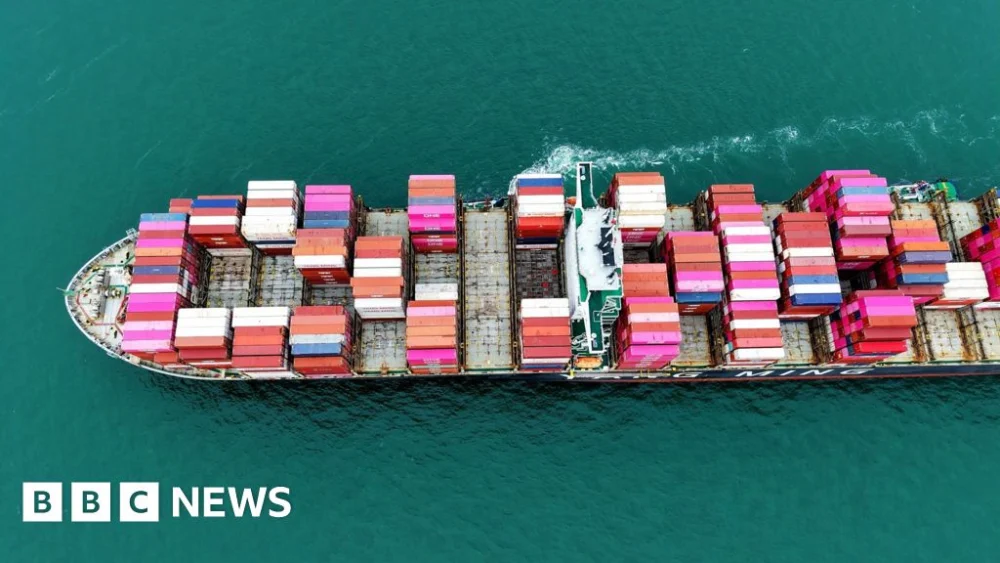
A pivotal agreement designed to drastically cut global shipping emissions has collapsed, following intense diplomatic pressure and successful lobbying efforts primarily led by Saudi Arabia and the United States. The deal, which had been years in the making and was initially agreed upon in April, aimed to establish international mandates for emission reductions within the shipping industry, marking a historic precedent as the first global sector to adopt such comprehensive climate targets. Over 100 nations had convened in London for the International Maritime Organization (IMO) meeting, poised to give final approval to the groundbreaking framework.
However, the path to decarbonizing one of the world’s most challenging sectors was abruptly halted by fierce opposition from the administration of US President Donald Trump. President Trump had consistently branded the proposed climate initiative as a "green scam," aligning with his broader political narrative that often dismisses environmental regulations as economically detrimental. Representatives of his administration took an aggressive stance, reportedly threatening countries with punitive tariffs if they dared to vote in favor of the deal. This blatant exercise of economic leverage sent shockwaves through the diplomatic community, raising concerns about the integrity of multilateral environmental negotiations.
Following the dramatic conclusion of the talks, US Secretary of State Marco Rubio publicly hailed the outcome as a "huge win" for President Trump, underscoring the political victory for an administration that has often prioritized economic growth and deregulation over international climate commitments. This celebratory tone, however, stood in stark contrast to the deep disappointment and alarm expressed by many international delegates and environmental advocates.
Reflecting the immense pressure exerted during the negotiations, Arsenio Dominguez, the Secretary General of the International Maritime Organization, issued an impassioned "plea" for such tactics not to be repeated. His statement highlighted the fragility of international cooperation and the potential for a powerful nation’s unilateral actions to derail collective efforts on pressing global issues like climate change. The credibility of the IMO, as the UN specialized agency responsible for the safety and security of shipping and the prevention of marine and atmospheric pollution by ships, was undeniably tested by the unprecedented intervention.
The dramatic climax unfolded on Friday, the day countries were expected to cast their votes for final approval. In a surprising move that stunned many, Saudi Arabia tabled a motion to adjourn the talks for a full year. This unexpected delay meant that the carefully constructed agreement, with its intricate timelines and regulatory milestones, could not be approved. The chairman of the meeting acknowledged that this adjournment would necessitate a complete revision of key timelines for the treaty, effectively pushing back any meaningful action by at least a year, if not more. The motion passed by a narrow margin, a testament to the intense lobbying and last-minute shifts in allegiances.
Hon. Ralph Regenvanu, the Minister for Climate Change for the Republic of Vanuatu, a small island developing state particularly vulnerable to the impacts of rising sea levels, voiced his profound disappointment and condemnation. He declared Saudi Arabia’s motion "unacceptable given the urgency we face in light of accelerating climate change." Minister Regenvanu further elaborated on the difficult position many nations were in: "We came to London in reluctant support of the IMO’s Net-Zero Framework. While it lacks the ambition that climate science demands, it does mark a significant step." His words underscored the compromise nature of the deal, which, despite its shortcomings, represented a crucial initial stride towards decarbonizing a sector that has historically been resistant to climate regulation. For nations on the front lines of climate change, even incremental progress is vital.
The shipping industry itself had largely been supportive of the deal, recognizing its long-term benefits. Thomas Kazakos, secretary-general of the International Chamber of Shipping (ICS), the principal international trade association for shipowners, expressed his industry’s disappointment. "We are disappointed that member states have not been able to agree a way forward at this meeting," he stated, adding, "Industry needs clarity to be able to make the investments." The sector had been seeking consistent global standards to avoid a patchwork of regional regulations, which could create competitive disadvantages and complicate operations. The lack of a clear regulatory framework now introduces significant uncertainty, potentially delaying crucial investments in cleaner fuels, innovative ship designs, and other decarbonization technologies.
The voting patterns revealed a complex geopolitical landscape. The UK and most EU nations voted to continue the talks, signaling their commitment to the deal. However, some EU members, notably Greece, went against the bloc and chose to abstain, highlighting internal divisions within the European Union regarding the economic implications of such regulations. The countries that ultimately voted in favor of adjourning the talks included Russia, Saudi Arabia, and the US, all of whom articulated concerns that the deal would inevitably lead to price rises for consumers, echoing the Trump administration’s primary objection.
Perhaps most revealing were the shifts in position among some key countries. China, a major shipping nation that had initially voted to support the deal in April, agreed to delay proceedings. This change of heart suggests a delicate balancing act between its own climate commitments and its economic relationship with the US. Similarly, the island state of the Bahamas, along with Antigua and Barbuda, which had also agreed to the deal in April, changed their positions – the Bahamas agreeing to delay, and Antigua and Barbuda abstaining. A delegate from the island states group, speaking to the BBC, revealed the intense pressure these nations faced, explaining that they "particularly rely on the US for trade and had been leaned on heavily by the Trump administration to change their position." This highlights the vulnerability of smaller economies to the economic might and diplomatic coercion of larger powers.
The deal, first hammered out in April after a painstaking decade of negotiations, was celebrated as historic. Its approval would have made shipping the world’s first industry with internationally mandated targets for reducing greenhouse gas emissions. The agreement stipulated that from 2028, ship owners would be required to use increasingly cleaner fuels or face significant fines. These fines were intended to create a powerful economic incentive for decarbonization and potentially fund further research and development into sustainable shipping technologies.
Shipping currently accounts for approximately 3% of global emissions, a figure that is projected to rise significantly in tandem with increasing global trade volumes, given that around 90% of all goods are transported via sea. Unlike other sectors, shipping has struggled to reduce its emissions, primarily due to the lack of cost-effective alternatives to heavy fuel oil. As Faig Abbasov, programme director for maritime transport at the think tank Transport and Environment, explained during earlier IMO negotiations: "There is no fuel as cheap as diesel that ships use today because when we take crude oil out of the ground, we take out all the nice bits, that’s the kerosene for aviation, diesel and petrol for cars." This inherent economic challenge means that without regulatory intervention, the International Maritime Organization itself had previously estimated that shipping emissions could skyrocket by anywhere between 10% and 150% by 2050, severely undermining global climate goals.
The meeting in London this week was intended to be the final step: to formally approve the deal and outline the detailed next steps for its implementation. However, since April, the US had become increasingly vocal and aggressive in its objections, reiterating concerns that the deal would inevitably lead to higher prices for American consumers. President Trump underscored this position with a post on Truth Social on Thursday night, stating: "The United States will NOT stand for this Global Green New Scam Tax on Shipping. We will not tolerate increased prices on American Consumers."
With the talks now delayed for at least a year, the meticulously planned timeline to get the necessary regulations in place for the 2028 implementation deadline appears increasingly unfeasible. Bláithín Sheeran, an observer to the talks and policy officer at the environmental NGO Opportunity Green, warned of the severe consequences: "A delay in action may require changes to the text of agreement that undermine the planned timeline, and could revert years of work to date." This setback not only jeopardizes the immediate climate goals for the shipping sector but also sends a chilling message about the vulnerability of international climate agreements to political shifts and economic pressures, potentially hindering future efforts to tackle global emissions across other hard-to-abate industries. The abandonment of this landmark deal under such circumstances represents a significant blow to multilateral climate action and raises profound questions about the future of global cooperation on environmental challenges.




 Roy Suryo
 Nakalama John
 atisusanti
 Ramos Leo