
 Nana Banana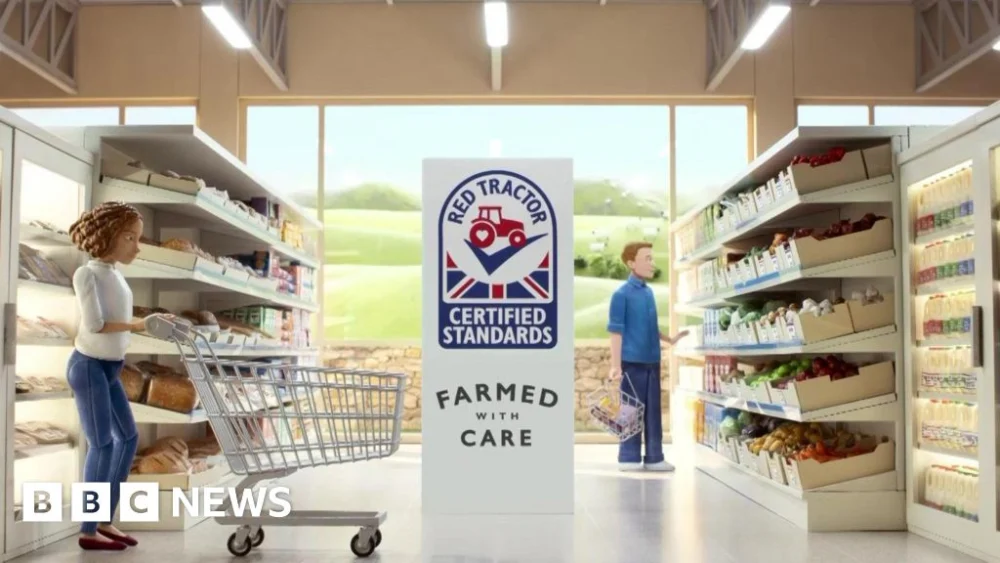
The UK’s largest food assurance scheme, Red Tractor, has faced a significant setback as its prominent television advertisement has been prohibited by the Advertising Standards Authority (ASA) for making exaggerated and unsubstantiated environmental claims. The ruling marks a victory for environmental campaigners and raises critical questions about the credibility of food certification labels and the marketing practices of major retailers.
The controversy stems from an ad first aired in 2021 and subsequently run for two years, which featured the slogan: "From field to store all our standards are met. When the Red Tractor’s there, your food’s farmed with care." While seemingly innocuous, the environmental group River Action argued that the ad implicitly conveyed a message of high environmental protection, thereby misleading consumers. The complaint, lodged in 2023, triggered an extensive investigation by the ASA, culminating in one of its longest-running probes.
Central to River Action’s complaint was a crucial piece of evidence: a 2020 report by the Environment Agency. This report critically assessed the environmental performance of Red Tractor certified farms over the preceding five years, concluding unequivocally that these farms were "not currently an indicator of good environmental performance." This finding directly contradicted the implicit assurances of environmental care that River Action believed the Red Tractor advert communicated to the public. The charity highlighted that for a scheme boasting widespread adoption across UK supermarkets and certifying 45,000 farms, any suggestion of environmental stewardship needed to be robustly supported by evidence.
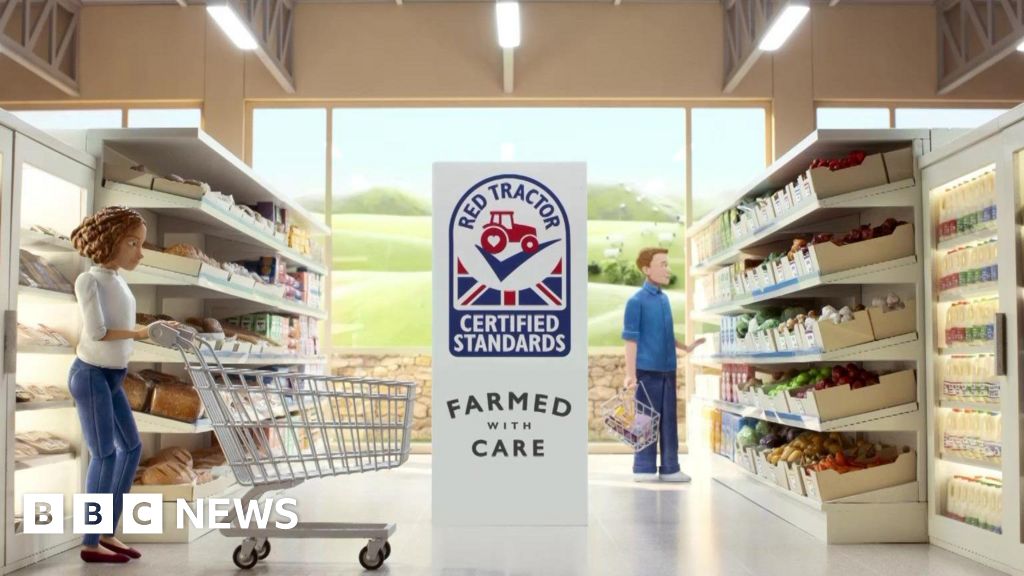
After over two years of scrutiny, the ASA upheld River Action’s complaint, issuing a decisive ruling against Red Tractor. The watchdog stated that Red Tractor had failed to provide "sufficient evidence" to demonstrate that its certified farms consistently met "basic" environmental laws or achieved positive environmental outcomes. Consequently, the ASA deemed the advert "misleading" and found that it "exaggerated" the environmental benefits of the scheme. This ruling means the advert cannot be shown again in its current form and must be updated to comply with advertising standards.
The verdict was warmly welcomed by River Action, which seized the opportunity to call for immediate action from supermarkets. Amy Fairman, head of campaigns at River Action, emphasized the broader implications of the ruling. "What this shows is that for their environmental credentials Red Tractor has been misleading the public and their suppliers," Fairman stated. "So, we’re looking for suppliers like supermarkets to really examine and take stock of what is on their shelves." She underscored the critical importance of challenging such deceptive advertising, particularly given the severe environmental risks posed by agricultural pollution. Agricultural runoff, containing slurry, pesticides, and fertilizers, is a major contributor to the degradation of the UK’s waterways. In 2022, the Environment Audit Committee highlighted that agriculture was a primary factor preventing 40% of the nation’s rivers from achieving good ecological health, painting a stark picture of the environmental challenges facing the sector. The ASA’s decision, therefore, is not just about an advert but about the integrity of environmental claims in a sector with significant ecological impact.
Red Tractor, however, has vehemently rejected the ASA’s findings, describing the decision as "fundamentally flawed." Jim Mosley, CEO of Red Tractor, expressed his organization’s dismay, arguing that the ad made no explicit environmental claims, either in its voiceover or imagery. "They believe that we have implied an environmental claim. Nowhere in the voiceover or the imagery is any environmental claim actually made," Mosley told the BBC. He contended that only a minority of viewers would interpret the advert as suggesting strong environmental standards for Red Tractor farms. Mosley reiterated that Red Tractor’s primary objectives are food safety, animal welfare, and traceability, with environmental standards playing a comparatively minor role.
In a candid admission that has drawn significant attention, Mosley conceded that Red Tractor does not verify whether its certified farms comply with environmental law. When directly asked if Red Tractor knows if its farms are meeting environmental regulations, he replied: "Correct." This admission reveals a fundamental disconnect between the public perception of a "farmed with care" label and the actual scope of Red Tractor’s oversight regarding environmental protection. While Red Tractor focuses on specific areas, consumers, and indeed some retailers, appear to interpret its certification as a broader endorsement of responsible farming, including environmental stewardship. This discrepancy forms the crux of the "greenwashing" accusation.
The ASA’s ruling puts significant pressure on UK supermarkets, many of which prominently display the Red Tractor logo and often promote its environmental credentials. For instance, just last month, marking Red Tractor’s 25th anniversary, Natalie Smith, Tesco’s head of agriculture, stated that "Red Tractor has established itself as a mark of quality, standing for… environmental protection." Similarly, Morrisons’ website explicitly declares that "100% of the fresh pork, beef, lamb, poultry, milk and cheddar cheese we sell in our stores comes from farms certified by Red Tractor, or an approved equivalent scheme, giving customers assurance… environmental protection." These statements directly link Red Tractor certification to environmental benefits, mirroring the implied claims in the now-banned advert.
When pressed for comment on the ASA’s ruling and their continued reliance on the Red Tractor logo, Morrisons did not respond. Tesco offered a somewhat circumspect reply, stating: "We recognise there is still more to do, and it’s essential that the Government and industry work together to drive change." They further referred inquiries to the British Retail Consortium (BRC), the industry body representing UK retailers. The BRC’s response highlighted the complex relationship, noting that "retailers remain committed to working with Red Tractor," while also acknowledging that the retailers themselves are "owners of the scheme." This dual role as both users and stakeholders in the Red Tractor scheme presents a potential conflict of interest and underscores the deep integration of Red Tractor into the UK’s food supply chain.
The ban on Red Tractor’s advert is a powerful reminder of the increasing scrutiny on environmental claims in advertising and the growing intolerance for "greenwashing." Regulatory bodies like the ASA are tightening their grip on companies that make vague or unsubstantiated eco-friendly assertions, pushing for greater transparency and verifiable data. For Red Tractor, this ruling necessitates a fundamental re-evaluation of its public messaging and potentially its operational scope. If it wishes to imply environmental benefits, it will need to implement and enforce robust environmental standards across its certified farms and provide concrete evidence of compliance and positive outcomes.
The wider implications extend to consumer trust in food labeling. In an era of heightened environmental awareness, consumers increasingly look to certifications and labels to guide their purchasing decisions towards more sustainable options. If these labels are found to be misleading, it erodes public confidence not only in the specific scheme but in the entire system of food assurance. This could lead to greater skepticism and a demand for more rigorous, independent verification of environmental claims across the food industry.

Ultimately, the ASA’s decision serves as a pivotal moment, challenging the status quo in food certification and advertising. It underscores the urgent need for clearer definitions of "care" in farming, particularly concerning environmental protection. As the debate continues, all stakeholders – from certifiers and farmers to retailers and consumers – will be watching closely to see how the industry responds to the call for greater accountability and genuine environmental stewardship in the journey "from field to store."




 Roy Suryo

 Nakalama John
 atisusanti
 Ramos Leo
