Nakalama John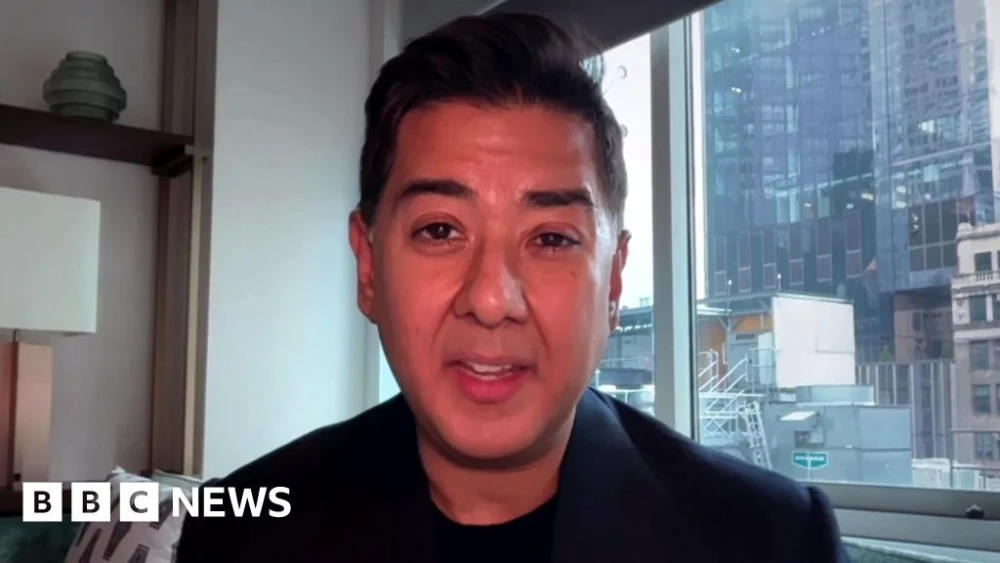
Imran Ahmed, a prominent figure in the fight against online hate and disinformation, found himself at the center of an escalating dispute that pits advocacy for online safety against claims of censorship and infringement on free expression. The CCDH, under Ahmed’s leadership, is known for its investigative work into the spread of hate speech, misinformation, and extremism across major social media platforms. Their reports often highlight the failures of these platforms to adequately moderate harmful content, leading to significant scrutiny from both the public and policymakers.
The original decision to deny Ahmed his visa, and subsequently threaten his status as a permanent resident, was met with strong condemnation from various quarters, including European leaders who staunchly defended the crucial work of organizations monitoring online content. For Ahmed, the implications of detention and potential deportation were deeply personal, as he warned that such a move would forcibly separate him from his American wife and young child, severing his established life in the United States. Praising Judge Broderick’s swift decision, Ahmed expressed his resolve to the BBC, stating unequivocally that he would not be "bullied" into abandoning his critical work.
The controversy was amplified by comments from figures like Secretary of State Marco Rubio, who publicly stated that the individuals targeted were blocked over concerns that they had organized efforts to pressure US platforms to censor and "punish American viewpoints they oppose." This rhetoric aligns with a broader narrative, popular among some conservative circles, that views content moderation efforts as an attack on free speech and an attempt to silence dissenting political voices. Ahmed, however, maintains that his organization’s work is non-partisan and focuses solely on the verifiable harm caused by specific types of online content, such as hate speech and disinformation, irrespective of political affiliation.
Ahmed’s legal complaint, filed on Wednesday, specifically named officials including Rubio and US Attorney General Pamela Bondi, challenging the decision to sanction him by revoking his visa. The court documents, reviewed by the BBC, reveal Judge Broderick’s decision to grant Ahmed’s request for a temporary restraining order (TRO). This order not only blocks his immediate detention but also temporarily prevents officials from taking any action to detain him without first providing an opportunity for his case to be fully heard in court. This ensures due process, allowing Ahmed to present his arguments against the visa revocation and the underlying accusations. The BBC reached out to both the state department and the White House for comment on the judge’s ruling, highlighting the high-profile nature of the case.
In a response provided to AFP news agency, a state department spokesperson reiterated a standard legal position, stating, "The Supreme Court and Congress have repeatedly made clear: the United States is under no obligation to allow foreign aliens to come to our country or reside here." While legally accurate in a general sense, this statement does not fully address the specific circumstances of Imran Ahmed, who holds a green card as a lawful permanent resident, granting him significant rights and protections under US law that differ from those of a mere visitor or undocumented immigrant. The legal challenge, therefore, hinges on whether the government’s actions against a permanent resident were lawful and justified, particularly when tied to his advocacy work.
Ahmed’s commitment to his mission remains unwavering. "I will not be bullied away from my life’s work of fighting to keep children safe from social media’s harm and stopping antisemitism online," he declared. This statement underscores the deeply moral and public safety dimensions of his advocacy, framing his efforts not as censorship but as a defense against tangible societal harms. His lawyer, Roberta Kaplan, a highly respected legal professional, emphasized the significance of the judge’s swift decision. "The federal government can’t deport a green card holder like Imran Ahmed, with a wife and young child who are American, simply because it doesn’t like what he has to say," Kaplan asserted. Her remarks highlight the principle that the government cannot use immigration law as a tool to silence critics or suppress speech, especially when the individual is a lawful permanent resident with deep ties to the country.
This is not the first time Ahmed and the CCDH have faced legal challenges from powerful entities. In 2023, Elon Musk’s social media company, X (formerly Twitter), sued Ahmed’s center after it published reports detailing a significant rise in hate speech on the platform following Musk’s acquisition. The lawsuit, widely seen as an attempt to silence critical research, was ultimately dismissed by a court, which found that Musk’s company was trying to impinge on CCDH’s First Amendment rights to free speech by using legal means to stifle their accountability work. While that case was dismissed, an appeal remains pending, illustrating the ongoing tension between tech platforms and organizations that hold them accountable.
Speaking to the BBC News Channel on Friday evening, Ahmed reflected on the recent events, describing the past few days as "rather confusing." He clarified that the Center for Countering Digital Hate has a history of working "with administrations both Republican and Democrat," suggesting that the current targeting feels out of step with the organization’s non-partisan approach to digital harm. Ahmed believes he is being targeted because the powerful organizations and platforms his group researches "do not like being called out." He further speculated that the current situation "does seem to be… perhaps even an error, goaded on by some of the tech companies, the social media platforms, the AI platforms that the Center for Countering Digital Hate studies and holds accountable." This perspective suggests a broader struggle where industry giants may be leveraging political influence to neutralize critics who expose their shortcomings in content moderation.
The judge’s temporary restraining order provides Ahmed with immediate relief and the crucial opportunity to present his case. The legal proceedings are expected to delve into the government’s rationale for revoking his visa and whether such actions constitute an abuse of power or a violation of his rights as a permanent resident. This case has significant implications for the future of digital advocacy, free speech, and the rights of lawful permanent residents in the United States, especially those whose work involves critiquing powerful corporate or political entities. It underscores the global debate about who controls online discourse and the mechanisms for holding powerful platforms accountable for the content they host. As the legal battle unfolds, it will continue to draw attention to the delicate balance between national security, immigration policy, and the fundamental right to freedom of expression.



 Roy Suryo
 atisusanti
 Ramos Leo