
 atisusanti
In a dramatic standoff with the US Department of Defense (DoD), artificial intelligence company Anthropic has firmly rejected demands to relax its safety protocols, with CEO Dario Amodei declaring the firm would rather cease all work with the Pentagon than compromise on ethical AI deployment. The assertion comes after a high-stakes meeting between Amodei and Secretary of Defense Pete Hegseth, which reportedly concluded with a veiled threat to remove Anthropic from the DoD’s supply chain if the company refused to agree to "any lawful use" of its advanced AI tools.
"These threats do not change our position: we cannot in good conscience accede to their request," Amodei stated unequivocally on Thursday, underscoring the gravity of the situation. The core of the dispute lies in Anthropic’s deep-seated concerns over the potential misuse of its powerful AI, particularly its flagship model Claude, for "mass domestic surveillance" and the development of "fully autonomous weapons." These specific applications, Amodei emphasized, have never been part of Anthropic’s contractual agreements with the DoD, historically referred to as the Department of War under an executive order signed by former President Donald Trump.
Anthropic’s stance is resolute: the company will not permit its technology to be weaponized for mass surveillance of American citizens or integrated into lethal autonomous weapon systems (LAWS). Amodei articulated this position in a company blog post, explaining that while Anthropic fully supports the use of AI for lawful foreign intelligence and counterintelligence operations, deploying these systems for domestic surveillance would directly contravene fundamental democratic values. The ability of AI to "assemble scattered, individually innocuous data into a comprehensive picture of any person’s life – automatically and at massive scale" is a capability Anthropic believes is incompatible with a free society.
The debate over autonomous weapons is equally fraught for Anthropic. Amodei asserted that even the most sophisticated AI systems currently available are "simply not reliable enough to power fully autonomous weapons." He stressed that the company would "not knowingly provide a product that puts America’s warfighters and civilians at risk." The critical judgment exercised by highly trained human soldiers, he argued, cannot be replicated by current AI without rigorous oversight and robust guardrails, which are conspicuously absent. Anthropic has even offered to collaborate with the Department of War on research and development to enhance the reliability of these systems, an offer that has reportedly been rebuffed.
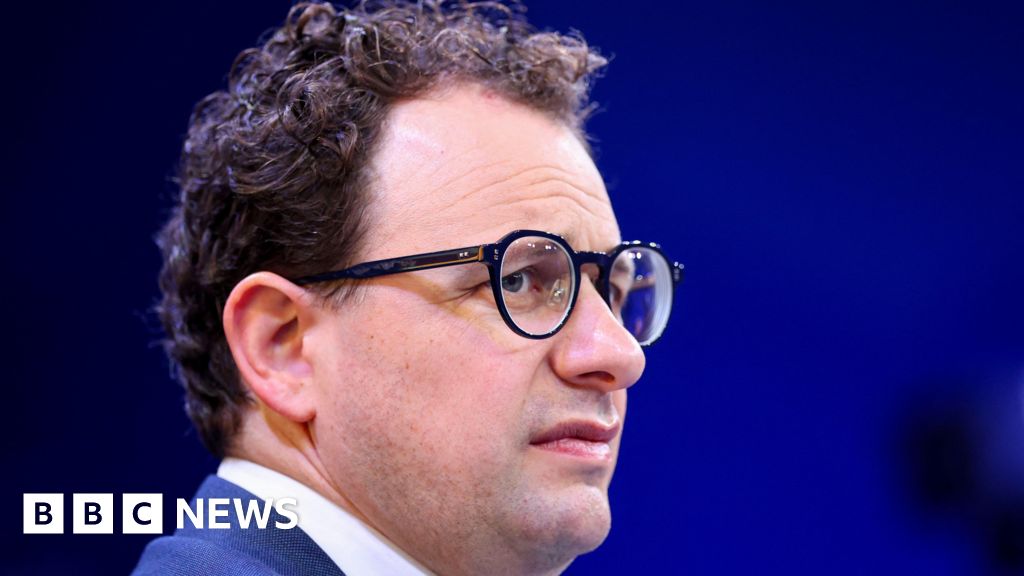
The DoD’s pushback has been forceful. A representative for the Defense Department remained unavailable for comment, but earlier statements and actions paint a clear picture of their objective. Emil Michael, the US Undersecretary for Defense, launched a personal attack on Amodei via the social media platform X, accusing the Anthropic CEO of attempting to "personally control the US Military" and of being willing to "put our nation’s safety at risk." In an interview with CBS News, Michael reiterated the Pentagon’s perspective, stating, "At some level, you have to trust your military to do the right thing." He further contended that the very uses of AI that Anthropic fears are already prohibited by existing law and Pentagon policies. When questioned about the DoD’s reluctance to accommodate Anthropic’s contractual demands, Michael cited the geopolitical imperative: "We do have to be prepared for what China is doing."
This escalating conflict has its roots in a complex history of negotiations. A Pentagon official previously indicated to the BBC that if Anthropic remained unyielding, Secretary Hegseth was prepared to invoke the Defense Production Act. This act grants the US president the authority to compel companies deemed critical to national defense to meet government needs. Additionally, Hegseth threatened to designate Anthropic as a "supply chain risk," effectively labeling the company as insecure for government use. However, a former DoD official, speaking on condition of anonymity, described the grounds for either measure as "extremely flimsy."
Sources familiar with the negotiations, also requesting anonymity, revealed that the tensions between Anthropic and the Pentagon have been simmering for several months, predating public knowledge of Claude’s alleged involvement in a US operation to apprehend Venezuelan President Nicolás Maduro. This clandestine operation, if true, would add another layer of complexity to the ethical considerations surrounding AI deployment in sensitive military contexts.
The DoD’s proposed contract language, intended as a compromise, was received by Anthropic on Wednesday night. However, an Anthropic spokeswoman described it as representing "virtually no progress on preventing Claude’s use for mass surveillance of Americans or in fully autonomous weapons." She further criticized the language as containing "legalese that would allow those safeguards to be disregarded at will," suggesting that despite public pronouncements, the core issues have remained unaddressed for months.
The situation highlights a profound philosophical and ethical chasm between a cutting-edge AI developer prioritizing safety and democratic values and a defense establishment focused on maintaining a technological edge in a competitive global landscape. The DoD’s insistence on broad, unrestricted access to AI capabilities, even at the potential cost of civil liberties or ethical boundaries, stands in stark contrast to Anthropic’s commitment to responsible AI development and deployment. As the standoff continues, the implications for the future of AI in national security and the balance between innovation and ethical governance are significant, with the possibility of Anthropic’s exclusion from critical defense projects looming large. The Pentagon’s stated need to counter adversaries like China appears to be driving a more aggressive approach to AI procurement, potentially at the expense of the safeguards that companies like Anthropic deem essential for a secure and democratic future.





 Nana Banana
 George Anjay
 Ramos Leo
 Nakalama John