atisusanti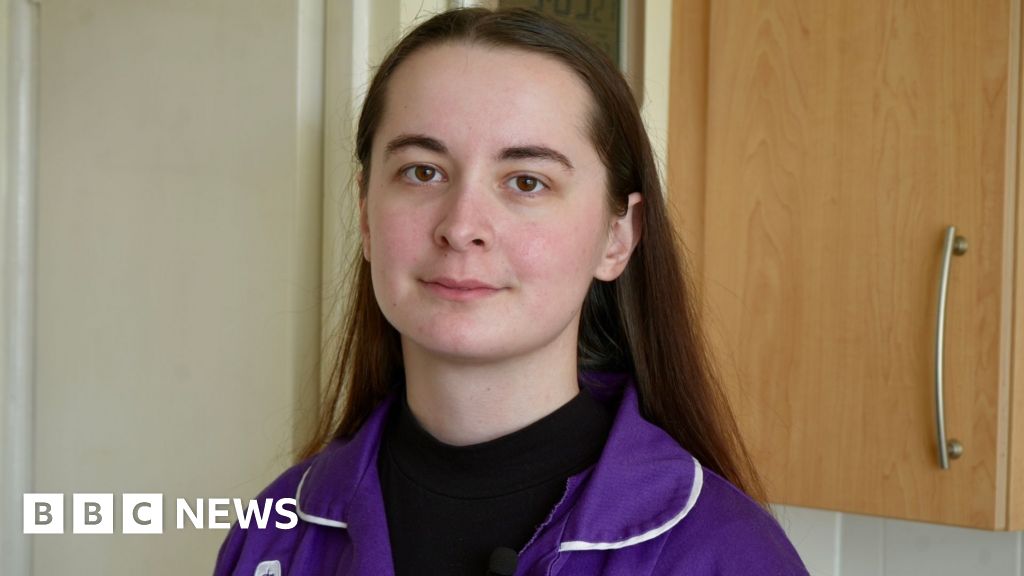
Just half an hour after she applied for a care job, Mollie Cole-Wilkin’s phone rang. Sitting at home, she answered it, expecting a human voice. Instead, she was greeted by "Ami," an AI-powered telephone interviewer developed by the homecare company Cera. "It didn’t sound like AI at all," Cole-Wilkin recalls. "My mum was in the other room. We thought it was just another person. We just couldn’t believe it." The five-minute call concluded with Cole-Wilkin, from Long Stratton, Norfolk, being informed she had passed the screening and was offered an appointment for a one-to-one interview with a human recruiter. She subsequently secured the job.
This sophisticated AI system has already screened 14,600 applicants, successfully recruiting 1,028 carers. Cera, one of England’s largest homecare providers, facilitating 2.5 million visits monthly, states its AI system significantly accelerates hiring in a sector grappling with escalating demand. Projections indicate that the adult social care system will require nearly 440,000 additional care workers by 2035. Ami conducts initial interviews using a standardized script, scoring applicants out of 100 based on their perceived attitude and experience.
Cole-Wilkin, 23, had previously left a role in a GP’s surgery due to a challenging experience and transitioned into administration. However, she found herself missing the satisfaction of "being physically helpful for other people" and "making people smile." When she re-entered the job market for care roles, the AI interaction proved unexpectedly encouraging. As someone who occasionally stammers, she found the AI less intimidating than a human interviewer. "It was nice to know that I wasn’t going to be judged… I get very anxious, especially face to face," she explained. "It did give responses like ‘I’m happy you shared that with me’ and it was quite a rewarding conversation."
Cera reports that since Ami’s launch in August 2025, the time from application to the first interview has been halved, and job offers have doubled for the same recruitment expenditure. The company emphasizes that standardized questions reduce bias, offering candidates like Mollie, who experience stress during traditional interviews, a fairer opportunity. The system is designed to adhere to Care Quality Commission standards.
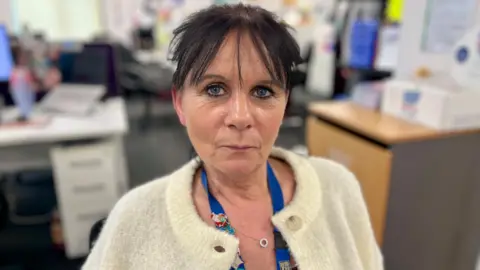
However, not all industry professionals are convinced. Critics argue that algorithms are incapable of discerning the subtle, human nuances crucial in caregiving roles. Janet Beacham, director of Swift Care Solutions in Colchester and a former nurse with over 45 years of experience in healthcare, firmly believes that only a human can accurately assess genuine empathy. "If they haven’t got care in their heart then they’re not going to be a good carer… They’ve got to have the right personality and have the right skills," she asserts. For Beacham, human intuition remains paramount. "The first screening should be a review of the CV and then an initial telephone conversation, but actually a person-to-person one," she insists. She reasons that care workers enter clients’ homes as guests, and only a person can gauge whether an individual is truly suited for such a sensitive position.
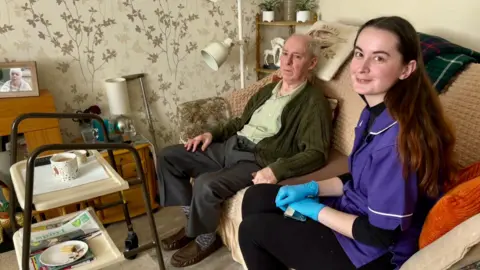
Despite these reservations, Lucy Kruyer, branch manager at Cera’s Colchester office, views the AI technology as indispensable. She argues that accelerating the recruitment process is vital for alleviating hospital discharge delays. "People don’t want to be laying in a hospital waiting for care because they can’t come home without the care," she states. Human recruiters still conduct essential background checks and lead in-person training before any new staff member begins their duties.
Putting Ami to the Test

To understand the experience firsthand, reporter Nikki Fox decided to trial the Ami AI agent at Cera’s offices in Colchester. The AI engaged Fox by inquiring about her motivation for the role and verifying her experience, right-to-work status, and driving licence. When pressed about car insurance costs, Ami provided estimates, noting that some carers incur an additional annual cost of approximately £30 to £60. Questions regarding training yielded clear and direct answers.
To assess Ami’s ability to handle deviations from the standard script, Fox presented a hypothetical scenario. When asked about shift availability, Fox stated an inability to work Saturdays due to childcare responsibilities and Friday nights because of a personal preference for fish and chips. Ami responded with unwavering composure, acknowledging the importance of family traditions like fish and chips while reiterating the requirement for carers to work at least one weekend day. Fox then proposed Sundays as an alternative, which Ami accepted, confirming that Sundays were acceptable while Friday nights and Saturdays remained unavailable. Upon confirmation, Fox was informed she had passed the screening.
Large language models like Ami operate by identifying patterns and associations. In this context, these capabilities are sufficient to advance a candidate to the next stage of the recruitment process, where a human takes over. Cera receives an annual intake of 500,000 applications. The company contends that traditional recruitment methods often result in applicants waiting for days or even weeks, a timeframe during which many candidates disengage or accept other employment offers.
Dr. Ben Maruthappu, founder and chief executive of Cera, believes the company is expanding its workforce rather than diminishing it. "We’re using AI to recruit more people faster, not replace them… Recruitment and staffing remain major challenges for health and social care," he states. He highlights that Ami’s ability to contact multiple candidates simultaneously drastically cuts waiting times "from days to seconds," thereby freeing up human staff to focus on supervision, training, and ensuring the safety of care provision.
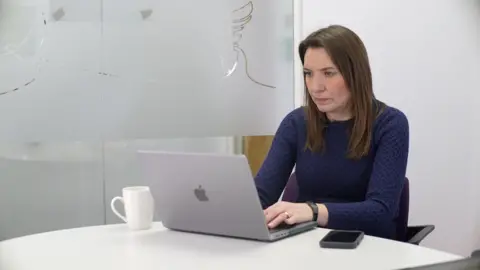
Cera also employs a separate AI tool to manage carer cover when staff are sick, a process that previously consumed hours of phone calls. Kruyer explains the logistical challenges: "I’ve got 177 carers out on the floor today so for me the phones are constantly ringing… We can’t be answering phones and trying to get cover at the same time… We know it’s working in the background, giving us a green light when we’ve got a carer that’s saying yes." Carers subsequently confirm their availability with human staff. Furthermore, Cera utilizes a preventative AI within its app to assist workers in logging client symptoms and identifying potential issues like urinary infections. This technology has also supported the government’s rollout of a predictive falls tool.
Dr. Maruthappu posits that the greater risk lies in stagnation. "The real question shouldn’t be whether we use AI – it should be how we use it to widen opportunity," he urges. Cera is now extending its recruitment agent technology to companies in other sectors, including dentistry. In March 2025, the government announced a "test and learn" approach to funding AI in the public sector to foster innovation, though a comprehensive legal framework for its application in care is still under development.

Gavin Edwards, head of social care at the trade union Unison, acknowledges the potential of technology to enhance staff efficiency and improve care quality. "With major workforce shortages across the social care sector, help in increasing capacity and easing workload pressures is welcome," he comments. However, he cautions, "AI can’t wash or clean anyone, issue medication or carry out the many complex tasks care workers do." He also advises against using AI for making individual care decisions, emphasizing these tasks are the domain of trained, skilled professionals. "There are also important considerations for recruitment. Any use of AI must be transparent, fair, and fully compliant with equality and employment laws."
A spokesperson for the Local Government Association suggests that technology can bolster care capacity when integrated with human support, but stresses that care is "fundamentally person-centred." They advocate for AI to be co-designed with service users and for a "human in the loop" to always oversee decisions, supported by robust safeguards. The Department of Health and Social Care has been approached for comment.




 George Anjay
 Nana Banana