
 Nana Banana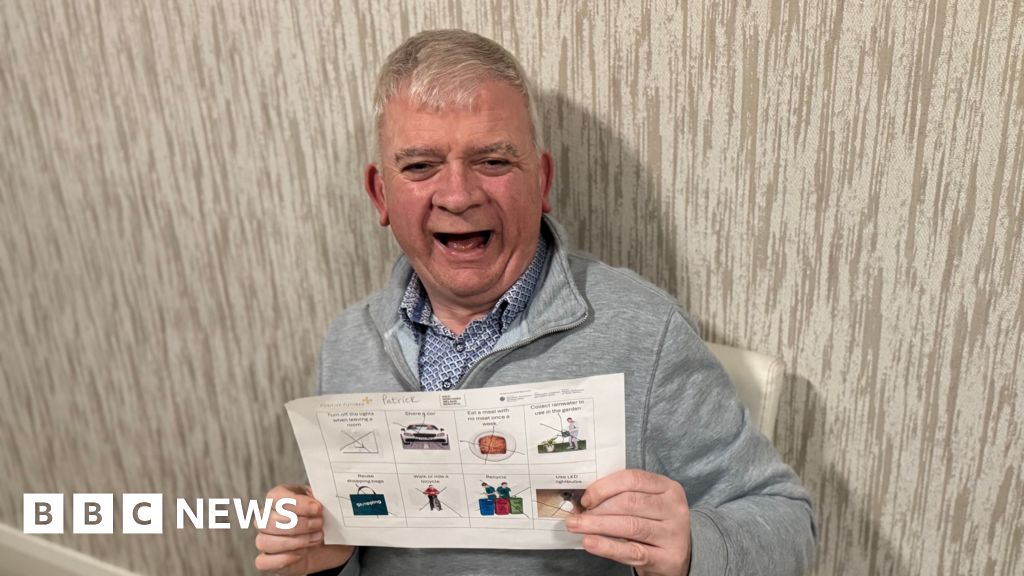
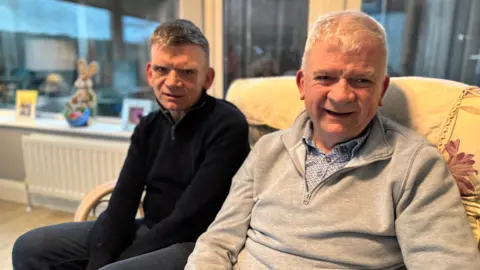
In a groundbreaking initiative challenging conventional approaches to environmental education, a pioneering climate change training course has been specifically designed for and delivered to people with learning disabilities, believed to be the first of its kind in the United Kingdom. This innovative program aims to empower individuals, often overlooked in mainstream discussions, to understand and actively contribute to tackling the global climate crisis. Its success is vividly demonstrated through the experiences of brothers Patrick and Michael McKinney, residents of supported accommodation in Newtownstewart, County Tyrone, Northern Ireland.
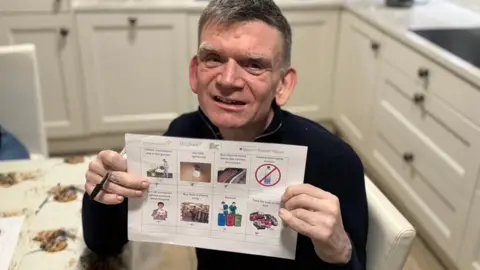
Traditional methods of conveying complex topics like climate change often fall short for those with diverse learning needs. However, this course has embraced creativity and accessibility, demonstrating that understanding is not a barrier but a matter of tailored communication. For instance, participants engage with the subject not through daunting statistics or abstract scientific jargon, but through engaging activities such as a unique form of "bingo." Instead of numbers, players match pictures representing various climate action ideas, transforming a potentially intimidating topic into an interactive and enjoyable learning experience. This visual and practical approach has proven highly effective in helping individuals like Patrick and Michael grasp how their everyday choices can collectively make a tangible difference.
The McKinney brothers, who live in supported accommodation provided by Sperrins Supported Living Services, eagerly completed the multi-week training program in 2025. Their enthusiasm and subsequent changes in daily habits underscore the course’s profound impact. Patrick, for example, has embraced the concept of circular economy by making conscious decisions to buy pre-loved clothes instead of new ones, reducing textile waste and his carbon footprint. Michael, who finds immense joy and purpose in gardening and cultivating flowers, has taken on the crucial role of collecting food waste for composting, enriching the soil for future blooms while diverting organic matter from landfills where it would otherwise produce harmful methane gas.
Their commitment extends beyond individual preferences to shared household responsibilities, showcasing a holistic understanding of sustainable living. Michael has become the designated "light monitor," diligently ensuring all lights are switched off when he and Patrick leave their home. Their household has also upgraded to a new hybrid electric car, a significant step towards reducing their transport emissions, and the brothers are actively involved in understanding its environmental benefits. Patrick takes pride in mowing the garden and carefully adds the grass cuttings to their compost heap, contributing to a healthy ecosystem right outside their door. Both brothers are meticulous in sorting household recycling, ensuring plastics, paper, and glass are correctly separated. Furthermore, they’ve adopted reusable water bottles for their regular visits to the gym, eliminating single-use plastic waste.
Reflecting on the experience, Patrick shared that the training was "all very good." He particularly enjoyed "talking about animals, walking and learning about things they could do differently in the house." This simple yet profound statement highlights the course’s ability to connect climate change to relatable, everyday experiences and the natural world, making the abstract concept of environmental impact personal and actionable. The emphasis on local wildlife and outdoor exploration, combined with practical tips for household sustainability, resonated deeply with the participants.
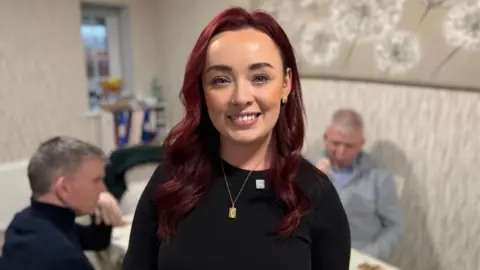
The inspiration for this groundbreaking program was deeply personal for Hanna Coney, a dedicated support worker at Sperrins Supported Living Services who works closely with the McKinney brothers. Becoming a mother last year profoundly shifted her perspective, prompting her to contemplate the kind of world her child would inherit. This maternal drive fueled her desire to find accessible ways to engage the people she supports with critical global issues. While she hoped the training would build the brothers’ confidence and independence, she admitted to being genuinely surprised by the depth of their engagement and commitment.
Hanna recognized the inherent challenge in discussing climate change. "The conversation of climate change can be quite a frightening topic," she noted, acknowledging the potential for anxiety and overwhelm. "But I suppose for us as support workers, it’s to make sure that we’re not fear mongering the people we support." The course’s success lies in its careful balance: informing without terrifying, empowering without imposing. It focuses on positive actions and achievable changes, fostering a sense of agency rather than helplessness. "And they’ve really taken off with it," she added, visibly proud of her clients’ enthusiastic adoption of new sustainable practices. Following the successful pilot, plans are in motion to roll out this vital training to other supported living services across Northern Ireland throughout 2026, promising a wider ripple effect of environmental awareness and action.
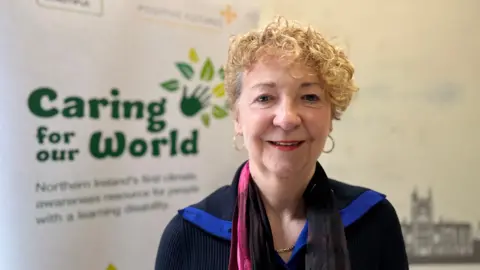
Agnes Lunny, the chief executive of Positive Futures, one of the key organizations behind this collaborative project, underscored the particular vulnerability of people with learning disabilities to the impacts of climate change, often experiencing these challenges differently due to existing societal barriers. She passionately articulated how this training, developed in partnership with Keep Northern Ireland Beautiful, has been instrumental in dismantling long-standing exclusions. "They get excluded from all sorts of issues facing all citizens," Lunny stated, highlighting a systemic oversight. She explained that this exclusion is rarely malicious but often stems from assumptions: "’Oh, well, you know, it’s too difficult, we can’t really do it, we can’t make our material accessible, we can’t do it and really, they don’t understand anyway’."
Lunny firmly refutes this pervasive misconception. "Well, of course they don’t, if the information isn’t shared and if the information that is shared is inaccessible." Her words serve as a powerful reminder that cognitive differences should not equate to exclusion from vital societal conversations. Providing information in an understandable and engaging format is not just an act of kindness, but a fundamental right. The course has proven that with the right approach, people with learning disabilities are not only capable of understanding complex issues but are also eager to contribute meaningfully. "So it’s been incredibly empowering," she concluded, emphasizing the profound positive impact on participants’ self-esteem and sense of civic responsibility.
The core of "climate change training" as implemented here is to educate people about the intricate ways their daily choices influence the planet, and subsequently, how they can modify their behaviors to lessen their environmental footprint. This practical education is made possible through dedicated funding, notably from the plastic bag levy, a testament to the idea that small policy changes can generate significant educational opportunities.
Scott Howes, the Strategic Lead for Climate Action at Keep Northern Ireland Beautiful, was instrumental in developing the original course and then meticulously adapting it for this pioneering special needs pilot. He elucidated the holistic philosophy behind the curriculum. "It’s as much about action as about involvement in being in the natural world," he explained. The training is not confined to classrooms but actively encourages participants to immerse themselves in their local environment. They are prompted to "go out, walk in the woods, make drawings of the natural world, explore places with friends, and to come back and talk about what they’ve discovered."
This experiential learning fosters a deep, personal connection to nature. From these discoveries and observations, the curriculum gracefully transitions into discussions about human impact. "From that, we lead into thinking about how we can impact the natural world, the damage we can do to it, and the whole range of different ways that we can reduce our impact," Howes detailed. The course simplifies complex environmental concepts using highly visual aids, practical demonstrations, and relatable scenarios. For instance, discussions about "damage" might cover litter, pollution from cars, or the waste from excessive consumption, while "reducing impact" could involve topics like conserving energy at home, supporting local produce, or participating in community clean-ups. The goal is to equip participants with both knowledge and practical tools to become active stewards of their environment, ensuring that everyone, regardless of their learning abilities, has the opportunity to understand and respond to the urgent call of climate action. This initiative stands as a beacon of inclusivity, proving that collective action for a sustainable future truly means involving every member of society.





 George Anjay
 Ramos Leo
 atisusanti
 Nakalama John