
 Nana Banana
Plans by the Welsh government to incorporate glass into its Deposit Return Scheme (DRS) have ignited a fierce backlash from a broad coalition of industry leaders, who warn the move could trigger an annual fraud bill of up to £300m, significantly drive up consumer prices, and impose crippling logistical burdens on businesses. This stark warning comes as Wales faces a critical deadline to appoint an administrator for the scheme, with fears mounting that any delay could leave the nation isolated and vulnerable to widespread exploitation when the rest of the UK launches its own DRS in October 2027.
The Deposit Return Scheme is a widely adopted environmental initiative designed to combat litter, boost recycling rates, and foster a more circular economy. Under a DRS, consumers pay a small deposit when purchasing a drink in a recyclable container (such as a plastic bottle, metal can, or glass bottle). This deposit is then refunded when the empty container is returned to a designated collection point, often a reverse vending machine (RVM) located in shops or recycling centres. The overarching goal is to incentivise recycling by giving containers a monetary value, thereby reducing waste and promoting the reuse of materials.
Across the United Kingdom, a coordinated approach to DRS is planned, with England, Scotland, and Northern Ireland all set to introduce schemes covering plastic bottles and metal cans from October 2027. This harmonised strategy aims to create a seamless system for consumers and businesses alike, capitalising on economies of scale and simplifying cross-border operations. Industry groups across the UK have already committed over £1bn in investment to support this nationwide rollout, primarily for the infrastructure required for collecting plastic and aluminium, including the procurement and installation of reverse vending machines.
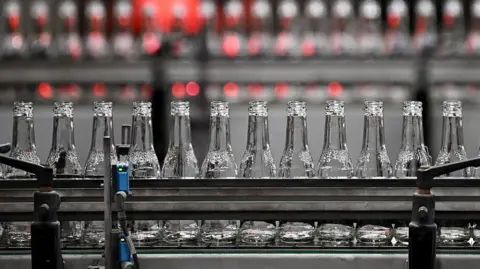
However, Wales has chosen a divergent path, opting to include single-use glass bottles in its DRS. This decision has become a significant point of contention with industry representatives, who argue that it creates an unnecessary and costly deviation from the planned UK-wide model. In a strongly worded joint letter addressed to the First Minister, a formidable alliance of organisations representing the soft drinks, retail, hospitality, alcoholic drinks, and bottled water sectors voiced their "serious concerns" regarding Wales’s unique stance on glass. These organisations collectively represent over 9,000 UK businesses, underscoring the breadth and depth of industry opposition.
One of the primary objections revolves around the potential for substantial financial and logistical strain. Industry figures highlight that an "impressive 92% of household glass is already being recycled in Wales" through existing kerbside collection systems. They contend that introducing glass into the DRS risks "disrupting existing successful recycling systems" that are already highly efficient and widely utilised, potentially undermining an approach that currently works well. Shifting glass collection to a deposit-based model could necessitate a complete overhaul of established infrastructure, leading to inefficiencies and increased costs.
The practical implications for retailers, particularly small shops, are also a major concern. Glass-enabled reverse vending machines are significantly more expensive to purchase, operate, and maintain compared to those designed solely for plastic bottles and cans. Furthermore, they are substantially bulkier, posing a considerable challenge for smaller retail premises with limited floor space. The logistics of handling fragile glass bottles, which are prone to breakage and require more careful storage and transport, add another layer of complexity and cost. These increased operational expenditures, combined with the higher capital investment in specialized RVMs, would inevitably be passed on to consumers through elevated fees and ultimately higher prices for beverages sold in glass. This burden is particularly acute for Wales, which represents a relatively small market, accounting for just 4.6% of total UK drinks sales. The industry argues that the disproportionate cost of implementing a separate glass system in Wales cannot be justified by the marginal environmental gains, especially given the existing high recycling rates for glass.
Beyond the immediate financial and logistical challenges, the industry’s most alarming warning centres on the risk of widespread fraud, estimated to cost up to £300m annually. This peril stems directly from the potential for a staggered rollout of DRS across the UK, specifically if Wales fails to appoint a scheme administrator and launch its system concurrently with England, Scotland, and Northern Ireland in October 2027.
The mechanism for this potential fraud is straightforward: if Wales implements a glass-inclusive DRS while other UK nations do not, consumers could exploit the disparity. Individuals could purchase glass bottles in England, Scotland, or Northern Ireland, where no deposit would be paid, and then transport these empty bottles across the border into Wales to claim a deposit refund. This "deposit arbitrage" would essentially allow individuals to claim money for bottles for which no deposit was ever paid into the Welsh system, creating a significant financial leakage. The industry letter explicitly warns that this danger "arises if an administrator is not appointed soon" and Wales is left without a functioning system when the rest of the UK goes live. Such a scenario would create a "wild west" environment, ripe for organised and casual fraud, costing the scheme and ultimately Welsh taxpayers and consumers hundreds of millions of pounds.
Given these severe warnings, the joint letter urgently calls upon the Welsh government to appoint a scheme administrator "as soon as possible." The administrator, often referred to as the Deposit Management Organisation (DMO), is a critical entity responsible for overseeing the entire DRS operation, including managing deposits, coordinating collection points, handling logistics, and ensuring the scheme’s financial integrity. Without this key appointment, the industry cautions that Wales risks missing the October 2027 launch date, thereby exacerbating the fraud risk and further isolating its scheme from the rest of the UK.
The Welsh government, however, remains steadfast in its commitment to a glass-inclusive DRS. A spokesperson stated that "Our scheme builds on our world class recycling system and draws from global best practice to tackle litter and begin the transition into reuse." They view laying regulations for Wales’s DRS as a "major step towards ending throwaway culture." Regarding the appointment of the DMO, the government affirmed that it is "a key decision" and that they are "following a rigorous, transparent process to ensure the scheme will deliver for Wales whilst supporting interoperability with the other UK schemes." They further noted that the appointment process commenced in November, involving "extensive industry engagement throughout." While acknowledging the need for interoperability, the government has not indicated a willingness to drop the glass component.
Political reactions within Wales reflect the complex debate. Plaid Cymru has suggested a more pragmatic, staged introduction of the scheme, advocating for glass to be included later when it becomes more practical and in line with the rest of the UK. Luke Fletcher MS, the party’s economy spokesman, acknowledged the "legitimate concerns of the sector, especially small Wales-based businesses, of having a different set of regulations in Wales compared with the rest of the UK." He stressed the importance of pressing ahead with a DRS but suggested that "the way to do this is to proceed with plastic and metal drinks initially, to reduce litter and drive higher rates of reuse and recycling."
Similarly, the Liberal Democrats have voiced opposition to what they perceive as "divergence for no good reason," asserting that a "split" from the UK scheme risks harming Welsh businesses. The Welsh Conservatives have also taken a clear stance, stating their intention to "ensure alignment" between Wales and the rest of the UK on deposit return schemes. Their rationale is to "avoid confusion, unnecessary costs and ensure consistency for retailers and manufacturers," highlighting the practical benefits of a unified approach. Reform and the Green Party have also been approached for comment on this evolving situation, reflecting the broad political interest in the scheme’s future.
As the October 2027 deadline looms, the Welsh government faces increasing pressure to reconcile its ambitious environmental goals with the significant economic and logistical concerns raised by industry. The critical task of appointing a scheme administrator and establishing a robust, fraud-resistant system is paramount. The coming months will determine whether Wales’s unique approach to glass recycling will prove to be a pioneering step towards a greener future or a costly misstep fraught with financial risk and operational challenges. The industry’s stark warning of a potential £300m fraud bill serves as a potent reminder of the high stakes involved in this environmental policy decision.




 atisusanti
 George Anjay