
 Nakalama John
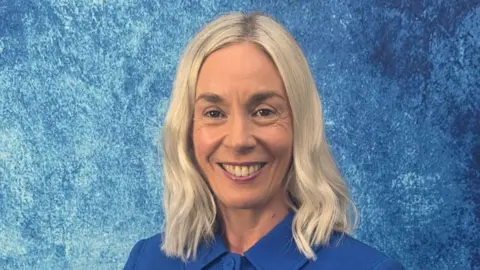
For countless pupils across Northern Ireland, the arrival of school holidays, rather than a time of carefree enjoyment, often signals a period of profound "food insecurity," a stark reality underscored by school principal Aine Leslie. At Malone Integrated College, where Leslie leads, a staggering more than half of its 750 pupils are entitled to free school meals, a statistic that paints a vivid picture of the significant socio-economic challenges faced by the communities it serves. The school day, for these vulnerable children, transcends mere education; it provides a vital source of consistent nourishment and an invaluable sense of stability that is often absent from their homes.
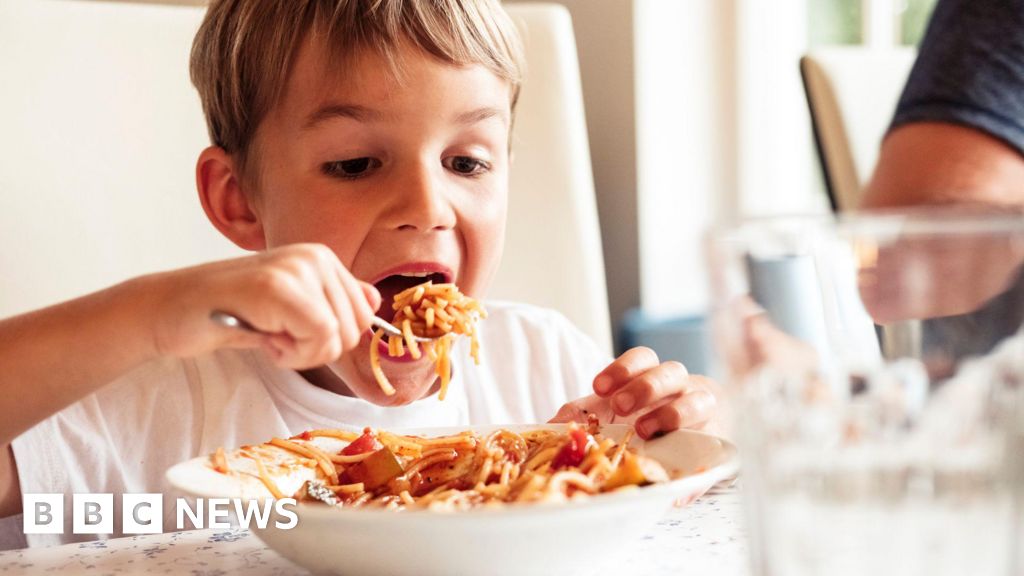
The impact of this holiday-time deprivation is acutely felt by school staff, who frequently step in to bridge the gap. Last Christmas, in a poignant display of community spirit and urgent need, the dedicated staff at Malone Integrated College collectively raised an impressive £3,000. This sum was then channelled directly into providing supermarket vouchers for families of pupils identified as being in dire need, a testament to the compassion within the school walls but also a stark indicator of systemic failures. When schools close for extended holiday periods, Leslie explains, the critical support network they provide evaporates, leaving families already grappling with the relentless pressures of the cost-of-living crisis facing even greater hardship. Reinstating holiday hunger payments, she argues, would offer "practical, dignified support for families and ensure that vulnerable children are not placed at a further disadvantage simply because the school term has ended." For many of the most vulnerable, the summer break, in particular, is not a time of joyful opportunity but rather a prolonged period of isolation, food insecurity, and limited access to safe, structured activities that their peers might take for granted.
The concept of holiday hunger payments is not new to Northern Ireland. From July 2020 until March 2023, a crucial lifeline existed for families with children eligible for free school meals. During this period, approximately 90,000 children benefited from a grant of £27 per child, disbursed each fortnight throughout all school holidays – encompassing the summer, Easter, Christmas, and half-term breaks. This initiative was specifically designed to alleviate the financial burden on low-income households, helping them cover the additional cost of feeding children when they were not receiving meals at school. However, this vital support was abruptly axed by the Department of Education (DE) in March 2023, citing a lack of sustained funding from the executive. Eligibility for these payments was, and remains for free school meals, tied to a household income threshold of below £15,390 a year, a figure that many argue is increasingly out of step with the realities of modern living costs.
Now, a legislative effort is underway to revive these critical payments. Sinn Féin MLA Danny Baker has introduced the Education (Holiday Meal Payments) Bill in the Northern Ireland Assembly, aiming to re-instate this much-needed support. Baker’s motivation stems from powerful personal experiences gained through his work in youth services and community initiatives. He recounts a particularly moving incident involving a young boy, around seven years old – the same age as his own youngest child – who was observed discreetly filling his pockets with food during a breakfast club. Upon investigation, it was discovered that the child was taking food home for his siblings because there simply wasn’t enough to eat in the house. This poignant anecdote underscores Baker’s conviction that while the community and voluntary sector performs "so much great work," the burden of preventing child hunger should not fall squarely on their shoulders. "I know this is only one piece of a much wider puzzle," Baker states, "but we have to start somewhere."
In preparation for his bill, Baker has meticulously estimated the cost of re-introducing these payments at approximately £20m a year initially. He acknowledges the financial implications for government departments, stating, "I’m not naive to say that it won’t cause issues for a department." However, he frames it as a matter of political will and prioritisation. "Departments and ministers have their own priorities and their own budgets," he explains. "It does come down to hard choices." Baker is determined to make this an "inescapable pressure for any minister coming forward in education," highlighting the moral imperative behind the financial commitment. He remains optimistic that the bill can be passed before the next assembly election, currently anticipated in early 2027.
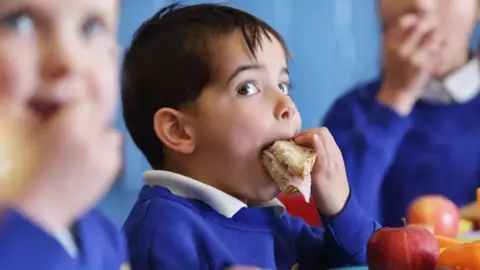
The debate, however, is not without its complexities, particularly concerning the allocation of scarce resources within an already stretched education system. David Thompson, principal of Dungannon Primary, where about a third of the 320 pupils are entitled to free school meals, echoes the sentiment that support for vulnerable families is "crucial." He observes a growing number of families struggling to make ends meet, and believes that additional holiday support would "undoubtedly be warmly received by some of those who are already finding it difficult to cope."
However, Thompson also raises a critical point about the limitations of the current eligibility criteria. He highlights the plight of families who, despite being above the free school meal income threshold, are still struggling significantly. These households, often referred to as the ‘working poor’, frequently shoulder a heavy financial burden due to rising living costs, stagnant wages, and expenses like childcare. They can face just as much, if not more, pressure during school holiday periods. Thompson advocates for a "fairer and more inclusive system that recognises and supports these families as well," arguing that "no child is disadvantaged simply because their family sits marginally above an income threshold."
Thompson also expresses a pragmatic concern regarding the state of the education budget itself. "Given the current financial climate within our schools, where budgets are under unprecedented strain, I am not convinced that a holiday hunger allowance is where limited resources most urgently need to be directed," he cautions. While acknowledging the "understandable and well-meaning" intention behind the proposal, he stresses the importance of balancing any new initiatives against the "immediate and pressing needs within our school system." This perspective underscores the broader financial challenges facing public services in Northern Ireland, where difficult choices about funding priorities are a constant reality.
The problem of holiday hunger extends far beyond the immediate discomfort of an empty stomach. It has profound and lasting consequences on a child’s development, education, and overall well-being. Children experiencing food insecurity are more likely to suffer from health issues, exhibit behavioural problems, and struggle academically. The "summer slide" – the phenomenon where children lose academic ground during the long summer break – is often exacerbated by a lack of consistent nutrition and access to stimulating activities. Without the routine and nourishment provided by school, vulnerable children can fall further behind their peers, widening the achievement gap and perpetuating cycles of poverty. Ensuring consistent access to nutritious food during holidays is therefore not just a welfare issue, but a critical investment in a child’s future potential and the long-term health of society.

In response to the re-emerging debate, a spokesperson for the Department of Education reiterated that the additional funding enabling the School Holiday Food Grants from July 2020 was provided by the Executive and concluded in March 2023. The DE maintains its commitment to supporting children through free school meals for low-income families during term-time and states it "will continue to work with other government departments and agencies to look at ways to tackle holiday hunger." This statement, while acknowledging the ongoing issue, highlights the absence of dedicated funding within the department’s current budget for holiday provision.
As the Education (Holiday Meal Payments) Bill progresses through the assembly, it represents more than just a legislative proposal; it is a crucial test of political will and societal priorities in Northern Ireland. The voices of principals like Aine Leslie and David Thompson, alongside the advocacy of MLAs like Danny Baker, bring the human cost of holiday hunger into sharp focus. The decision to re-instate these payments will require navigating complex budgetary constraints, but for thousands of cash-strapped parents and their children, it could mean the difference between enduring a holiday of hunger and experiencing a period of much-needed relief and security. The call to put money for cash-strapped parents back on the menu is a powerful one, highlighting a fundamental need that many believe society has a moral obligation to meet.



 Nana Banana
 George Anjay
 Ramos Leo
 atisusanti