
 George Anjay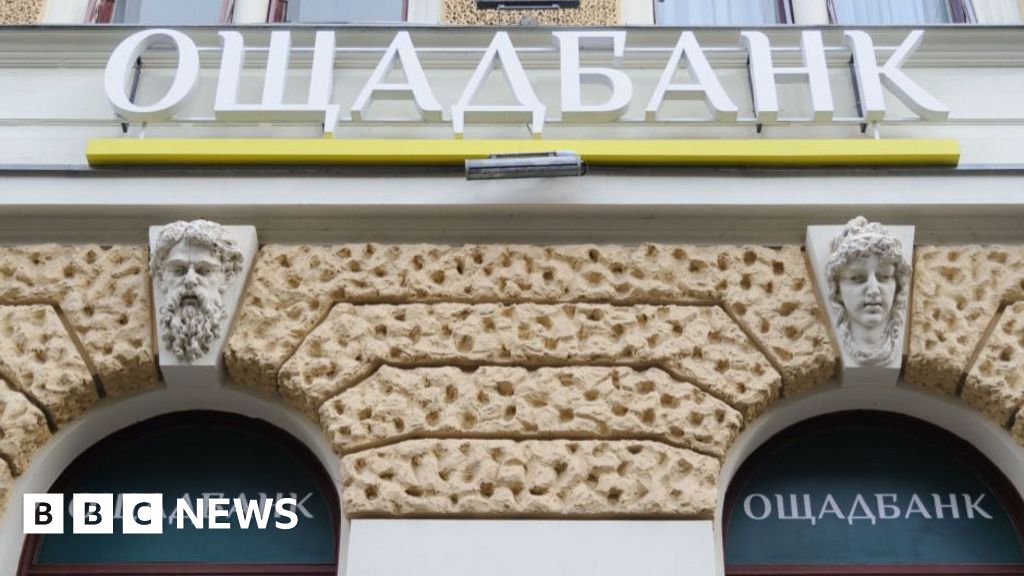
Hungary has announced the expulsion of seven Ukrainian bank workers apprehended on Thursday while reportedly transporting a staggering $80 million (approximately £60 million) in cash and 9 kilograms of gold via cash-transport vehicles destined for Ukraine. The dramatic move has escalated a simmering diplomatic spat between Budapest and Kyiv, with accusations of theft and political manipulation flying from both sides. The incident unfolded amidst Hungary’s ongoing election campaign, with Prime Minister Viktor Orbán’s party trailing in opinion polls, raising questions about the timing and motivations behind the detention.
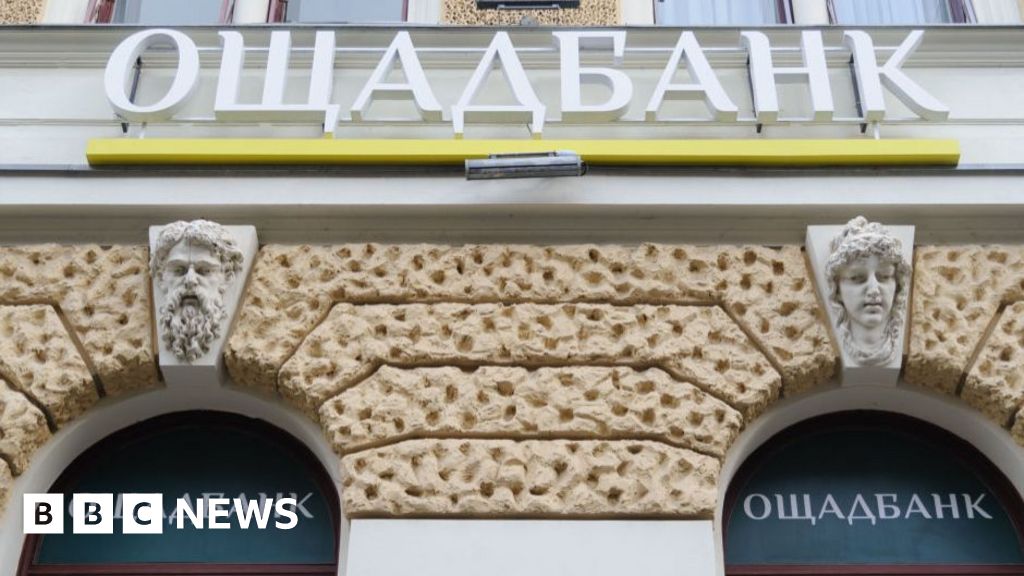
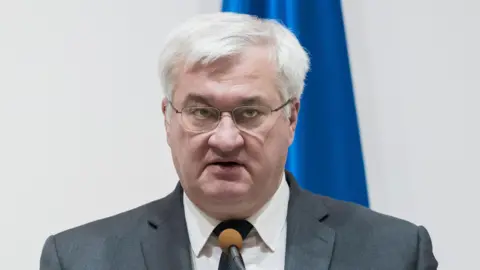
Following the arrests, Ukraine’s Foreign Minister, Andriy Sybiha, vehemently accused Hungary of taking the bank workers hostage and engaging in "state banditry," implying the seizure of funds was akin to theft. In response, Hungary’s National Tax and Customs Administration (NTCA) stated that the individuals were detained on suspicion of money laundering, asserting that the transport was being overseen by a former general of Ukraine’s intelligence service. Oschadbank, Ukraine’s state savings bank, confirmed the detained individuals were part of a routine transport operation between Austria and Ukraine, deeming their detention "unjustifiably" carried out.
The exact whereabouts of the seized cash and gold remain unclear, but Polish Foreign Minister Radek Sikorski publicly declared that "they’ve stolen the money," amplifying the accusations of impropriety against Hungary. This latest confrontation deepens the already strained relations between Ukraine and Hungary, which have been severely tested throughout Russia’s full-scale invasion of Ukraine. The diplomatic friction has manifested in a bitter war of words, particularly concerning a halt in Russian oil supplies through the vital Druzhba pipeline, which traverses Ukraine.
Hungarian media outlets provided vivid descriptions of the operation, detailing how black-clad officials from Hungary’s TEK counter-terrorism center raided the Ukrainian-registered vehicles before their convoy proceeded towards Budapest. Foreign Minister Sybiha directly implicated Prime Minister Orbán, accusing him of "dragging Ukraine into its domestic politics and electoral campaign" and vowing that Kyiv would not tolerate "this state banditism." His Hungarian counterpart, Foreign Minister Péter Szijjártó, countered by questioning the necessity of transporting such vast sums in cash, posing the rhetorical question: "If this is truly a transaction between banks, why was it not carried out by transfer?"
Notably, Prime Minister Orbán made no direct mention of the detained bank workers during his regular Friday radio address. However, he did allude to the ongoing dispute over Russian oil supplies, stating that "transit shipments" crucial to Ukraine would be suspended until the matter was resolved. Orbán, widely regarded as Russia’s closest ally within the European Union, has consistently accused Ukraine of deliberately disrupting Russian oil shipments. Kyiv, in turn, maintains that the Druzhba pipeline was damaged by a Russian air strike in January. Orbán, however, has publicly challenged this narrative, claiming satellite imagery indicates no impediment to the pipeline’s operation and threatening to "force the Ukrainians to restart deliveries."
This stance on oil supplies is consistent with Orbán’s broader opposition to EU financial support for Ukraine. He has previously blocked a €50 billion (£43 billion) EU aid package, which is considered vital for Ukraine’s continued financing, in a bid to compel the resumption of oil shipments. Orbán has repeatedly voiced his objections to EU funding for Ukraine, arguing that it prolongs the conflict and has made an anti-Ukraine message a central theme of his election campaign. In a move that further heightened tensions last month, Orbán ordered increased security for Hungary’s energy infrastructure, citing unsubstantiated claims that Kyiv was preparing "further actions to disrupt" the energy system.
Ukrainian President Volodymyr Zelensky has been a vocal critic of Orbán’s obstruction of EU aid. In a recent briefing, Zelensky expressed his skepticism about the timely resumption of the Druzhba pipeline operations, suggesting it could take another four to six weeks. He went further, stating, "To be honest, I would not restore it. This is my position. I expressed it to European leaders… because this is Russian oil," adding pointedly, "Russians are killing Ukrainians and we have to give oil to Orbán, because he, the poor thing, cannot win the election without this oil."
President Zelensky also issued a veiled threat, suggesting that if Hungary’s prime minister persisted in blocking EU funding for Ukraine, the Ukrainian armed forces would be given Orbán’s address to "call him and communicate with him in their own language." This remark drew swift condemnation. Peter Magyar, whose opposition Tisza party is currently leading in the opinion polls ahead of the April 12th election, criticized Zelensky’s statement. The European Commission also weighed in, with spokesperson Olof Gill stating, "That type of language is not acceptable; there must not be threats against EU member states." Gill emphasized that the Commission was actively engaged in discussions with all parties involved, aiming to de-escalate rhetoric and encourage a unified approach in pressuring Russia to end its aggression.
The Druzhba pipeline, the primary conduit for Russian oil to Hungary and Slovakia, has experienced disruptions since January 27th, with shipments to both countries being cut off. In a separate diplomatic development this week, Hungary’s Foreign Minister traveled to Moscow and successfully secured the release of two ethnic Hungarian prisoners of war. Hungary claims these individuals, originating from Ukraine’s Transcarpathia region, hold dual Hungarian and Ukrainian citizenship and has accused Kyiv of forcibly conscripting them into the army. Kyiv, however, has denounced their transfer to Hungary as a "gross violation of international humanitarian law." The expulsion of the bank workers and the ongoing dispute over oil supplies underscore the deepening chasm in relations between Hungary and Ukraine, further complicated by Hungary’s complex geopolitical positioning and its upcoming domestic elections.



 atisusanti
 Nana Banana

 Ramos Leo