Nana Banana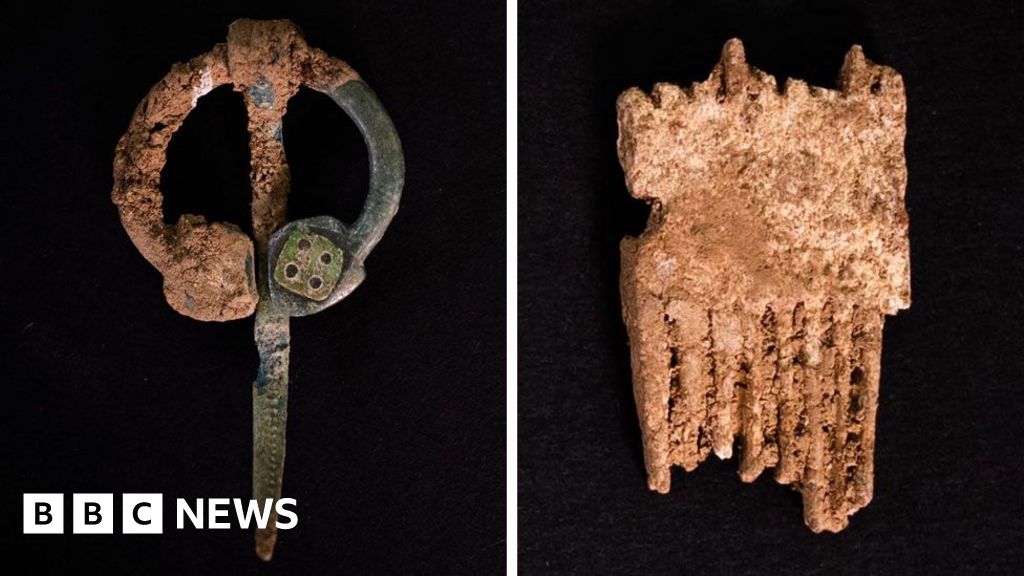
The site, situated within the historical grounds of Fonmon Castle, remarkably close to the bustling modern operations of Cardiff Airport, has yielded 58 skeletons to date. These remains, carbon-dated to the 6th or 7th Century, present a peculiar demographic: almost all belong to women. This unusual composition has puzzled archaeologists for the past four years, prompting intense investigation into the identity and purpose of this ancient settlement. The latest revelations significantly bolster the burgeoning hypothesis that the burial ground was an integral part of an early female religious community, possibly one of the earliest known of its kind in the region.
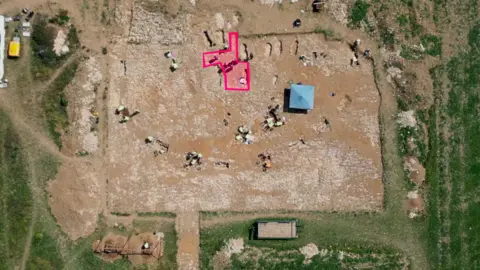
The ongoing dig, led by Dr. Andy Seaman from Cardiff University, has meticulously uncovered these ancient graves, carved shallowly into the underlying limestone bedrock. While forensic analysis of the bones and teeth paints a picture of individuals who endured physically demanding lives, the accompanying grave goods and settlement traces tell a more nuanced story, hinting at a community that, despite its potential ascetic leanings, possessed access to a degree of wealth and luxury.
The most compelling new evidence is the discernible outline of what Dr. Seaman believes could be a small building. "It’s producing fragments of building stone, so it might be structural. We might be thinking of a small shrine or a chapel," he explains, highlighting its potential significance. The discovery of such a structure within the heart of the cemetery profoundly strengthens the argument for a religious establishment. Early Christian communities often built their churches or shrines directly amidst their burial grounds, symbolizing a sacred connection between the living and the departed, and emphasizing the communal spiritual life. "I do think that we have a site which may be an early religious community," Dr. Seaman concludes, his voice conveying the excitement of a significant breakthrough.

This potential building occupies a central position within the cemetery, a fact underscored by the clustering of graves around its perimeter. This arrangement suggests a deeply held desire among the deceased, or their surviving community, to be interred as close as possible to this focal point. Cardiff University archaeologist Tudur Davies elaborates on this phenomenon, noting the unusual density of burials: "It’s a highly desired location for people to be buried in. Sometimes two, three, four individuals have been buried on the same spot, again and again. There doesn’t appear to be as much of a taboo over putting bodies in the same place and just moving those still there to one side." This practice of intercutting graves and reusing burial plots around a central sacred structure is characteristic of early Christian cemeteries, where proximity to a holy person or a revered spot was believed to confer spiritual benefits.
The array of artifacts unearthed provides further texture to the lives of these medieval women. These objects, now undergoing meticulous conservation and analysis at Cardiff University’s lab, reveal both practical aspects of daily existence and glimpses into the aesthetic sensibilities of the era.

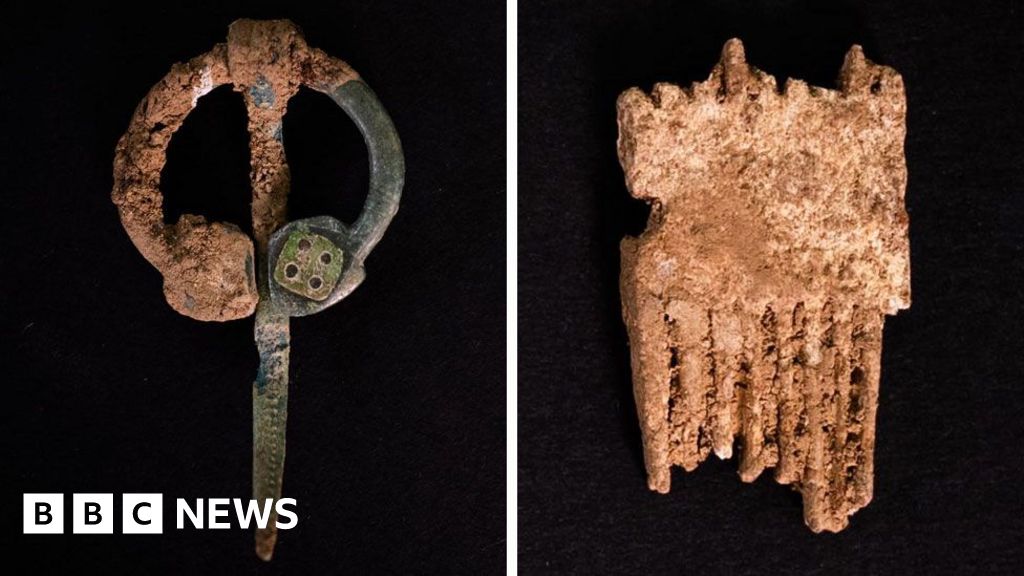
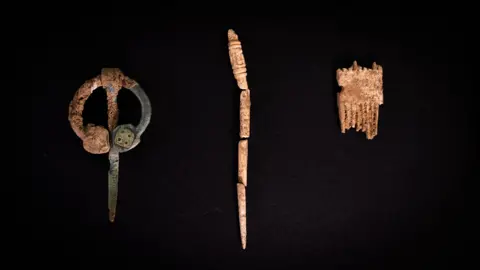
Among the most striking decorative items is an ornate copper brooch. Conservator Nicola Emmerson, carefully removing centuries of accumulated soil, explains its potential grandeur. "We’d have to do some more analysis, but it’s probably bronze," she states. "Also, we think it was possibly gilded, which would be a coating of gold over the top." The terminals of the brooch, she adds, were adorned with vibrant green enamel, a testament to sophisticated craftsmanship. "This would have been a very decorative brooch. I think it’s a very special find for the site." Such an item, combining precious metalwork with enamel, speaks volumes about the status of its wearer and the community’s access to skilled artisans or trade networks capable of supplying such luxury goods. It challenges simplistic notions of austere monastic life, suggesting that even religious women might have worn finery, perhaps reflecting their noble origins or the community’s standing.
Beyond this piece of "medieval bling," the team has also recovered a delicately crafted pin made from bone, featuring an intricate, detailed pattern. Bone pins were common utilitarian objects for fastening clothing or styling hair, but the artistry evident in this particular piece elevates it beyond mere function. Similarly, a comb, meticulously carved from antler, demonstrates an attention to detail and a commitment to personal grooming that belies the common perception of harsh medieval conditions. These personal effects suggest a community that valued both practicality and beauty.
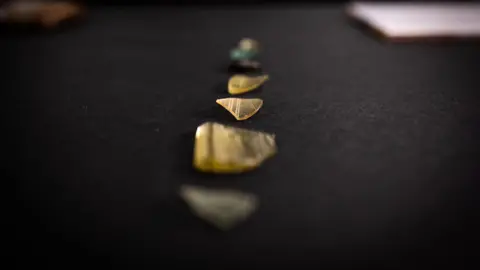
Perhaps the most visually captivating finds are the exquisite, multicoloured glass beads. Measuring a mere 3mm across, each bead is a miniature marvel of craftsmanship, boasting a vibrant palette of dark red, orange, light blue, yellow, and green. These tiny treasures could have been stitched onto clothing, perhaps as embellishments on cloaks or tunics, or incorporated into pieces of jewellery. The presence of such finely made glass items, often imported or produced by specialist workshops, further reinforces the idea of a community with resources and connections, capable of acquiring or creating objects of considerable value and aesthetic appeal. Fragments of other glassware found amongst the graves further underscore this point, indicating a regular use of glass vessels for domestic purposes.
But it is not just the luxury items that are illuminating. The discovery of domestic tools offers a window into the everyday rhythms of life within this ancient community. "We have a quern stone for grinding flour for bread. We’ve got pottery and glass for eating and drinking," Dr. Seaman points out. These finds confirm that the site was not merely a repository for the dead but a vibrant, functioning settlement. "It’s clearly not just a place for the dead. There’s a living community here as well." The quern stone, in particular, speaks to self-sufficiency, indicating that the inhabitants were processing their own grain, likely for daily bread—a staple food. The presence of pottery and glass for consumption further paints a picture of communal meals and daily routines.
Dr. Seaman hypothesizes that this community was largely enclosed, living in close proximity to the cemetery, perhaps separated from wider society by design. This isolation, combined with the all-female population and the religious artifacts, strongly supports the identification of the site as an early clas or convent—a foundational institution of early Welsh Christianity. Such early monastic communities often operated as self-sufficient units, combining spiritual devotion with agricultural labor and skilled crafts.
While the pieces of this medieval puzzle are rapidly falling into place, some intriguing questions persist, adding layers of complexity to the narrative. The discovery of a few male skeletons and some children among the predominantly female burials begs further investigation. Who were these men? Were they priests serving the community, or perhaps male family members of the women? And the children – were they offspring of some of the women, or perhaps orphans taken in by the religious community, a common practice in medieval monasteries? Their presence adds a fascinating dimension to the communal structure.
Perhaps the most perplexing and unsettling discovery relates to the stark contrast in burial practices observed. While the majority of individuals were interred with apparent care and reverence, two women were found unceremoniously "tossed in a ditch," one with her hands and feet bound. This grim detail stands in stark opposition to the careful burials around the potential shrine. What transgressions could have led to such a dishonorable and brutal end? Were they victims of internal discipline, excommunicated and punished for grave offenses, or perhaps victims of external violence or conflict, disposed of by hostile forces? This anomaly highlights the harsh realities and potential darker undercurrents of life and justice in the 6th and 7th centuries, raising questions about social order, crime, and punishment within or outside the community.
The team’s ongoing research aims to determine if this site represents a crucial example of very early Christianity in Wales, a period about which historical records are notoriously sparse. "It’s a period where the history is not yet written," Dr. Seaman emphasizes. "We don’t really understand early church sites… how they functioned, what they looked like, how they were organized." Unlike later, well-documented monastic institutions, the formative years of Christianity in Wales, often referred to as the Age of Saints, remain largely enigmatic. Archaeological discoveries like those at Fonmon Castle are therefore invaluable, offering tangible evidence where written accounts are silent or scarce.

"We know that very well from later periods, but in this very formative period of history, it’s not very well understood. So it’s a really exciting opportunity," Dr. Seaman enthuses. The site holds the potential to rewrite parts of Welsh history, providing unprecedented insights into the role of women in the early church, the structure of proto-monastic communities, and the broader social and economic landscape of post-Roman Wales. The archaeologists are eagerly anticipating the continuation of their excavations later this year, hoping that each shovel-full of soil will reveal another piece of this ancient and compelling puzzle.






 George Anjay
 atisusanti