George Anjay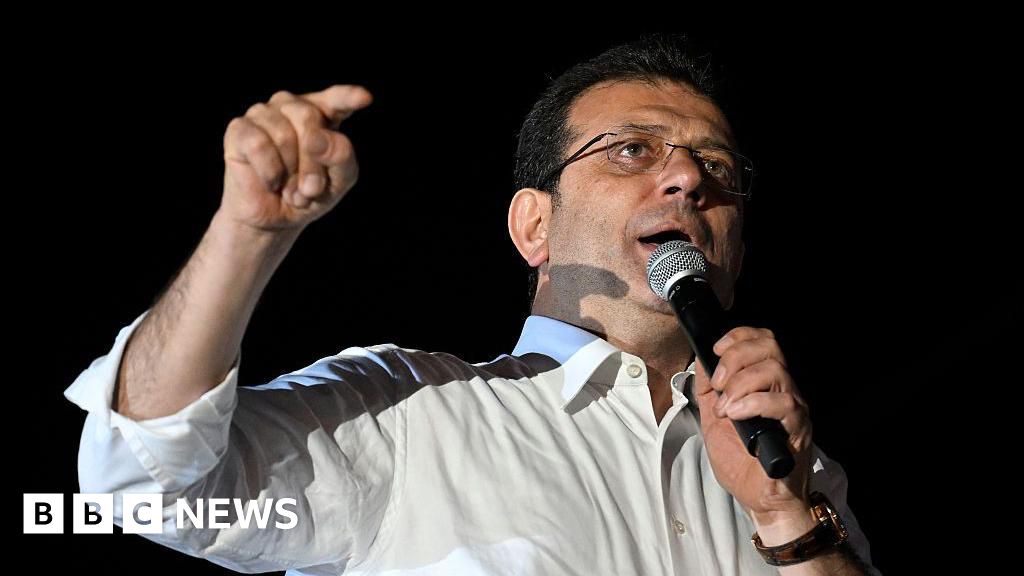
Ekrem Imamoglu, the prominent former mayor of Istanbul and a formidable challenger to President Recep Tayyip Erdogan, is set to face a high-stakes corruption trial that his party, the Republican People’s Party (CHP), and international rights organizations decry as a politically motivated persecution designed to sideline a key political opponent. The trial, commencing on Monday, casts a shadow over the political landscape of Turkey, with prosecutors seeking an unprecedented jail term of up to 2,430 years for Imamoglu, 55, who faces a staggering 140 charges, including corruption and operating a criminal organization.
Imamoglu and the CHP vehemently deny all allegations, framing the charges as a desperate attempt by President Erdogan and his administration to neutralize a growing threat to their long-held grip on power. They argue that the legal proceedings are a direct consequence of Imamoglu’s rising popularity and his perceived ability to challenge Erdogan’s dominance, which has spanned over two decades since 2003. This narrative is amplified by the fact that Imamoglu was detained in March of the previous year, on the very day he was appointed as the leader of the CHP and designated as its presidential candidate for the 2028 elections. His subsequent incarceration at the Marmara prison complex, where the trial is scheduled to unfold, triggered widespread public outcry and the largest street demonstrations seen in Turkey in over a decade, leading to numerous arrests and a forceful police response.
The legal onslaught against Imamoglu extends beyond the current corruption charges. He has also been accused of a series of other offenses, including espionage and the forgery of his university degree, a qualification crucial for presidential eligibility and which has since been officially annulled. These accusations further fuel the perception among his supporters and critics of the government that the judiciary is being weaponized for political ends.
The current trial involves an extensive network, with an additional 407 of Imamoglu’s supporters also facing charges. Prosecutors allege they were part of a criminal corruption network orchestrated by the former mayor, whom they identify as its "founder and leader." This mass indictment underscores the scale of the legal action being taken against Imamoglu and his political circle.
The international community and human rights organizations have voiced strong condemnation of the proceedings. Benjamin Ward, deputy Europe and Central Asia director at Human Rights Watch, expressed deep concern, stating in a recent statement that "The trial of Mayor Ekrem Imamoglu follows more than a year of weaponising the criminal justice system against his party and other CHP elected officials while he sits in jail." He added, "Looking at these cases as a whole, it’s hard to avoid the conclusion that prosecutors are trying to remove Imamoglu from politics and discredit his party in ways that undermine democracy."
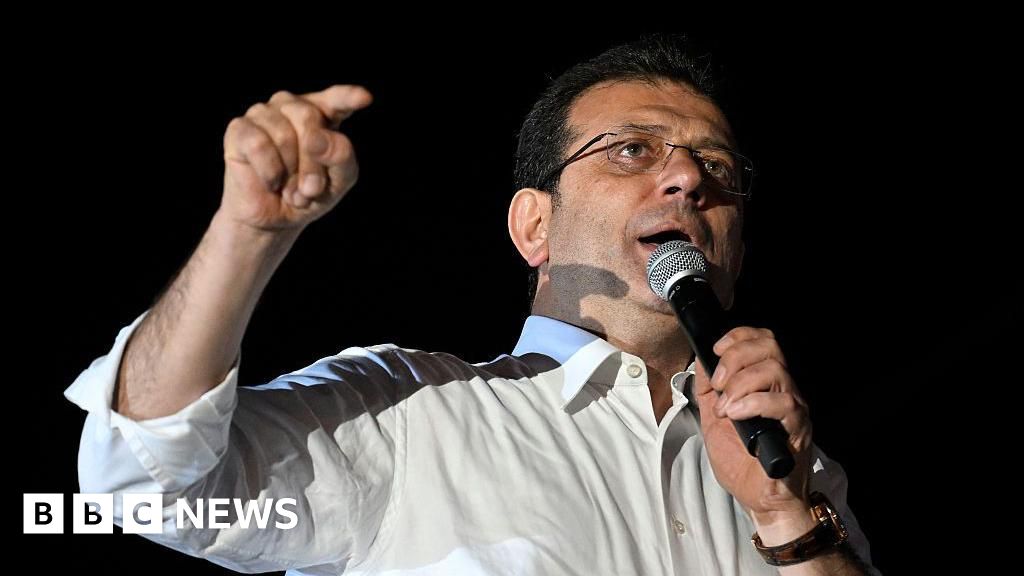
Amnesty International has similarly denounced the charges as "absurd," with Dinushika Dissanayake, Amnesty’s deputy director for Europe, highlighting the dubious nature of the prosecution. "This politically motivated prosecution, which is based almost entirely on secret witness testimony, is riddled with serious international fair trial and rule of law issues," Dissanayake stated on Friday.
Despite these criticisms, the Turkish government maintains that its judiciary operates independently and that the legal processes are fair. Justice Minister Akin Gurlek, who previously served as the chief prosecutor and spearheaded the investigation into Imamoglu, asserted his adherence to duty, telling reporters on Friday, "I simply did my duty as a public prosecutor. My conscience is clear."
Imamoglu’s political trajectory has been remarkable. He was first elected as Istanbul’s mayor in 2019, a victory that marked a significant shift in the city’s political leadership. His re-election in April 2024 was even more emphatic, as he defeated the governing AK Party candidate by a substantial margin of nearly a million votes. This resounding victory was widely interpreted by political analysts in Turkey as a major blow to President Erdogan, with many commentators labeling it as the president’s "worst defeat ever."
The former mayor’s defiance in the face of these legal challenges has been palpable. Ahead of the trial, Imamoglu conveyed a resolute message through his legal team to the news agency Reuters last month, urging President Erdogan to call for immediate elections. This defiant stance, coupled with the broad opposition and international scrutiny surrounding the trial, positions Ekrem Imamoglu not just as a defendant in a corruption case, but as a central figure in a critical juncture for Turkish democracy.
The roots of the current charges can be traced back to alleged irregularities in procurement processes during Imamoglu’s tenure. Prosecutors contend that specific contracts awarded by the Istanbul Metropolitan Municipality under his leadership were inflated or awarded improperly, leading to financial losses for the public purse. These allegations, they claim, form the basis of a criminal enterprise involving numerous individuals within the municipality and its associated entities, with Imamoglu at the apex of this alleged corrupt network. The sheer volume of charges and the proposed sentence, however, lead many to believe that the legal proceedings are disproportionate and politically motivated, aiming to incapacitate Imamoglu’s political career and deter future opposition.
The legal battles surrounding Ekrem Imamoglu are not isolated incidents. They are part of a broader pattern observed in Turkey in recent years, where political opponents, journalists, and civil society activists have faced extensive legal challenges and imprisonment. This context amplifies the concerns raised by human rights organizations regarding the erosion of democratic norms and the rule of law in the country. The international community continues to monitor the trial closely, recognizing its potential to significantly impact Turkey’s democratic trajectory and its standing on the global stage. The outcome of this trial is expected to have profound implications, not only for Imamoglu’s political future but also for the broader opposition movement in Turkey and the future of democratic governance in the nation. The coming weeks and months will undoubtedly reveal the full extent of the political ramifications of this high-profile legal confrontation.






 Ramos Leo
 atisusanti
 Nakalama John