
 Nana Banana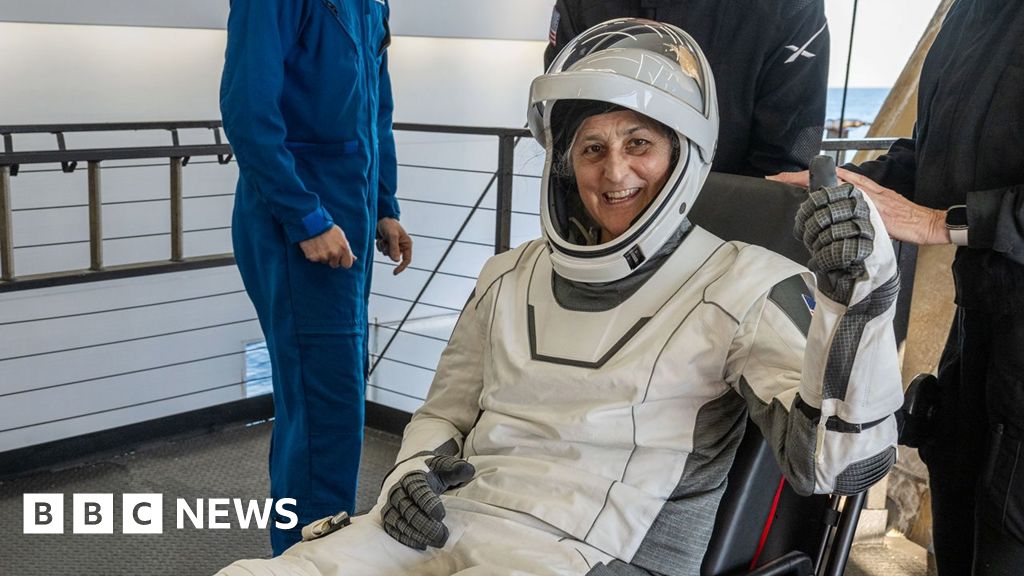
After an extraordinary nine-month odyssey in orbit, NASA astronauts Butch Wilmore and Suni Williams have at last touched down on Earth, concluding a mission that tested their resilience and flexibility far beyond its original eight-day scope. Their dramatic return marked the end of an extended stay aboard the International Space Station (ISS), transformed from a short test flight into a protracted assignment due to unforeseen technical challenges with their original spacecraft.
The journey home commenced with a seventeen-hour transit from the International Space Station, culminating in a spectacular re-entry into Earth’s atmosphere. Their SpaceX capsule, a Crew Dragon named Endurance, executed a fast and fiery descent, glowing incandescently as it battled the intense friction of re-entry. This fiery passage, a testament to the engineering marvels of modern spacecraft, slowed the capsule from orbital velocity to a controlled fall. As it plunged through the lower atmosphere, a series of four immense parachutes sequentially deployed, blossoming above the capsule to further decelerate its rapid descent. These chutes, critical for a safe landing, gently guided the craft towards its designated splashdown zone in the Gulf of Mexico, off the coast of Florida.
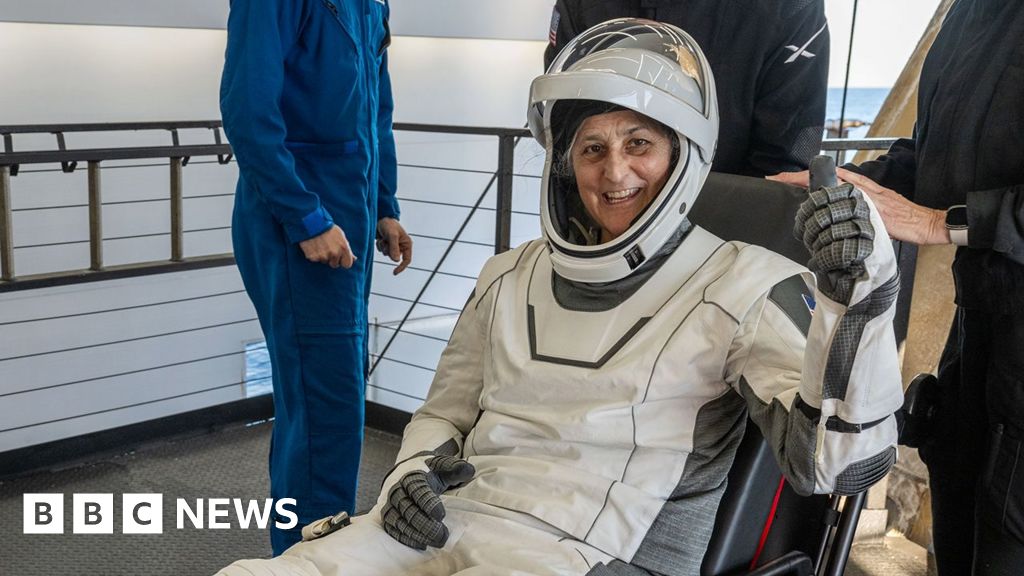
The landing itself was a poignant moment, a gentle splashdown in the ocean waters, met by an unexpected welcoming committee: a pod of dolphins was observed circling the bobbing capsule, adding a touch of natural wonder to the high-tech return. Almost immediately, a dedicated recovery ship, the MEV Shannon, moved into position, its crew ready to secure and hoist the capsule from the water. As the spacecraft was carefully lifted onto the ship’s deck, the hatch was opened, revealing the triumphant figures of Wilmore and Williams. They emerged, beaming and waving to the recovery team, visibly relieved and elated to be back on terrestrial ground. They were joined by fellow crew members, NASA astronaut Nick Hague and Russian cosmonaut Aleksandr Gorbunov, who had flown with them on the SpaceX capsule and were part of the regular ISS rotation.
"The crew’s doing great," affirmed Steve Stich, manager of NASA’s Commercial Crew Program, at a subsequent news conference, his voice tinged with pride and relief. "It is awesome to have crew 9 home, just a beautiful landing." Joel Montalbano, deputy associate administrator for NASA’s Space Operations Mission Directorate, echoed these sentiments, expressing profound gratitude for the astronauts’ unwavering resilience and adaptability throughout their unexpectedly prolonged mission. He also extended praise to SpaceX, hailing them as a "great partner" in ensuring the safe return of the crew.
The saga of Butch Wilmore and Suni Williams began in June 2024, when they embarked on what was meant to be a historic, brief mission: the first crewed test flight of Boeing’s Starliner spacecraft. This mission, designated Crew Flight Test (CFT), was a crucial step in certifying Starliner as NASA’s second commercial crew transportation system, alongside SpaceX’s Crew Dragon. Their task was to assess the capsule’s capabilities during an anticipated eight-day stay at the ISS. However, during its initial journey to the space station, the Starliner capsule encountered a series of technical anomalies, including helium leaks in its service module propulsion system and issues with some of its thrusters. While the capsule safely docked with the ISS, a thorough review by NASA and Boeing engineers determined that these issues posed too great a risk for the spacecraft to be deemed safe for the astronauts’ return journey.
This critical decision dramatically altered the course of their mission. Starliner returned safely to Earth empty in early September, performing a successful uncrewed re-entry and landing. But this left Wilmore and Williams in an unprecedented situation, without their intended ride home. NASA, prioritizing crew safety above all else, swiftly devised a solution. They opted to reassign the pair to the next available ride: a SpaceX Crew Dragon capsule, which was scheduled to launch as part of the regular Crew-9 rotation mission to the ISS. This SpaceX flight, typically designed to carry four astronauts, launched with only two on board, intentionally leaving two seats vacant to accommodate Wilmore and Williams for their return. The catch was that this Crew Dragon mission had a planned six-month duration, effectively extending Wilmore and Williams’ stay in space from days to months.
Embracing their longer-than-expected tenure in space with remarkable professionalism and good cheer, the NASA pair integrated seamlessly into the existing ISS crew. For nine months, they contributed significantly to the station’s operations and scientific endeavors. They conducted an extensive array of experiments, ranging from studies on human physiology in microgravity to advanced materials science and Earth observation. Suni Williams, a veteran astronaut, further cemented her legacy during this period by breaking the record for the woman who spent the most hours outside of the space station during spacewalks, undertaking crucial maintenance and upgrade tasks on the station’s exterior. Even during the festive season, their spirit remained undimmed; the team donned Santa hats and reindeer antlers, sending a heartfelt Christmas message to Earth, a Christmas they had originally planned to spend at home with their families.
Despite media portrayals of them being "stranded," NASA was quick to clarify that the astronauts were never truly in peril. Throughout their mission, multiple spacecraft remained docked to the International Space Station, providing contingency return options for all onboard crew members in the event of an emergency. This built-in redundancy is a fundamental safety protocol for long-duration space missions.
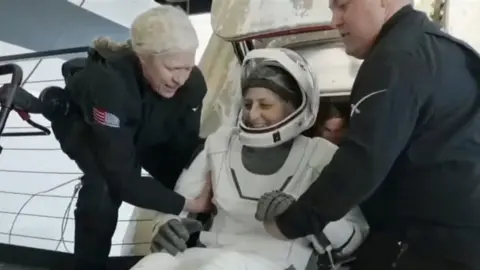
Now safely back on Earth, the immediate focus shifts to their physical well-being. The astronauts were carefully helped onto stretchers immediately after exiting the capsule, a standard procedure after prolonged exposure to microgravity. This precaution is vital as the human body undergoes significant physiological changes in the weightless environment, making the sudden re-adaptation to Earth’s gravity a challenging process. They will soon be transported to the Johnson Space Center in Houston, Texas, where a team of medical experts will conduct thorough examinations and oversee their rehabilitation.
Long-duration space missions take a considerable toll on the human body. Astronauts experience a loss of bone density, comparable to accelerated osteoporosis, and significant muscle atrophy due to the lack of resistance from gravity. Blood circulation is also profoundly affected, with fluids shifting upwards towards the head, often leading to facial puffiness and a decrease in leg volume. Furthermore, these fluid shifts can impact eyesight, a phenomenon known as Spaceflight-Associated Neuro-ocular Syndrome (SANS). It can take many months, sometimes even years, for the body to fully return to its pre-flight state. Consequently, Wilmore and Williams will embark on an extensive exercise and rehabilitation regime, meticulously designed to help their bodies re-adapt to living with gravity, rebuild muscle mass, and restore bone density.
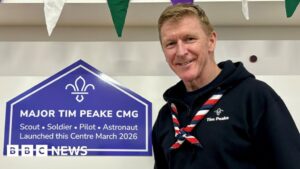
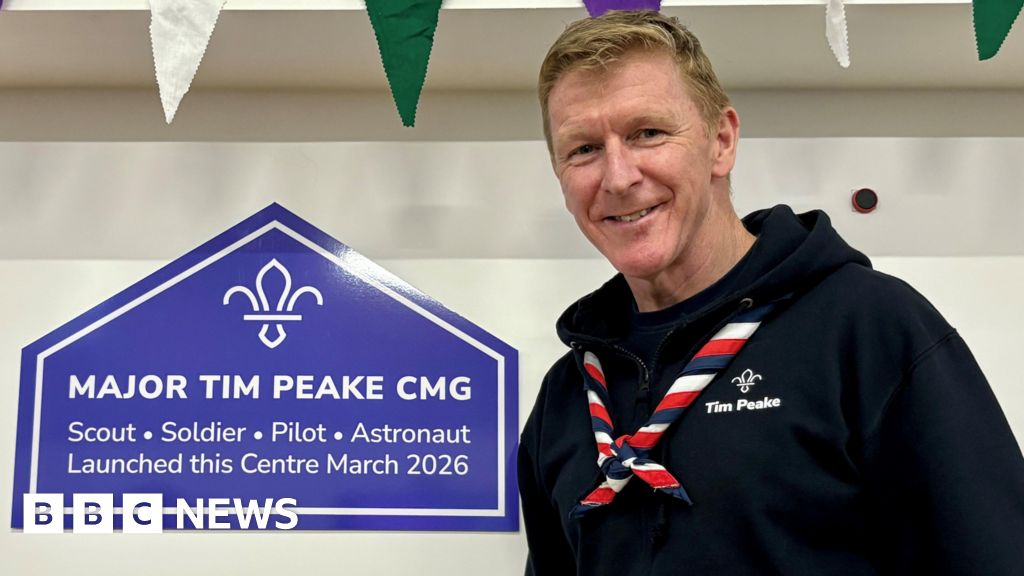
British astronaut Tim Peake, drawing from his own experience of living on the ISS, offered insights into the re-adjustment process. "Your body feels great, it feels like a holiday," he told the BBC, describing the ease of movement in zero gravity. "Your heart is having an easy time, your muscles and bones are having an easy time. You’re floating around the space station in this wonderful zero gravity environment." However, he stressed the critical importance of maintaining a rigorous exercise routine in space: "Because you’re staying fit in space, not for space itself, but for when you return back to the punishing gravity environment of Earth. Those first two or three days back on Earth can be really punishing."
During interviews conducted from the ISS in the preceding months, both Butch Wilmore and Suni Williams consistently expressed their preparedness for the extended stay, but also shared their anticipation for certain terrestrial pleasures. Speaking to CBS last month, Suni Williams articulated her simple yet profound desires: "I’m looking forward to seeing my family, my dogs and jumping in the ocean. That will be really nice – to be back on Earth and feel Earth." Their safe return not only marks the end of an unexpectedly long and challenging mission but also serves as a powerful testament to human endurance, the ingenuity of space engineering, and the robust spirit of international collaboration that underpins humanity’s endeavors in the cosmos.

 George Anjay
 Ramos Leo
 atisusanti
 Nakalama John