Nakalama John
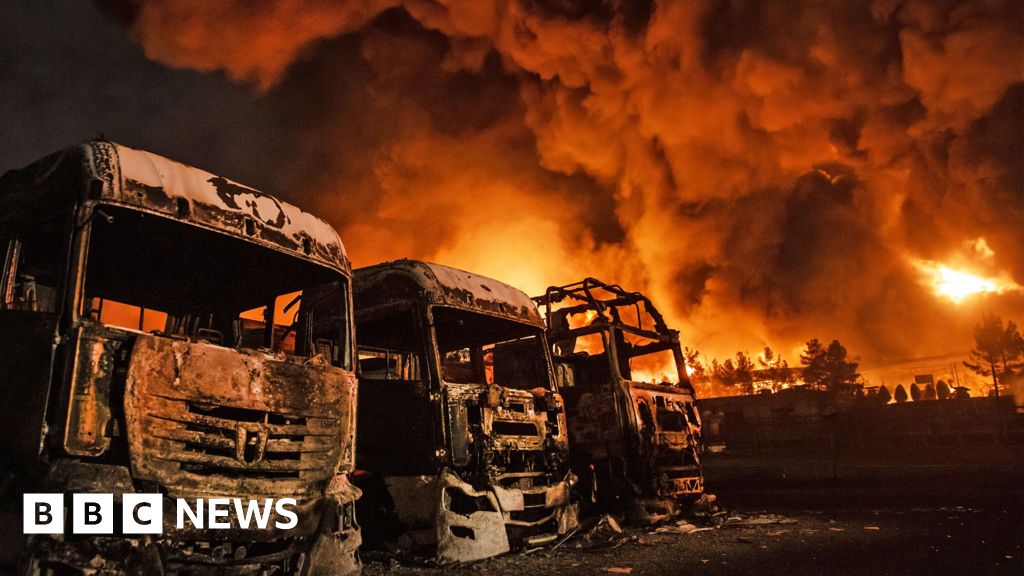
The conflict, which has seen reports of the US and Israel engaging in attacks on Iran earlier this month, has destabilized a crucial region for global energy supply. Iran’s swift warning to vessels against traversing the Strait of Hormuz in the Persian Gulf underscored the severity of the situation. This narrow waterway is an indispensable choke point, through which approximately 20% of the world’s oil and gas shipments pass daily. Any threat or disruption to this vital maritime route immediately triggers fear in the markets, leading to sharp price increases for crude oil and, consequently, for refined products like heating oil and diesel.
For Dominique Shepherd, a mother of three residing near Thirsk in rural North Yorkshire, the financial strain is acutely felt. She vividly recalled the moment she discovered the price of topping up her domestic oil tank had more than doubled, admitting she "wanted to cry." The unexpected hike has thrown her family’s budget into disarray. "If I had just ordered it when it was at £300, things would be a lot simpler, a lot easier," she lamented, highlighting the sudden and unpredictable nature of the price leap. Her family, like many others in similar situations, does not have "that money lying around" for such an exorbitant, unplanned expense. Typically, 1,000 litres of heating oil would cost Dominique between £600 and £700. However, just last week, the same quantity jumped to a staggering £1,258, with experts predicting further rises. This significant increase forces difficult choices, as Dominique explained, "It’s a big worry because we then have to cut back on certain things like family days out with the children," sacrificing leisure and family time to keep their home warm.

Heating oil is an essential commodity for millions of homes across the UK and Ireland that are not connected to the national gas grid. These properties, often older or located in remote rural areas, depend entirely on these deliveries for heating and hot water. The vulnerability of these households to global market fluctuations is profound, as they lack the alternative options available to urban dwellers. The sudden spikes in price are not merely an inconvenience but a genuine threat to their financial stability and well-being.
The UK and Ireland Fuel Distributors Association (UKIFDA) has acknowledged the unprecedented challenges. A spokesperson for UKIFDA attributed the current crisis to a "rapid rise in wholesale prices, which, in turn, has increased the price distributors pay for heating oil and, consequently, raised prices for customers." Beyond the cost, the heightened demand for heating oil, driven by widespread anxiety and the instinct to stock up, has also strained logistics, leading to longer delivery times. This combination of soaring costs and delayed deliveries creates a perfect storm for rural residents, who depend on a reliable supply for their daily lives. UKIFDA advised customers whose tanks are running low to "order as normal," while conceding that "the situation in the Middle East is changing quickly, making it difficult to predict how prices will move in the coming weeks." This uncertainty only adds to the stress experienced by consumers and distributors alike.
In the village of Alne, near York, community initiatives are attempting to mitigate some of the financial pain. Bob Hayes, a local resident, runs a cooperative that organises group purchases of heating oil. This model allows residents to benefit from wholesale prices through bulk buying and reduces delivery costs by consolidating multiple orders into fewer trips. Hayes highlighted the clear advantage of this approach, stating that being part of a cooperative was "far better than going to a fuel retailer." He explained that during periods of extreme price volatility, such as the current one, the "contingency [distributors add to cover cost rises] can be quite significant" for individual buyers. By pooling resources, the cooperative is able to negotiate better terms and absorb some of the market fluctuations, offering a degree of protection to its members. This community-led resilience demonstrates the ingenuity and solidarity often found in rural areas facing collective challenges.

The escalating prices have not gone unnoticed by policymakers. Minister for Energy Michael Shanks and the Secretary of State for Energy Security and Net Zero Ed Miliband have jointly penned a letter to UKIFDA CEO Ken Cronin, signaling their concern. In their communication, the ministers confirmed that the Competition and Markets Authority (CMA) would launch an investigation into whether customers were being treated fairly amidst the price increases. Their letter explicitly stated a "firm expectation is that pricing remains fair, transparent and fully justifiable, reflecting genuine market conditions." This government intervention underscores the seriousness of the situation and the commitment to protecting consumers from potential exploitation during times of crisis. The CMA’s investigation will be crucial in ensuring that distributors are not unfairly profiting from the geopolitical instability and that any price increases are genuinely reflective of wholesale market dynamics.
The impact of rising oil prices extends beyond domestic heating, profoundly affecting the agricultural sector, which is the backbone of many rural economies. Farming vloggers Martin and Craig Blakey, based in Church Fenton, have voiced grave concerns about the skyrocketing cost of red diesel, a crucial fuel used to power agricultural machinery. They reported an alarming jump in price, from 72p a litre just last week to more than £1. This increase represents a substantial addition to operating costs for farms already navigating tight margins. Craig Blakey described the situation as "a perfect storm." He elaborated, "March is here, land is starting to dry up, tractors will be out burning diesel and it’s going up faster than a space shuttle taking off." His brother, Martin, added that the situation is "going to hit very hard" for farmers generally. The higher cost of red diesel will inevitably translate into increased operational expenses for planting, harvesting, and transporting produce, which could ultimately lead to higher food prices for consumers, further fuelling inflation.
The ripple effect of the "Iran war" on global oil markets is therefore a complex and multifaceted challenge for rural communities. From families struggling to heat their homes to farmers facing unsustainable operational costs, the consequences are far-reaching. The dependence on imported oil, the lack of gas grid connectivity in remote areas, and the critical role of diesel in agriculture expose the vulnerabilities of these communities to international conflicts. While government investigations and community cooperatives offer some relief, the long-term solution requires a broader strategy to enhance energy security, promote alternative heating solutions, and provide targeted support to those most affected by volatile global energy prices. The current crisis serves as a stark reminder of how geopolitical events, seemingly distant, can have immediate and profound impacts on the everyday lives of ordinary citizens.




 George Anjay
 Ramos Leo
 atisusanti