
 George Anjay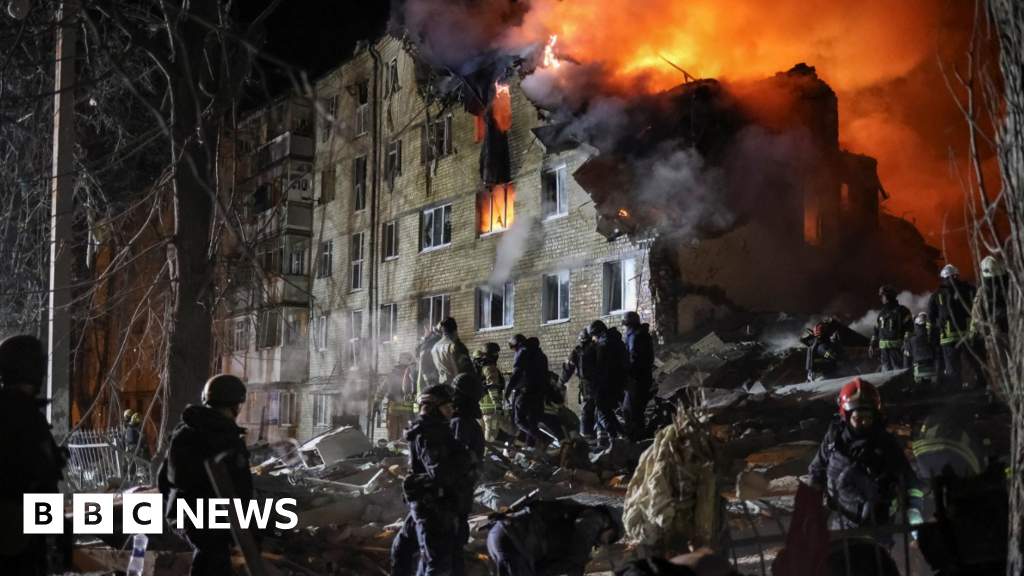
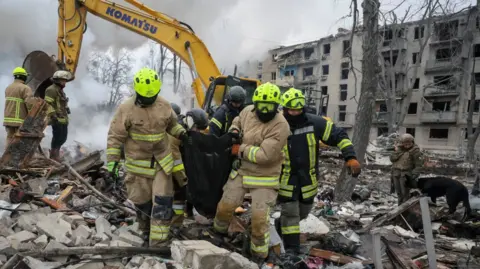
At least seven people, including children, have been tragically killed and several others injured after a devastating Russian airstrike pounded an apartment block in Kharkiv, Ukraine’s President Volodymyr Zelensky confirmed. The horrific attack, which occurred on Saturday morning, has sent shockwaves through the city and underscores the relentless nature of the ongoing conflict. Regional governor Oleg Synegubov provided further grim details, stating that the missile struck a five-storey residential building, causing extensive damage and triggering a massive rescue and recovery operation. Emergency workers have been tirelessly sifting through the rubble in a desperate search for survivors and to account for the victims.
This latest assault is part of a wider pattern of overnight attacks that triggered widespread air alerts across Ukraine, including in the strategically important regions of Dnipropetrovsk and Zaporizhzhia. Russia’s Ministry of Defence has since acknowledged its role in these strikes, confirming the use of drones to target what it claims were Ukrainian military compounds, airfields, and energy facilities, as reported by the Interfax news agency. The scale and nature of these attacks have also prompted a response from neighbouring Poland, whose air force scrambled military jets to patrol its airspace in regions bordering Ukraine, a standard procedure implemented during significant Russian aerial offensives.
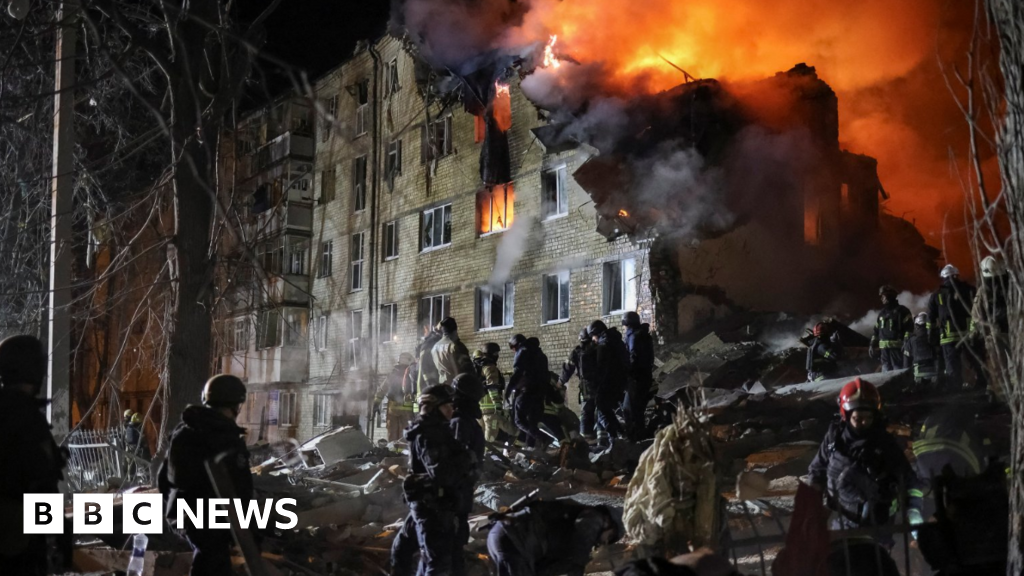
The human cost of the Kharkiv strike is mounting, with Governor Synegubov identifying some of the victims. Among those confirmed dead were a 65-year-old woman, a 40-year-old man, and a 13-year-old girl. The discovery of four more bodies, including that of a nine-year-old boy, further amplified the tragedy. The impact on the city was widespread, with Synegubov reporting damage to seven apartment buildings, vital power grids, and an administrative building. President Zelensky lamented that at least ten more people, including children, sustained injuries, emphasizing the indiscriminate nature of the attack. "There may still be people under the rubble," Zelensky stated gravely, highlighting the ongoing efforts of rescue services. "All necessary services are working at the scene to rescue them."
President Zelensky also provided a stark overview of the broader Russian offensive during the night, reporting that Russia unleashed a barrage of 29 missiles and a staggering 480 drones. He accused Russia of specifically targeting energy facilities in the Kyiv, Khmelnytskyi, and Chernivtsi regions, as well as railway infrastructure in the Zhytomyr region. "There must be a response from partners to these brutal attacks on life," Zelensky implored, calling for international solidarity and action against what he described as Russia’s barbaric tactics.
The attacks have not been confined to Kharkiv. In the Dnipropetrovsk region, Oleksandr Ganzha, head of the Regional Military Administration, reported that one person was killed and another wounded in a Russian assault on the Nikopol district. Ganzha detailed on Telegram that the Russian army had targeted the area approximately 20 times using a combination of drones, artillery, and rockets, indicating a sustained and multi-pronged assault.
Further south, in Zaporizhzhia, a separate strike resulted in injuries to a baby, a chilling reminder of the vulnerability of civilians, particularly the youngest, to the ongoing hostilities. In the city of Chuguiv, located within the Kharkiv region, Mayor Halyna Minayeva reported that two individuals were injured in a drone attack that targeted a house in the city center. These scattered incidents paint a grim picture of a widespread and coordinated Russian offensive aimed at inflicting maximum damage and terror across Ukraine.
The destruction of residential buildings like the one in Kharkiv is a recurring and deeply concerning tactic employed by Russian forces. These attacks not only result in immediate casualties but also displace large numbers of civilians, exacerbating the humanitarian crisis. The targeting of civilian infrastructure, including apartment blocks, is a clear violation of international humanitarian law and has been widely condemned by the international community. The international response has largely involved sanctions against Russia and military and financial aid to Ukraine, but calls for more decisive action, including the imposition of no-fly zones, have been made by some Ukrainian officials and international observers.
The resilience of the Ukrainian people in the face of such relentless attacks is remarkable. Despite the immense suffering and destruction, they continue to resist the invasion and strive to rebuild their lives. However, the psychological toll of living under constant threat, witnessing the destruction of their homes and communities, and losing loved ones is immeasurable. The international community’s continued support, both humanitarian and military, is crucial for Ukraine’s ability to defend itself and eventually rebuild.
The situation in Kharkiv, a major city in eastern Ukraine, has been particularly dire since the full-scale invasion began in February 2022. As a city close to the Russian border, it has been a frequent target of missile and drone attacks. The sheer scale of the destruction witnessed in Kharkiv over the past year has been immense, with much of its infrastructure damaged or destroyed. The recent attack on the apartment block is another tragic chapter in this ongoing saga of devastation.
The international condemnation of Russia’s actions has been swift and strong. Many countries have accused Russia of committing war crimes and crimes against humanity. International organizations, such as the United Nations, have launched investigations into alleged violations of international law. However, holding perpetrators accountable for such atrocities is a complex and lengthy process. The pursuit of justice for the victims of these attacks remains a critical imperative.
The ongoing conflict continues to have far-reaching global consequences, including impacting global energy markets, food security, and international relations. The humanitarian crisis has led to millions of Ukrainians being displaced, either internally or as refugees in neighboring countries and beyond. The international community faces the daunting challenge of not only supporting Ukraine in its defense but also addressing the broader geopolitical and humanitarian implications of this conflict. The persistent attacks on civilian infrastructure highlight the urgent need for de-escalation and a peaceful resolution, though the path to such a resolution remains fraught with obstacles. The world watches, hoping for an end to the bloodshed and a return to peace for Ukraine.





 Nana Banana


 Ramos Leo
 atisusanti