
 Nana Banana
While sheep still dot the landscapes of most British uplands, the profound changes at Hill Top Farm are a microcosm of a much larger transformation sweeping across not just the Dales but the entire British farming industry. The life of a shepherd has always been one of arduous labour and relentless challenge, yet for many, it is now reaching unprecedented levels of difficulty and financial precarity. The traditional image of rolling green hills, meticulously crisscrossed by drystone walls, maintained short and vibrant by generations of grazing sheep, is under threat, its future uncertain.
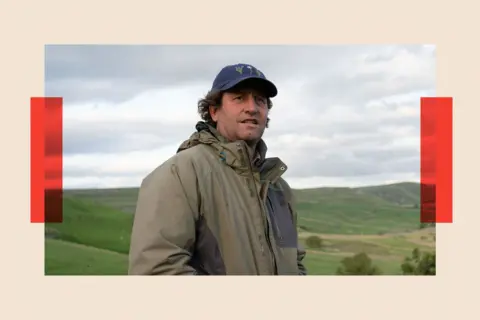
The challenges facing Britain’s sheep farmers are multifaceted and deeply entrenched. The average British farmer, according to the National Farmers’ Union (NFU), is now 60 years old, a demographic indicator of an industry struggling to attract new blood. Compounding this, the economic pressures have escalated dramatically. Prices for essential inputs, from tractor fuel to animal fodder, have soared in recent years. Neil Heseltine highlights the staggering increase in the cost of hay: an average bale now commands £155 a tonne, a sharp rise from £75 a tonne just a year ago. These escalating operational costs squeeze already tight margins, making profitability an increasingly elusive goal.
Furthermore, the post-Brexit landscape has introduced new complexities. The UK’s recent trade deals with New Zealand and Australia have been a source of significant anxiety for domestic producers. These agreements eliminate tariffs and grant producers in both countries substantial quotas for lamb exports into Britain. This influx of foreign lamb, potentially produced to different, and sometimes lower, welfare standards, poses a significant competitive threat to British farmers who adhere to some of the highest welfare and environmental standards globally. Concerns are mounting that these deals could effectively undermine the viability of British agriculture by creating an uneven playing field.

The repercussions are evident in the national flock statistics. There are currently 14.7 million breeding ewes in the UK, a figure that Phil Stocker, chief executive of the National Sheep Association, describes as the lowest in living memory. The overall national flock has also dwindled to 30.4 million sheep in 2025, numbers last observed in the mid-20th Century, when the UK population was considerably smaller, and thus the potential market for British lamb and mutton was far less extensive.
Beyond the farm gate, consumer habits have undergone a seismic shift. Becky Smith, a senior analyst at the Agriculture and Horticulture Development Board (AHDB), notes a significant decline in lamb and mutton consumption over the last 50 years. In 1980, the average UK household purchased a substantial 128g of sheep meat per person per week. By 2024, this figure had plummeted to a mere 23g per person per week. Mutton, once a culinary staple, is now rarely eaten by younger generations, and lamb has transitioned from a weekly roast to a meat reserved for special occasions, increasingly losing ground to "white meats" like chicken and pork, which are often perceived as cheaper, healthier, or more versatile.
This diminishing appetite for sheep meat is now clashing with a growing movement to re-evaluate how the UK’s iconic uplands are managed. While sheep farming has undeniably sculpted landscapes like the Lake District, Yorkshire Dales, and Welsh mountains, fostering their distinctive beauty, there’s a burgeoning debate about whether these areas might be better utilised for nature recovery and biodiversity enhancement. The question looms: have we passed "peak sheep" in the UK? And if so, what are the profound implications for consumers, who might find British lamb a rare and expensive commodity in decades to come? What fate awaits the cherished landscapes and the communities whose livelihoods are inextricably linked to them?
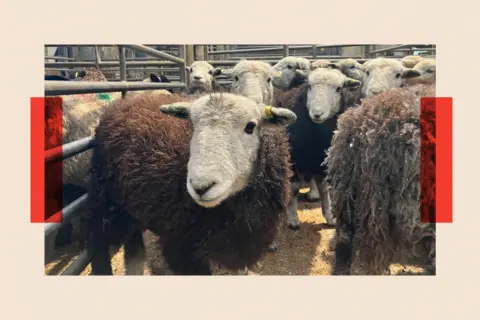
At Craven Cattle Marts, on the bustling outskirts of Skipton, North Yorkshire, the auction ring still hums with activity as farmers from across the Dales and Pennine Moors convene to buy and sell livestock. Yet, general manager Jeremy Eaton, a veteran of 47 years in the industry, observes a marked decline. "We’d have some sales at this market where we’d regularly be selling 19,000 store lambs," he recalls. "Now we’re fortunate if we get to 8,000 or 9,000." The anecdotal wisdom among those who work with sheep is that it is some of the hardest farming in Britain. A former shepherd vividly captured the essence of the challenge: sheep, he claimed, are only ever trying to do one of three things – "escape, or die, or escape and then immediately die."
Paradoxically, the drop in the national flock has actually driven up lamb prices, with Becky Smith from the AHDB reporting record highs in 2024. However, this robust growth in price doesn’t necessarily translate into prosperity for upland farmers, whose tight margins are particularly vulnerable to soaring input costs. The increase in diesel and oil prices, coupled with the rocketing cost of feed, can quickly erode any gains from higher lamb prices.
The socio-economic implications are stark. The extremely tight margins deter younger generations from entering the profession. Hayley Baines, a 39-year-old sheep farmer from Gisburn in the Ribble Valley, candidly observes the demographic imbalance at Craven Cattle Marts: "You can see here today, most of the generation of farmers are over 60. There [aren’t] many young ones because there’s better options."
Furthermore, the decline in sheep farming is not universally mourned. Animal welfare organisations like PETA welcome the trend. Mimi Bekhechi, senior vice president at PETA UK, states, "Fewer sheep means less suffering… a sheep’s life in the wool and mutton industries belies our reputation as a nation of animal lovers." Environmental concerns also play a role, with the UK’s Climate Change Committee previously advising the government to encourage reduced meat and dairy consumption as a strategy to combat climate change.
A significant contributing factor to the industry’s struggles is the dramatic overhaul of agricultural subsidies. Matthew Cole of the NFU points to the post-Brexit shift away from the EU’s direct payment system, which compensated farmers based on the volume of livestock or land farmed. In its place, successive UK governments have introduced new schemes with a pronounced focus on "farming for nature." While these schemes are welcomed in principle by many, the funding available often falls significantly short of previous support levels, leaving many farmers with substantially reduced incomes. For instance, the updated Sustainable Farming Incentive scheme offers incentives for farmers to graze moorland with cattle and ponies instead of sheep, as cattle are less intensive grazers, allowing smaller plants to flourish and contributing positively to biodiversity.
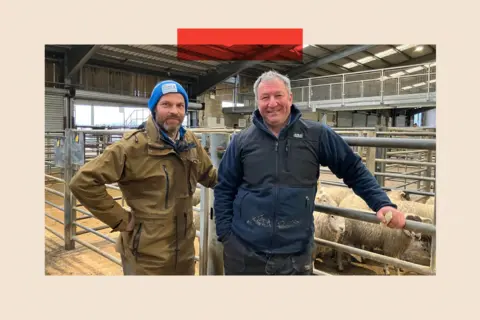
Neil Heseltine’s adaptation at Hill Top Farm exemplifies this shift. His move to 300 cattle, grazing outdoors year-round, has not only boosted profitability but also significantly reduced his working hours. Yet, for others, the transition is fraught with uncertainty. James Foster, a beef and sheep farmer on the Bolton Abbey Estate for three decades, voices a common sentiment: "Going forward, do I see a future? I’m not sure where we’re going with it. I do believe the government don’t want us, but people have to eat and we just have to adapt with that." Defra maintains that it is investing an average of £2.3 billion annually through its farming schemes, protecting farmers in trade deals, and striving for fairer supply chains.
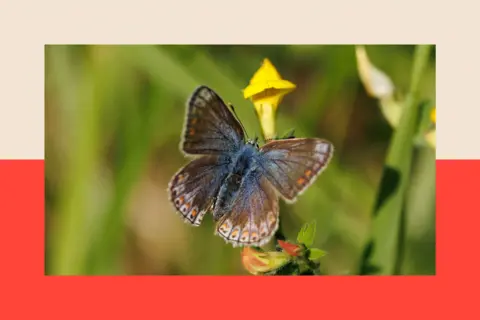
The historical relationship between sheep and the British landscape is profound. Sheep were first domesticated around 10,500 years ago in the Middle East, arriving on British shores with Neolithic farmers around 4000 BC. By medieval times, their economic importance was encapsulated in the proverb: "half the wealth of England rides on the back of the sheep." However, modern ecological understanding is challenging this long-held agricultural tradition. The Wild Ingleborough project provides a powerful case study. In 2004, sheep were removed from 1,500 hectares of Ingleborough’s limestone landscapes, the second-highest mountain in the Yorkshire Dales, and replaced with native cattle breeds, which are less intensive grazers. Two scientific studies published in Ecological Solutions and Evidence reveal the transformative impact: plant diversity increased by over 40%, and butterfly numbers saw a five-fold increase in the absence of sheep. Robyn Wrigley, co-author from the University of Leeds, highlights how this long-term research informs discussions about ecosystem restoration. Yet, this vision is not universally embraced; some farmers view such changes as the loss of valuable livestock pasture and a threat to their traditional way of life. David Stanners, Uplands North Group Chair at the NFU, calls for dialogue and mutual understanding: "To understand better what Natural England wants from the uplands, what wildlife trusts want, they need to understand what we (the farmers) want. There needs to be compromise and respect on all sides."
Amidst these profound challenges, a "ray of sunshine" emerges for the sheep industry, according to Phil Stocker of the National Sheep Association. He points to the robust and growing demand from the UK’s increasing Muslim population as a vital driver for the domestic market. AHDB statistics reveal a striking disparity: 80% of halal consumers eat lamb weekly, and 64% consume mutton weekly, in stark contrast to just 6% of the general UK population. Although Muslims constitute approximately 6.5% of the UK population, they account for a substantial 30% of annual lamb sales. Lamb is a preferred meat for family gatherings and festivals like Ramadan and Eid, while mutton is a cornerstone of popular curries and stews.
Thanks to this specific demand, Stocker does not foresee the total demise of the industry. However, he cautions that its survival currently relies heavily on "people’s interest and by market demand almost in spite of the work that the policymakers and others are doing on agricultural and land management policy." A worst-case scenario for farmers and consumers alike would see British lamb become an even more expensive luxury, increasingly displaced on supermarket shelves by cheaper imports from major suppliers like New Zealand and Australia.
The AHDB projects that sheep numbers are likely to continue decreasing across many farms. Yet, a stroll through the Lake District or Welsh mountains in another 25 years will likely still reveal sheep dotting the hillsides, albeit in smaller numbers. Both farmers and conservationists articulate a clear need for coherent, long-term plans from policymakers, outlining a sustainable vision for the uplands that can guide the next generation. Their collective hope is that, as the UK progresses further into the 21st Century, traditional sheep farmers and proponents of rewilding can find common ground and secure their respective places within the nation’s cherished and evolving uplands.




 George Anjay
 atisusanti

 Ramos Leo