
 Nana Banana
US President Donald Trump has announced the reversal of the so-called endangerment finding, a pivotal Obama-era scientific ruling that has served as the bedrock for much of US environmental legislation. This audacious move by the Trump administration’s Environmental Protection Agency (EPA) strips away the legal mandate for the federal government to regulate greenhouse gases, a decision that immediately ignited a firestorm of criticism from environmental groups and climate scientists, who are already preparing legal challenges. The reversal signals a profound shift in America’s approach to climate change, with far-reaching environmental, economic, and geopolitical consequences. Experts are anticipating a complex array of impacts, not all of which align with the administration’s stated goals. Here are some of the potential ramifications of this significant policy alteration.
Fewer Greenhouse Gas Emissions Restrictions
The most immediate and obvious consequence of the legislative change is a substantial reduction in restrictions placed on greenhouse-gas-producing industries, particularly vehicle manufacturers and the energy sector. The 2009 endangerment finding was the culmination of a landmark report by the EPA, which unequivocally identified six key greenhouse gases – including carbon dioxide, methane, nitrous oxide, hydrofluorocarbons, perfluorocarbons, and sulfur hexafluoride – as endangering the health and welfare of current and future generations. This report was mandated by a 2007 US Supreme Court decision in Massachusetts v. EPA, which ruled "without a doubt" that these gases qualified as air pollutants under the Clean Air Act, thereby obligating the EPA to regulate them.
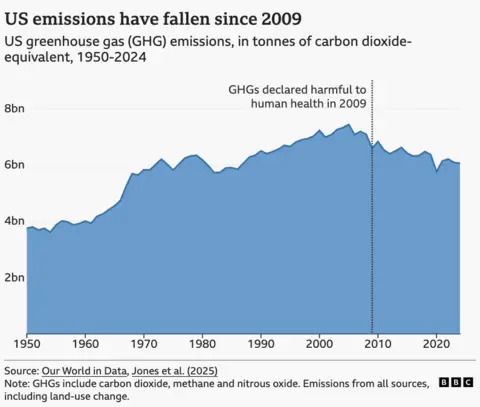
The impact of this ruling on US emissions has been notable. After peaking in the late 2000s, greenhouse gas levels in the US have shown a steady decline, a trend largely attributed to a combination of EPA regulations, state-level initiatives, and market forces favoring natural gas over coal. With the endangerment finding now rescinded, much of the legal and scientific basis for limiting US industries’ greenhouse gas emissions is effectively dismantled. The non-profit Environmental Defense Fund (EDF) has issued a stark warning, estimating an additional 7.5 to 18 billion tonnes of greenhouse gases could be emitted by 2055 – a volume equivalent to three times the current annual US emissions. This surge, the group contends, would incur costs potentially running into the trillions of dollars, not just in environmental damage but also in public health and economic disruption from climate impacts. This move directly contravenes global efforts to mitigate climate change, potentially undermining the Paris Agreement and exacerbating global warming trends.
Cheaper Cars in the US (But Harder to Export)
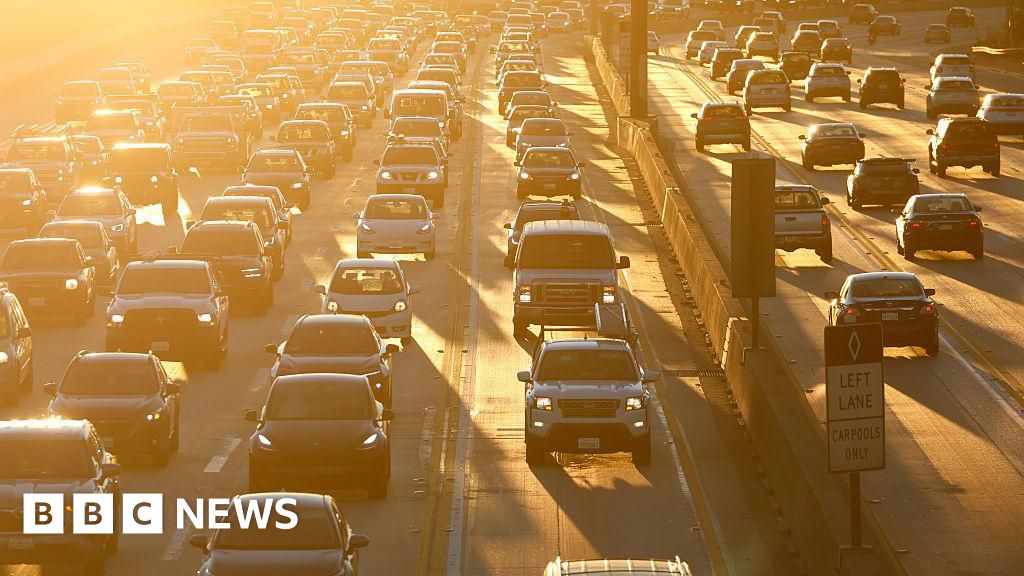
While the policy shift has drawn immediate condemnation from environmental advocates, the Trump administration champions the removal of the endangerment finding as an economically beneficial measure, particularly for the automotive sector. The White House claims that reversing the finding will reduce automobile manufacturers’ costs by approximately $2,400 (£1,760) per car. Since 2009, the endangerment finding paved the way for government policies aimed at boosting fuel efficiency standards and accelerating the adoption of electric vehicles (EVs). A cornerstone policy of Trump’s predecessor, Joe Biden, was the Inflation Reduction Act, which heavily incentivized EV ownership and renewable energy projects through tax credits and subsidies. Many of these policies have already been targeted for rollback by the Trump administration.
Thursday’s announcement has been met with approval from certain segments of the motor industry. Ford, for instance, informed CNBC that the change would help address "the imbalance between current emissions standards and customer choice," suggesting a desire to produce more traditional, less fuel-efficient vehicles. Similarly, the industry body the Alliance for Automotive Innovation welcomed the move, stating it would help "correct some of the unachievable emissions regulations enacted under the previous administration." However, this domestic relief for manufacturers may come at a significant cost in the global market. As climate targets remain applicable and increasingly stringent in many international markets, questions arise about the extent to which US car manufacturers can truly diverge from global production trends. Michael Gerrard, a climate law expert from Columbia University, warns that while the rollback "cements things that have already been done, such as the relaxation of the fuel economy standards," it fundamentally "puts the US automakers in a bind, because nobody else is going to want to buy American cars." This could lead to US manufacturers producing vehicles that are less competitive or even unsellable in major export markets, potentially harming long-term profitability and market share.
Nuisance Lawsuits
The endangerment finding had a profound effect on environmental litigation. Following the 2007 Supreme Court ruling, a subsequent 2011 Supreme Court decision in American Electric Power Co. v. Connecticut clarified that the power for regulating greenhouse gas emissions rested primarily with the EPA, effectively taking it out of the hands of the court system for "public nuisance" claims. This ruling significantly curtailed a wave of lawsuits brought by states and private entities against alleged corporate polluters, seeking compensation for climate-related damages.
With the endangerment finding now gone, legal experts are predicting a potential resurgence in such "public nuisance" actions. A public nuisance is defined as anything that interferes with the rights of the general public, and in environmental law, it typically refers to activities that harm the health, safety, or comfort of a community. Prior to the 2011 ruling, various US states and cities had initiated lawsuits against major industrial emitters, including power companies and oil corporations, arguing that their greenhouse gas emissions constituted a public nuisance and seeking monetary damages or injunctive relief to reduce pollution. Robert Percival, an environmental law professor at the University of Maryland, suggests that "this may be another classic case where overreach by the Trump administration comes back to bite it." The absence of federal regulatory authority could empower states, municipalities, and even private citizens to pursue legal avenues against companies whose emissions contribute to climate change, leading to a complex and potentially protracted legal landscape with significant financial implications for corporations.
Public Health Deterioration
In announcing the termination of the endangerment finding, the EPA asserted that maintaining stringent greenhouse gas emissions standards was not a prerequisite for fulfilling its "core mission of protecting human health and the environment." This statement stands in stark contrast to the overwhelming scientific consensus and the original intent of the Clean Air Act. The Environmental Defense Fund has presented alarming projections regarding the public health consequences of increased emissions. By 2055, they estimate that the relaxed standards could lead to between 15,400 and 58,000 additional premature deaths.
Furthermore, the EDF projects tens of millions more asthma attacks and tens of thousands more hospital visits over the same period. These health impacts are directly linked to elevated levels of air pollutants, including ground-level ozone (smog) and fine particulate matter, which are often co-emitted with greenhouse gases from fossil fuel combustion. Increased temperatures due to global warming also exacerbate heat-related illnesses and can worsen air quality. Vulnerable populations, such as children, the elderly, and communities with pre-existing respiratory conditions, particularly those in environmental justice areas often located near industrial sites, are expected to bear a disproportionate burden of these health impacts, leading to higher healthcare costs and a reduced quality of life across the nation.
Falling Behind in the Global Renewables Race
While the White House emphasizes the immediate economic savings for the automotive industry from removing greenhouse gas restrictions, Thursday’s announcement raises critical questions about the US’s long-term competitiveness in the burgeoning global race for renewable energy and clean technologies. The Biden administration had actively promoted policies, such as the Inflation Reduction Act, that incentivized domestic renewable technology development, aiming to ensure the US remained a leader in this critical sector.
Margo T. Oge, a former head of the EPA who was in post when the endangerment finding was first implemented, warned that "while the US retreats from clean vehicle standards, the rest of the world is accelerating, and American automakers are falling behind." She pointed to the significant uptick in market share for electric vehicles produced by EU and Chinese companies in recent years, propelled by aggressive national strategies and consumer demand. Oge articulated in Forbes that "If the US abandons its standards, we aren’t ‘saving’ the American auto industry; we are leaving it on an island of obsolete technology." This sentiment was echoed by former US Secretary of State John Kerry, who highlighted China’s monumental investments in clean energy. "China is now producing more wind, more solar than all of the rest of the world put together," Kerry stated, questioning whether other nations were "taking a stupid pill" by transitioning their economies. This policy shift risks ceding leadership in green innovation, jeopardizing future economic opportunities, and weakening the US’s influence in international climate diplomacy, potentially making the nation reliant on foreign technology for its energy transition needs.
Less Industry Regulation
The Trump administration frames the reversal of the endangerment finding as a triumph for deregulation and economic freedom. EPA administrator Lee Zeldin described it as "the single largest deregulatory action in US history," claiming it would save "American taxpayers over $1.3 trillion (£950bn)." This perspective underscores a core tenet of the Trump administration: that environmental regulations impose an undue economic burden, stifling growth and innovation.
Diana Furchtgott-Roth, who served in the US Department of Transportation during Trump’s first term, supported this view, telling the BBC that emissions regulations had historically led to higher prices and prompted manufacturing to leave the country. She argued that such manufacturing then "goes to China, where it’s made in a dirtier way," concluding that "to say that we’re reducing global emissions by ending energy intensive manufacturing in some countries, then having it go to China and India, where it’s made in a dirtier way, does not reduce global emissions." This argument suggests that stringent domestic regulations merely export pollution and manufacturing jobs. However, John Kerry, who also served as US special envoy for climate, fiercely countered this narrative, stating that the decision to do away with the endangerment rule will invite "enormous damage to people and property all around the world," as climate change is making extreme weather events more frequent and severe. He asserted that "It’s very clear the administration is trading facts and trading science for denial and the wilful negligence that will cost lives and health and countless taxpayers dollars," highlighting the long-term, often hidden, economic and human costs of a deregulatory approach to environmental protection.







 George Anjay
 atisusanti

 Ramos Leo