Nana Banana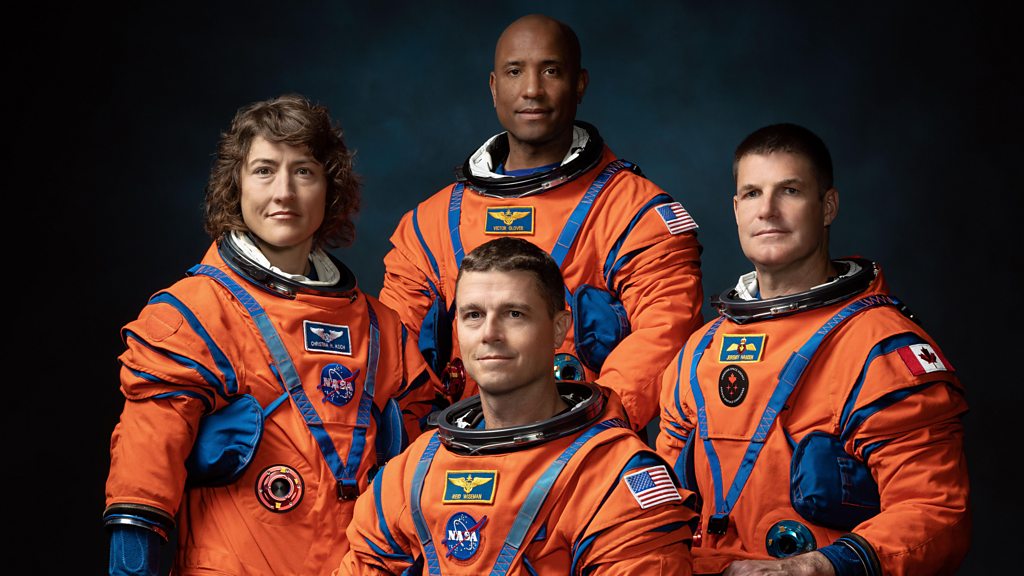
The United States, through NASA’s ambitious Artemis program, stands at the forefront of this renewed endeavor. Building upon the foundational legacy of the Apollo missions, Artemis aims not merely to revisit the Moon but to establish a sustainable, long-term human presence. The program’s second mission, Artemis II, represents a critical and audacious step in this journey. Slated to launch its crew farther from Earth than any human has traveled in decades, this flight will serve as a crucial test for the Orion spacecraft and the powerful Space Launch System (SLS) rocket. While Artemis II will not land on the lunar surface, its successful completion is indispensable for paving the way for future crewed landings, with Artemis III targeted to put astronauts back on the Moon, including the first woman and first person of color, marking a significant stride towards inclusivity in space.
Beyond the iconic "flags and footprints" approach of the Apollo era, Artemis envisions a more enduring human footprint. NASA’s strategy includes the development of the Gateway, a lunar-orbiting outpost designed to support missions to the lunar surface and beyond, and the establishment of a permanent lunar base at the Moon’s South Pole. This region is of particular interest due to the suspected presence of significant water ice in permanently shadowed craters, a resource critical for life support, rocket fuel, and scientific research. The international partnerships forged under the Artemis Accords underscore a vision of collaborative, transparent, and peaceful exploration, yet the underlying competitive dynamics remain palpable.
Simultaneously, China has been quietly but determinedly advancing its own formidable plans for a crewed Moon landing. With a track record of impressive robotic missions, including the Chang’e series of lunar orbiters, landers, and rovers – which have successfully brought back lunar samples and explored the far side of the Moon – Beijing has steadily demonstrated its growing prowess in deep space exploration. China’s long-term vision includes the construction of an International Lunar Research Station (ILRS), potentially in collaboration with Russia and other partners, signaling a distinct, independently-led pathway to lunar dominance. Experts suggest China aims to achieve a crewed lunar landing by the early 2030s, positioning itself as a major rival in the scramble for lunar real estate and resources.
This convergence of American and Chinese ambitions, coupled with the increasing involvement of other nations and private enterprises, unequivocally signals the start of a new space race. As BBC Science Editor Rebecca Morelle insightfully elaborates in "The Global Story" episode, this competition transcends the Cold War-era quest for mere prestige. While national pride and technological supremacy certainly play a role, the motivations underpinning this contemporary race are far more complex and pragmatic, rooted in the desire to establish a long-term presence on the Moon, tap into its valuable resources, and ultimately utilize Earth’s closest celestial neighbor as a strategic stepping stone for missions to Mars and beyond.
The prospect of resource tapping is a primary driver. The Moon is believed to hold vast quantities of water ice, which can be harvested and converted into breathable oxygen and hydrogen fuel. This "in-situ resource utilization" (ISRU) would dramatically reduce the cost and logistical challenges of sustained lunar operations and deep-space travel, lessening reliance on expensive launches from Earth. Beyond water, the Moon is rich in helium-3, a rare isotope with the potential to power future clean fusion reactors on Earth, though its practical extraction and transport remain monumental challenges. Additionally, lunar regolith contains valuable rare earth elements and other minerals that could hold significant industrial value. The nation that successfully masters lunar resource extraction could gain a substantial economic and strategic advantage, shaping the future of global energy and technology.
Establishing a long-term human presence on the Moon is not just about resources; it’s about extending humanity’s reach permanently into the cosmos. Lunar bases would serve as unparalleled scientific outposts, allowing for groundbreaking research in astronomy, geology, and astrobiology, leveraging the Moon’s unique environment – its vacuum, low gravity, and lack of atmospheric interference. They would also provide an invaluable testing ground for technologies and human physiological adaptations necessary for even longer-duration missions to Mars. Developing sustainable habitats, closed-loop life support systems, and radiation shielding techniques on the Moon would significantly de-risk future interplanetary endeavors.
Furthermore, the Moon’s strategic location makes it an ideal launchpad for Mars missions. Escaping the Moon’s weaker gravitational pull requires far less energy than escaping Earth’s, making it a more efficient and cost-effective location for assembling and fueling spacecraft bound for the Red Planet. A lunar propellant depot, utilizing hydrogen and oxygen derived from lunar water ice, could revolutionize the economics and feasibility of Mars exploration, transforming the Moon from a destination into a crucial waypoint on the interplanetary highway. This visionary goal underpins much of the long-term planning for both the Artemis and Chinese lunar programs.
The complexities of this new space race extend beyond technological prowess and resource acquisition to encompass significant geopolitical considerations. The absence of comprehensive international treaties governing lunar resource ownership or territorial claims creates a fertile ground for potential future disputes. While the Outer Space Treaty of 1967 declares space to be the "province of all mankind" and prohibits national appropriation, it does not explicitly address commercial exploitation or permanent settlements. The Artemis Accords, while promoting transparency and peaceful exploration, are not universally recognized, particularly by nations like China and Russia, who view them as a U.S.-led attempt to unilaterally establish norms. As nations vie for strategic locations and valuable resources, the potential for cooperation will be constantly balanced against the impulse for competition, raising questions about the future governance and militarization of space.
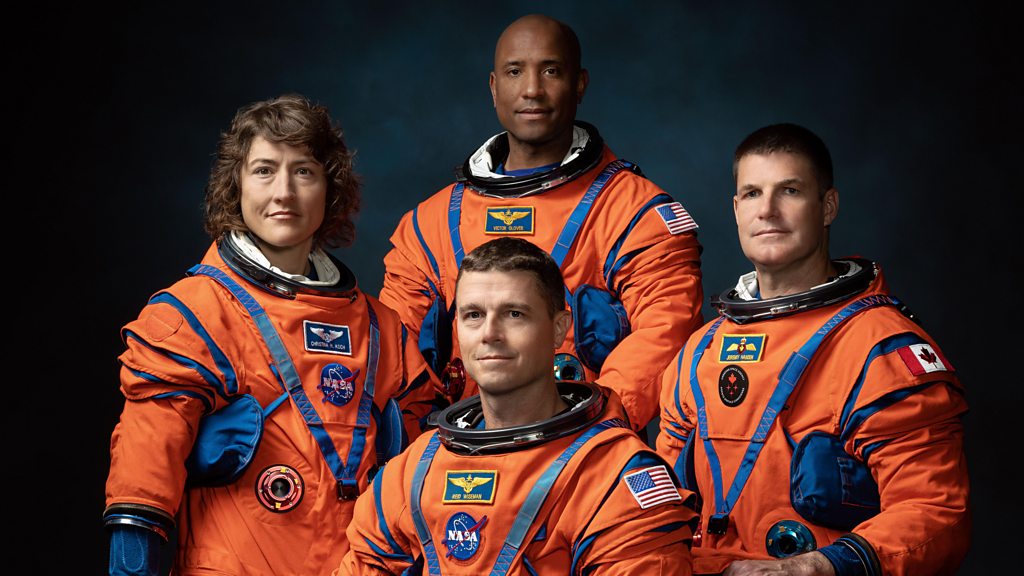
This insightful discussion, meticulously crafted by producers Valerio Esposito and Cat Farnsworth, with executive producer James Shield guiding the narrative, and Travis Evans expertly mixing the audio, provides a comprehensive overview of this monumental shift in space exploration. Senior news editor China Collins ensures the editorial integrity and global relevance of the broadcast, making "The Global Story" an essential listen for understanding the intricate dynamics at play. The episode’s accompanying imagery, such as the official Artemis crew portrait captured by Josh Valcarcel/NASA Handout/EPA-EFE/REX/Shutterstock, visually reinforces the human element at the heart of this audacious endeavor, reminding us of the extraordinary individuals who will lead humanity’s next giant leaps. As the global community watches, the outcomes of this renewed race to the Moon will undoubtedly shape not only the future of space exploration but also international relations and the very trajectory of human civilization.




 atisusanti
 George Anjay