
 Nana Banana
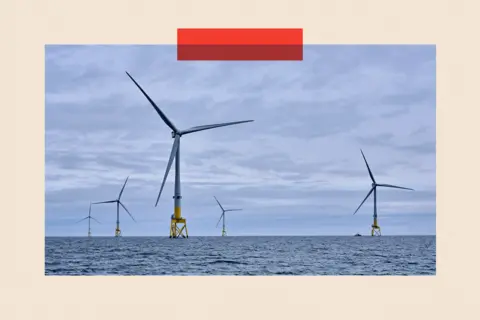
Consider the early hours of 3 June, a time when a powerful gale was sweeping across Scotland. One would naturally assume this to be prime operating conditions for the colossal Moray East and West offshore wind farms, situated 13 miles off the Scottish coast. These towering turbines, among the largest in the UK at 257m high, are theoretically capable of generating enough electricity to power over a million homes. Yet, during a half-hour window that day, they were paid £72,000 not to generate power. This startling scenario is not an isolated incident but a symptom of a deeper systemic flaw.

The fundamental issue lies in the historical design of Britain’s electricity grid. Conceived and constructed primarily to distribute power from large-scale coal and gas-fired plants located near major population centers, it struggles to efficiently integrate the vast, decentralized renewable energy sources now increasingly found in remote, windy, or sunny regions. The "wires" – the transmission lines that carry electricity across the country – frequently lack sufficient capacity to transport all the green energy generated in places like the Scottish North Sea down to the demand hubs in the south.
This bottleneck creates a significant problem for the National Electricity System Operator (NESO), the body responsible for balancing the grid in real-time. When there’s an oversupply of electricity in one region that cannot be transmitted elsewhere, and a deficit in another, NESO must intervene. Under the current system, this often means instructing wind farms to reduce their output and simultaneously paying gas-fired power stations, typically closer to demand, to ramp up production. This balancing act, known as "constraint payments," results in renewable generators being compensated for curtailing their clean energy output, while fossil fuel plants receive payments to fill the gap.

The financial toll of this inefficiency is staggering. Octopus Energy, a major UK energy supplier, highlighted that Seagreen, Scotland’s largest wind farm, received £65 million last year to restrict its output a staggering 71% of the time. This phenomenon isn’t confined to specific sites; it’s a pervasive issue. The cumulative cost of balancing the grid has already exceeded £500 million this year alone, according to Octopus Energy’s analysis. Projections from NESO itself warn that these costs could skyrocket to almost £8 billion annually by 2030 if no structural changes are made. These enormous sums are ultimately passed on to consumers, inflating energy bills and directly contradicting the government’s promise that transitioning to net-zero would lead to cheaper electricity.
The mounting pressure has forced the government to consider a radical overhaul of the electricity market, the most significant since privatization 35 years ago. The proposed solution involves moving away from a single, national electricity market to a system of smaller, regional markets, often referred to as "zonal pricing." The hope is that this localized approach could introduce greater efficiency and, critically, deliver lower bills. However, the path to implementation is fraught with intense debate, with one senior energy industry executive describing it as "the most vicious policy fight" he has ever witnessed, even claiming to have "have lost friends over it." The Prime Minister has reportedly requested a review of what some newspapers are sensationalizing as a "postcode pricing" plan, underscoring the political sensitivity of the decision.

Environment Editor Justin Rowlatt’s article illuminates the core challenge facing Energy Secretary Ed Miliband. His aggressive clean energy policies, which promised to cut average electricity bills by £300 by ensuring 95% of the country’s electricity comes from low-carbon sources by 2030, are under unprecedented scrutiny. The Conservative opposition has voiced concerns, green politicians argue it’s not delivering for ordinary people, and even former Prime Minister Tony Blair has weighed in. Reform UK, in particular, has seized on net-zero as a political vulnerability, with deputy leader Richard Tice declaring the next election will be fought on "immigration and net stupid zero," betting on public frustration over costs.
The public’s concern over the cost of living, particularly rising energy prices, consistently ranks high in opinion polls. While renewables now generate over half of the UK’s electricity, the current national pricing mechanism means that even on days of abundant wind or sun, some gas generation is almost always required to stabilize the system. Crucially, because gas generation often represents the marginal cost of electricity, its price frequently dictates the wholesale price for all electricity, including cheaper renewables. This mechanism prevents the true cost benefits of renewable energy from fully reaching consumers.
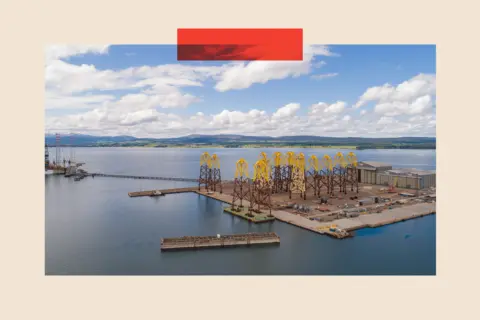
Supporters of zonal pricing argue that it would fundamentally break gas’s stranglehold on electricity costs. In regions like Scotland, which boasts immense wind resources but a relatively small population of 5.5 million, local pricing could dramatically reduce electricity costs. Instead of paying wind farms to curtail output due to transmission constraints to England, these farms would be incentivized to sell their abundant power locally. The theory suggests that on exceptionally windy days, Scottish customers might even receive electricity for free.
The benefits would extend beyond Scotland. Other areas rich in renewable generation, such as Yorkshire, the North East, and parts of Wales, would also see significant price reductions. As solar power investments grow in regions like Lincolnshire and other parts of eastern England, these areas could also experience tumbling prices. Such a transformation in electricity costs could revitalize local economies, attracting energy-intensive industries like data centers, chemical manufacturers, and other manufacturing sectors that currently face high energy overheads.
While London and much of the south of England might experience higher electricity prices at times under zonal pricing, proponents argue that the hundreds of millions saved through increased system efficiency could be redistributed to ensure no one pays more than they do now. Furthermore, higher regional prices would create powerful market signals, encouraging investors to build new wind and solar plants closer to major demand centers. This strategic decentralization would reduce the need for expensive, extensive new transmission infrastructure, such as pylons, saving money and preserving the countryside.
Greg Jackson, CEO of Octopus Energy, is a vocal advocate for zonal pricing, stating it would make the energy system "dramatically more efficient, slashing this waste and cutting bills for every family and business in the country." Research commissioned by Octopus estimates potential savings of over £55 billion by 2050, which could translate to £50-£100 off the average annual bill. They point to Sweden’s successful transition to regional pricing in just 18 months as a viable precedent. The proposal has garnered significant support from key institutions including NESO, Citizens Advice, the energy regulator Ofgem, and, most recently, a committee of the House of Lords.

However, the opposition from established energy firms and developers of renewable plants is formidable. Tom Glover, UK chair of the German power giant RWE, expresses deep concern. "We’re making billions of pounds of investments in renewable power in the UK every year," he notes, "I can’t go to my board and say let’s take a bet on billions of pounds of investment." His primary worry is that altering the energy pricing mechanism could undermine existing contracts and introduce crippling revenue uncertainty, potentially stalling the crucial green energy transition.
The economics of renewable projects are heavily front-loaded; the main cost is in the build, meaning project viability is acutely sensitive to the cost of capital and interest rates. With the government expecting power companies to invest £40 billion annually over the next five years in UK renewable projects, even a small increase in perceived risk or interest rates could have profound negative effects on how much renewable infrastructure gets built and the ultimate cost of the power it produces. Stephen Woodhouse, an economist with AFRY consultancy, which has studied regional pricing for power companies, warns that "those additional costs could quickly overwhelm any of the benefits of regional pricing." This risk is compounded by already high interest rates and rising material costs for steel and other components, factors that led to the recent cancellation of plans for a huge wind farm off the coast of Yorkshire.

Critics also point out that the National Grid is already committed to a massive £60 billion investment program over the next five years to upgrade and expand the transmission system. This new infrastructure will significantly increase capacity, particularly from windy northern coasts to the south, thereby reducing the very constraints that zonal pricing aims to address and potentially diminishing its future benefits. Furthermore, opponents argue that implementing regional pricing could take years, that energy-intensive businesses like British Steel cannot simply relocate to cheaper zones, and that the system would be inherently unfair if some customers pay more than others based solely on their postcode.
Greg Jackson of Octopus, however, dismisses these concerns as self-serving, claiming that "it’s the companies that enjoy attractive returns from this absurd system who are lobbying hard to maintain the status quo." Yet, the power companies retort that Octopus itself has a vested interest, being the UK’s largest energy supplier with seven million customers and owning a sophisticated billing system licensed to other suppliers, thus potentially benefiting from such market changes.

As the clock ticks, the government faces a pivotal decision. Meeting its clean power targets hinges on a steady pipeline of new wind and solar farms. The companies poised to build these vital projects demand clarity and certainty regarding the future electricity market. A decision is expected within weeks, leaving the final call in the hands of Ed Miliband, who must navigate this complex political and economic minefield.







 George Anjay
 Ramos Leo
 atisusanti
 Nakalama John