Nakalama John
The Strait of Hormuz, a chokepoint located between Iran and Oman, with the United Arab Emirates just to its south, is not merely a shipping lane; it is a geopolitical fault line. Its unique geography—a mere 21 nautical miles wide at its narrowest point—makes it highly susceptible to disruption. For decades, global energy security has been inextricably linked to the free flow of commerce through this strait. Any impediment here sends immediate ripples through international markets, affecting everything from crude oil prices to the cost of consumer goods worldwide. Recent aggressive posturing and reported military actions by Iran, including instances where its forces allegedly fired upon several vessels, have triggered alarm bells across the shipping industry and global capitals.
In response to this rapidly unfolding crisis, President Trump outlined a two-pronged strategy designed to restore confidence and ensure the uninterrupted passage of energy resources. Firstly, he announced that the US government, through the United States Development Finance Corporation (DFC), would offer political risk insurance to all shipping firms operating in the Gulf region. This insurance, promised "at a very reasonable price," is intended to cover "ALL Maritime Trade, especially Energy," thereby mitigating the financial exposure of companies facing heightened risks. The explicit goal, as stated by Trump, is to "ensure the FREE FLOW of ENERGY to the WORLD."
Secondly, and perhaps more significantly, the President pledged the direct intervention of the US military, stating that naval escorts would be provided "if necessary… as soon as possible." This commitment underscores a willingness to deploy hard power to safeguard international shipping lanes, a move reminiscent of past US efforts to protect maritime trade in volatile regions. The announcement immediately impacted global oil markets, with crude prices notably dropping back from their highs shortly after Trump’s statement, reflecting a cautious optimism that the immediate threat to supply might be addressed.
The President’s remarks were made ahead of a critical meeting at the White House, where he was scheduled to confer with Energy Secretary Chris Wright and Treasury Secretary Scott Bessent. The agenda for this high-stakes discussion focused squarely on formulating comprehensive plans to tackle the burgeoning energy crisis and its broader economic implications. The administration is keenly aware that a prolonged disruption in the Middle East could have far-reaching consequences for the global economy, potentially triggering inflation and stifling growth.
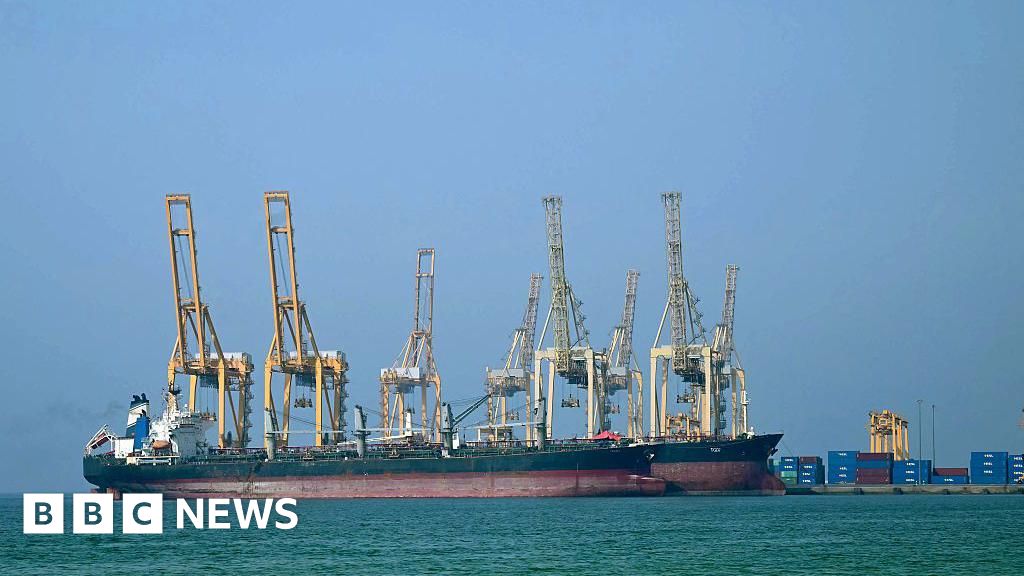
However, despite the administration’s assurances, experts remain skeptical about the efficacy of these measures in fully assuaging the concerns of the shipping industry. Richard Meade, the influential editor-in-chief of the shipping journal Lloyds List, voiced significant reservations. He questioned whether the proposed risk insurance and military escorts would be sufficient to overcome the deep-seated safety fears that are currently driving the supply crunch. Meade drew parallels to the challenges faced in the Red Sea in recent years, where Houthi attacks on commercial ships prompted numerous shipping firms to abandon the shorter, traditional routes in favor of longer, more expensive detours, despite the presence and intervention of the US military.
"There was never really a point at which insurance alone would have prevented ships from going through the Strait of Hormuz," Meade commented, emphasizing that the underlying issue is the perceived threat to human life and vessel integrity. He further cautioned, "Just because you’ve got a naval escort doesn’t mean to say you’re safe." This perspective highlights the complex reality that naval protection, while a deterrent, cannot entirely eliminate the risk of asymmetric attacks, accidental engagements, or the psychological impact of operating in a war zone. Shipping companies, responsible for their crews and billions of dollars in assets, often prioritize safety over convenience or even direct cost savings, especially when alternative routes, however circuitous, are available.
The financial ramifications of a prolonged disruption are stark. Analysts have consistently warned that if the crisis in the Strait of Hormuz persists, crude oil prices could surge past $100 a barrel. Such a dramatic increase would inevitably translate into significantly higher petrol prices globally, including in the United States. Even with substantial domestic oil production, which historically has cushioned the US from the full impact of global price movements, a sustained spike of this magnitude would place considerable strain on American consumers and businesses, potentially slowing economic activity and fueling inflationary pressures. The cascading effects could impact manufacturing, transportation, and agriculture, sectors heavily reliant on stable energy costs.
Addressing reporters at the White House on Tuesday, President Trump staunchly defended the ongoing conflict, stating that "something had to be done" about the Iranian regime. While he acknowledged that the conflict might lead to "high oil prices ‘for a little while’," he dismissed the notion of a long-term negative impact. Expressing characteristic optimism, Trump asserted, "As soon as this ends, those prices are going to drop, I believe lower than even before." This statement reflects a belief within the administration that the current instability is a temporary phase necessitated by a broader strategic objective, and that a resolution would quickly restore market equilibrium, potentially even creating a more favorable energy landscape.
The broader context of the "US-Israel war with Iran" is a critical, though vaguely defined, element in this unfolding crisis. While the original text does not detail the specific nature of this conflict, it implies an escalating state of regional tension and confrontation involving US and Israeli interests against Iran. This could encompass a range of activities from proxy conflicts and cyber warfare to economic sanctions, intelligence operations, and limited military engagements. The direct impact on the Strait of Hormuz suggests that this broader conflict has reached a point where it is directly threatening global commerce and energy supply lines, compelling a more overt military and economic response from the US. The phrase underscores a significant shift from mere geopolitical rivalry to a more active and disruptive phase of confrontation, making the free passage of ships a critical flashpoint. The US commitment to protect shipping in the Middle East, therefore, is not merely an economic decision but a significant geopolitical statement, reaffirming its role as a guarantor of international maritime security in a volatile and strategically crucial region.




 atisusanti
 George Anjay
 Nana Banana