Nana Banana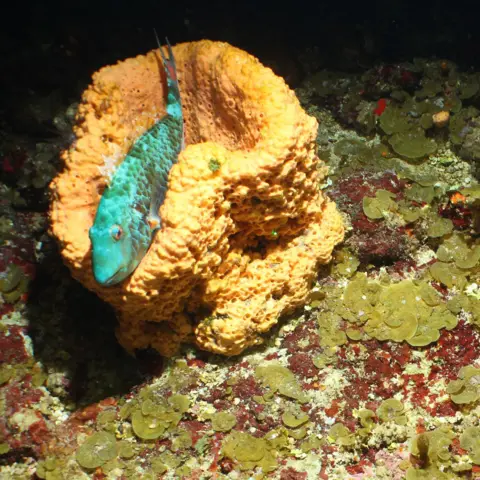
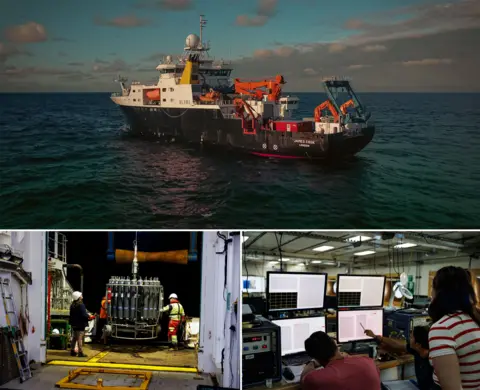
For six intensive weeks, operating relentlessly 24 hours a day, researchers aboard the British research ship RRS James Cook pushed the boundaries of deep-sea exploration. They deployed state-of-the-art cameras, advanced echo-sounders, and other specialized equipment designed to withstand the crushing pressures of the abyss, reaching astonishing depths of up to 6,000 meters (19,700 feet). The challenge was compounded by the fact that the team was forced to navigate using severely outdated maps, some decades old, which were riddled with serious errors and entirely missing vast swathes of the seafloor around these British Overseas Territories. The UK Centre for Environment, Fisheries and Aquaculture Science (CEFAS), leading this monumental effort, has shared their breathtaking footage and revolutionary discoveries exclusively with BBC News, offering the world a glimpse into these pristine, alien-like ecosystems.
The expedition’s findings immediately underscore the critical importance of these regions. The UK government shares a profound responsibility for safeguarding the natural heritage of these islands, and it is estimated that up to 90% of Britain’s unique species are found within these and other British Overseas Territories. With these unprecedented discoveries, scientists are now sounding the alarm, emphasizing the urgent need to protect this "relatively pristine" environment from the escalating threats of climate change, ocean acidification, and burgeoning pollution.
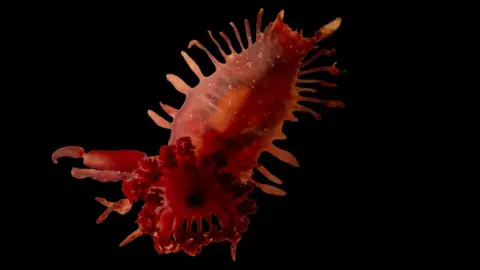
Dr. James Bell, the lead scientist spearheading the expedition from the RRS James Cook, expressed his awe at the revelations. "This is the first step into environments people have never seen, and in some cases didn’t know existed," he stated, highlighting the sheer novelty of their findings. The diversity encountered has been "really, really astonishing." He recounted a recent discovery: "Just yesterday we found a kind of type of swimming sea cucumber, and we still don’t know what it is," underscoring the potential for countless new species yet to be formally identified. The expedition meticulously documented nearly 14,000 individual specimens, representing an estimated 290 different types of marine creatures, though further scientific analysis is essential to confirm these preliminary findings and officially classify potential new species.
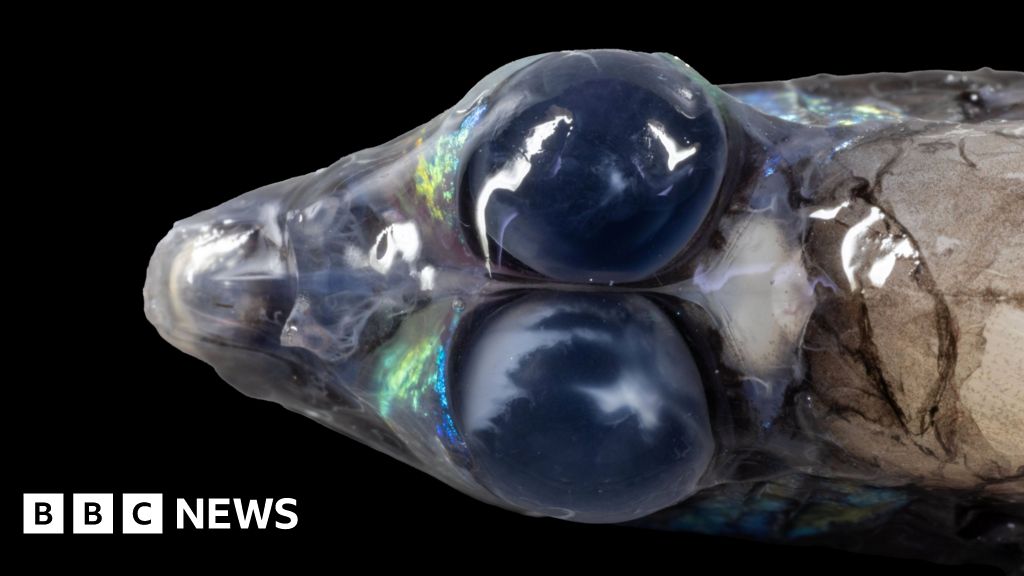
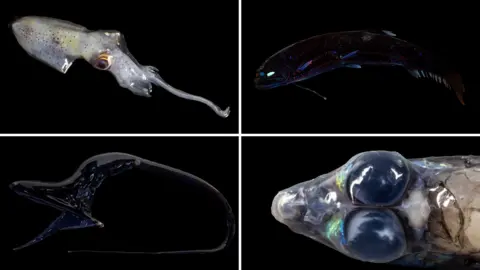
Among the spectacular deep-sea fauna captured on film were a pelican eel (Eurypharynx pelecanoides) with an extraordinary glowing pink tail that flashes a vibrant red, believed to be a sophisticated lure for unsuspecting prey in the perpetual darkness. They also observed a barreleye fish (Opisthoproctus soleatus), famed for its unique tubular eyes that point upwards, allowing it to detect the faint silhouettes of prey against the dim light from the surface. Another marvel was the dragonfish (Neonesthes), equipped with a glowing rod under its chin, likely used for hunting or communication in the abyssal zone. Footage also revealed enope squid (Enoploteuthidae squid), glowing lanternfish, and various alien-like cephalopods, all thriving in conditions of extreme pressure and absence of light. One particular highlight was a mysterious swimming sea cucumber, initially mistaken for the famed "headless chicken monster" (Enypniastes), but later determined to be a distinct, as-yet-unidentified species.
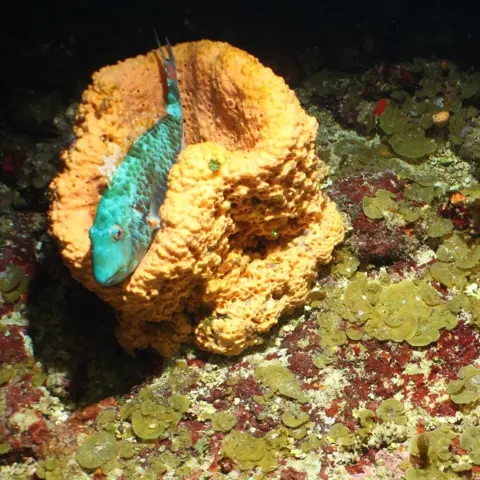
Navigating uncharted waters presented significant challenges. Dr. Bell recounted a tense moment while the ship was navigating near an unknown underwater mountain, which they christened "Pickle Bank," located north of Little Cayman island. "We’re not sure how close to it we are. It’s quite difficult to map it without running the risk of running aground," he explained. Through persistent effort, the team eventually mapped this colossal feature, revealing it to rise dramatically from a depth of 2,500 meters (8,200 feet) to within just 20 meters (65 feet) of the sea surface. The footage from Pickle Bank was astounding, showcasing a vibrant, almost impossibly colourful mountainside teeming with life. Golden towers of coral stood alongside massive, brain-like coral formations. Fish darted between delicate gorgonian whip corals, while jelly-like orange sea sponges coexisted with ancient black corals, forming a truly kaleidoscopic underwater landscape.
This reef at Pickle Bank has been identified as one of the healthiest and most biodiverse in the entire Caribbean region, showing no signs of the devastating stony coral tissue loss disease that has plagued other reefs across the area. Its remarkable pristine condition is likely due to its significant depth and the mountain’s steep slopes, which offer a natural protective barrier against surface-level environmental stressors. These deep-water, or mesophotic, reefs are generally too far below the surface to be immediately affected by the warming ocean temperatures, a primary consequence of climate change that has already damaged an estimated 80% of the world’s shallow-water corals since 2023. These mesophotic reefs represent crucial potential refugia for marine biodiversity in a rapidly changing world.
Utilizing their array of specialized deep-sea cameras and echo-sounders, meticulously lowered from the ship’s side, the researchers managed to map an astonishing almost 25,000 square kilometers (9,700 square miles) of the sea-floor. In addition to the mapping, they captured over 20,000 high-resolution photographs, providing an invaluable visual record of these newly revealed ecosystems. Dr. Bell emphasized the global significance of this mapping effort, stating, "We know the surface of Mars or the Moon better than we know the surface of our own planet. You send a satellite around them and map them in a few weeks. We can’t do that for our ocean. We have to map it bit by bit using acoustic instruments on ships." This stark comparison highlights the monumental task of ocean exploration and the pioneering nature of this expedition.
The discoveries continued in Turks and Caicos, where the team uncovered a monumental geological feature entirely absent from existing sea charts. They mapped an extremely steep, 3,200-meter (10,500-foot) high mountain ridge stretching an impressive 70 kilometers (45 miles) along the seabed, located west of a bank known as Gentry Bank. This colossal underwater barrier represents a significant new addition to the Caribbean’s known bathymetry.
Even more astonishing was the discovery of a massive, vertical sinkhole, colloquially known as a blue hole, situated approximately 75 kilometers south of Grand Turk. This colossal geological formation originated from the collapse of an ancient underwater cave. "Imagine taking an ice cream scoop out of the sea-floor. That’s what we saw – a crater about 300 meters (980 feet) wide to 550 meters (1,800 feet) below sea level," Dr. Bell described, conveying the immense scale of the feature. Researchers believe its sheer, steep walls could make it the deepest blue hole in the Caribbean, potentially surpassing Belize’s internationally famous Great Blue Hole. Intriguingly, unlike many blue holes that are often anoxic and devoid of life, cameras dropped into this new discovery revealed a thriving ecosystem, showcasing small sponges, a species of urchin known as large spatangoid, and a diverse array of fish species.
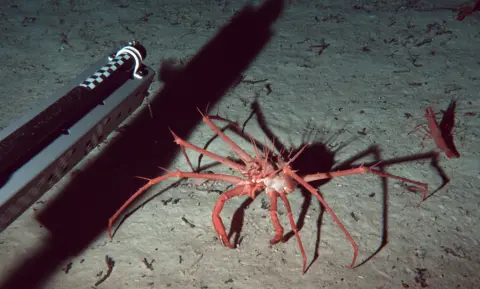
Further north, approximately 25 kilometers (15 miles) off the coast of Anguilla, the researchers investigated long-standing rumours among local fishers who had occasionally pulled up pieces of coral from unusual depths. The expedition confirmed these anecdotal reports, discovering a 4-kilometer (2.5-mile) long reef characterized by intricate mosaics of coral growing within lush "sponge gardens." Within this pristine environment, they also found specimens of black coral that could be thousands of years old, making them some of the most ancient living organisms ever recorded in the marine world. "It tells us that these environments are really pristine and healthy," Dr. Bell affirmed, highlighting the ecological significance of these long-hidden ecosystems.
Scientists are particularly interested in these deep-water areas and steep underwater mountains because of their critical role in marine ecosystems. Such topographical features can create upwelling currents, funneling nutrient-rich water from the deep sea towards the surface. This process creates highly productive feeding grounds, attracting a wide variety of marine life and offering potential new fishing opportunities for local island communities.
A crucial aspect of this expedition was the collaborative effort. On board the RRS James Cook, CEFAS scientists worked hand-in-hand with environmental experts from the Cayman Islands, Anguilla, and Turks and Caicos. This partnership, part of the wider Blue Belt Programme, ensures that the invaluable findings will directly inform and improve biodiversity management plans for these islands, as well as aid in identifying sustainable new fishing opportunities for their communities. Kelly Forsythe from the Cayman Islands Department of Environment articulated the profound local significance of the expedition: "Our islands were literally born from the sea. But when it comes to our offshore environments, we really haven’t had a chance before to discover what’s out there."
This monumental work will provide essential baseline information, enabling the UK to effectively fulfill its legally-binding UN commitments to protect 30% of the world’s oceans by 2030 through the establishment of designated Marine Protected Areas (MPAs). Dr. Bell underscored the necessity of robust data for meaningful conservation: "Anyone can draw a box on a map and say, ‘That’s a marine protected area.’ But unless you know what’s in it, you don’t know if that’s useful at all." The detailed knowledge gleaned from this expedition is therefore not just a matter of scientific curiosity, but a fundamental pillar for effective, evidence-based conservation strategies, ensuring that these newly unveiled, spectacular deep-water worlds are safeguarded for generations to come. The journey into the Caribbean’s deep has just begun, revealing a vibrant, vulnerable frontier that demands immediate attention and protection.







 George Anjay
 Ramos Leo
 atisusanti
 Nakalama John