
 Nakalama John
The profound and far-reaching impact of the hypothetical war between the US and Israel in Iran is beginning to resonate across the globe, reaching homes and industries irrespective of geographic location. As the conflict disrupts vital oil exports from the strategically critical Gulf region and compels major producers to curtail output, a significant supply shock has propelled oil prices dramatically. Initially surging towards $85 per barrel, with peaks nearing $120, this volatility has sent tremors through financial markets, triggered steep increases at the fuel pump for consumers, and ignited widespread fears of a severe, cascading economic downturn that could eclipse previous crises.
This geopolitical flashpoint serves as an unwelcome, yet stark, reminder of the world’s enduring and deep-seated reliance on the Middle East for its energy lifeblood. The current situation evokes unsettling parallels with historical supply shocks, such as the Suez Crisis of the 1950s or the OPEC embargoes of the 1970s. However, contemporary analysts universally agree that the repercussions this time around are poised to be substantially more extensive and devastating. A staggering 20% of the world’s crude oil supply typically transits through the Strait of Hormuz, a narrow maritime choke point now effectively blocked by the ongoing hostilities. This closure alone represents an unprecedented disruption to global energy flows.
Beyond the immediate blockade, the global capacity to offset these losses is severely constrained. Major oil and gas producers outside the immediate conflict zone, including nations like the United States, Brazil, and Norway, possess only limited ability to rapidly ramp up their production. The lead time for increasing output from conventional oil fields is often measured in years, while even the more flexible shale operations in the US face logistical, infrastructure, and capital constraints that prevent immediate, large-scale increases. Furthermore, while some local oil pipelines offer alternative routes for regional producers, their existing capacity is woefully insufficient to compensate for the massive volume of oil that normally passes through the Strait of Hormuz. Consequently, producers within the region are being forced to announce significant output reductions. Reports from Reuters indicate that Iraq’s oil output alone has plummeted by over 60%, with Kuwait and the United Arab Emirates also implementing substantial cutbacks to their production.

The energy crisis is not confined solely to crude oil. Approximately 20% of the world’s natural gas supplies have also been jeopardized, following Qatar’s state energy firm’s decision to halt production, directly citing military attacks in the region. Given Qatar’s pivotal role as a major exporter of Liquefied Natural Gas (LNG), particularly to Europe and Asia, this cessation of supply promises to create acute shortages and drive up gas prices significantly in energy-import dependent regions. With no readily available mechanisms to plug these colossal gaps in supply, analysts at JP Morgan have issued a stark warning, predicting that "visible shortages" of both oil and natural gas will begin to manifest in Asia and Europe within a mere week, escalating the crisis from a financial market concern to a tangible impact on daily life and industrial operations.
In the United Kingdom, Chancellor Rachel Reeves has publicly voiced grave concerns about the impending risks of an inflationary shock, underscoring the potential for a broad-based increase in prices across the economy. Echoing this sentiment, energy market expert Kornfeind characterized the situation as "essentially the biggest supply shock at least in modern global oil market history." He emphasized the unprecedented scale of the challenge, stating, "We’re talking apples to oranges in terms of the need," highlighting that previous crises pale in comparison to the current demand-supply imbalance.
The immediate consequence of this shock is a dramatic escalation in energy prices. Both Brent crude, the international benchmark, and West Texas Intermediate (WTI), the US benchmark, experienced significant surges following the outbreak of the war. While they temporarily retreated from an intra-day high of nearly $120 per barrel, prices have stabilized around $85 per barrel, still representing a substantial increase. This elevated cost of crude directly translates into higher operational expenses for businesses and increased financial burdens for households globally. In the UK and across Europe, natural gas prices have almost doubled since the conflict in Iran began, threatening to reignite a cost-of-living crisis that many countries were only just beginning to recover from. Even the United States, typically somewhat insulated from global price fluctuations due to its substantial domestic oil and gas production, is feeling the pinch. Pump prices for gasoline have climbed from approximately $2.90 per gallon a month ago to approach $3.50 per gallon, returning to levels last experienced in 2024 and eroding consumer purchasing power.
The broader economic ramifications are equally alarming. Last week, Goldman Sachs estimated that even a temporary rise in oil prices to just $100 per barrel could shave 0.4 percentage points off global economic growth. This reduction stems from a multitude of factors: businesses face higher transportation and production costs, which they often pass on to consumers; households have less discretionary income after paying for fuel and heating, leading to reduced spending on other goods and services; and central banks, battling inflationary pressures, may be forced to maintain higher interest rates, further stifling economic activity. If the conflict remains unresolved by the end of the month, analysts warn that global oil prices could easily surpass the peaks seen in 2022 following Russia’s invasion of Ukraine. In some dire scenarios, oil could even hit an unprecedented $150 per barrel. Kornfeind cautioned that at such price levels, the knock-on impact for the global economy would be "pretty drastic," potentially triggering widespread recessionary conditions as higher energy costs force a significant contraction in both household and business spending, leading to a broader economic slowdown.

The impact extends far beyond the energy sector, rippling through various critical industries. Analysts are closely monitoring the potential for the energy shock to impede chip-making, a sector with profound ramifications for nearly every aspect of modern life, from automobiles and home appliances to smartphones and defense systems. Taiwan, a global hub for semiconductor production, relies heavily on imported energy, making its vital output vulnerable to sustained price hikes or energy shortages. In the United States, concerns have also been raised that a significant jump in energy costs could weigh heavily on tech firms vigorously building out their artificial intelligence (AI) infrastructure. The immense computational power required for AI development translates into substantial energy consumption, and higher electricity costs could dampen investment and slow down what has been a key driver of recent economic growth and innovation.
Moreover, the crisis is affecting a broader spectrum of commodities. The Middle East is a significant source of aluminum, a crucial material in construction, automotive, and packaging industries. It also supplies sulfur, an essential chemical used in processing metals such as copper and in the production of various industrial chemicals. Furthermore, the region is a vital supplier of ingredients for fertilizer, including urea, a cornerstone of global agricultural productivity. As prices for these critical commodities begin their upward creep, the inflationary pressure will inevitably feed through to the costs of food and manufactured goods, impacting consumers worldwide.
For the agricultural sector, the timing of these disruptions could not be worse. In the US, approximately 25% of annual fertilizer imports typically arrive during March and April, coinciding precisely with the crucial planting season. Farmer Harry Ott, who cultivates cotton, corn, and soybeans in South Carolina, recounted his recent experience. Last week, when he contacted his fertilizer supplier to arrange for applications to his fields, he was informed that the business was temporarily halting sales and deliveries until it could gain a clearer understanding of the war’s full impact. Subsequently, the supplier announced a price hike, which Ott fears will increase his fertilizer bill by roughly $100 per acre, effectively wiping out any chance of making a profit on this year’s crop. During a briefing hosted by the American Farm Bureau Federation, Ott lamented, "These are trying times and what we are going through now on fertilizer… was totally unexpected. Nobody’s balance sheet had room to make these adjustments," highlighting the precarious financial position of many farmers.
The economic risks are particularly acute in Asia and Europe, regions that are profoundly dependent on energy imports. This vulnerability has been clearly reflected in global stock markets. Japan’s main stock index has fallen by approximately 10% since the war began, while South Korea’s has dropped by a steeper 15%. Germany’s Dax index, a barometer for Europe’s largest economy, has also fallen by more than 7%. In stark contrast, the US S&P 500 has experienced a comparatively modest decline of just 1.2%, underscoring America’s greater energy independence.
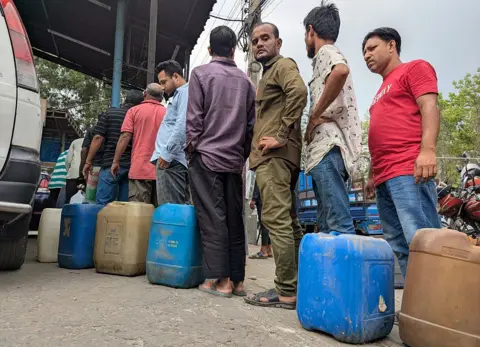
However, even in the US, the escalating cost of living remains a top concern for voters, particularly ahead of congressional elections in November. Analysts suggest that the situation threatens to create a significant political liability for President Donald Trump should consumer prices continue their upward trajectory. The White House has, at times, sent conflicting signals regarding its plans for the region, raising doubts about the administration’s willingness or ability to sustain a prolonged conflict. Even if President Trump were to declare an end to the war, experts warn that underlying concerns about continued geopolitical turmoil could keep prices elevated. Paul Sankey of Sankey Research cautioned, "Much as the US and Israel may declare operations over and complete, the Iranians may not see it that way." He added, "That may mean this situation continues long beyond the declaration of hostilities by the Trump administration," implying that the perception of risk and ongoing regional instability could maintain a premium on oil prices, affecting global economies and households for an extended period. The price of oil, therefore, is far more than a simple market indicator; it is a complex barometer of geopolitical stability, economic resilience, and the everyday well-being of billions worldwide.







 Ramos Leo
 George Anjay
 atisusanti