Nana Banana
"We’re not trying to build Terminator," quips Rich Walker, the director of Shadow Robot, the innovative firm behind these advanced prosthetics. With his distinctive long hair, beard, and spectacles, Walker presents a figure more akin to a visionary artist than a typical tech mogul, yet his passion for his work is palpable as he guides visitors through his workshop. "We set out to build the robot that helps you, that makes your life better, your general-purpose servant that can do anything around the home, do all the housework…"
However, Shadow Robot’s ambition extends far beyond mere domestic assistance. At its core, the company is tackling one of the United Kingdom’s most urgent challenges: the escalating crisis in social care. The statistics are stark and paint a worrying picture of an overburdened system. A recent report by the charity Skills for Care revealed a staggering 131,000 vacancies for adult care workers in England last year. This translates into a profound human cost, with Age UK estimating that approximately two million people aged 65 and over in England are currently living with unmet care needs. The demographic shift further exacerbates this problem, as projections suggest that by 2050, one in four people in the UK will be aged 65 or over, placing unprecedented strain on existing care infrastructures.

It is into this chasm of unmet need that robots are being positioned as a potential lifeline. The previous government, recognizing the scale of the challenge, committed a substantial £34 million investment to the development of care robots. In 2019, it boldly declared that "within the next 20 years, autonomous systems like… robots will become a normal part of our lives, transforming the way we live, work and travel." This vision, often termed "techno-solutionism," conjures images straight out of a dystopian novel, prompting a critical inquiry: can such a technologically driven approach truly resolve the complex, deeply human needs of elderly care? And, perhaps more importantly, can individuals truly entrust their most vulnerable moments, and the well-being of their loved ones, to what is, at its heart, an intricate machine?
To glimpse a potential future where robots are integrated into daily life, one need only look to Japan. A decade ago, the Japanese government, grappling with a rapidly aging population and a chronic shortage of care staff, initiated subsidies for robot manufacturers to accelerate the development and adoption of robots in care homes. Dr. James Wright, an AI specialist and visiting professor at Queen Mary University of London, embarked on a seven-month immersive study, observing these robots in action within a Japanese care home environment.
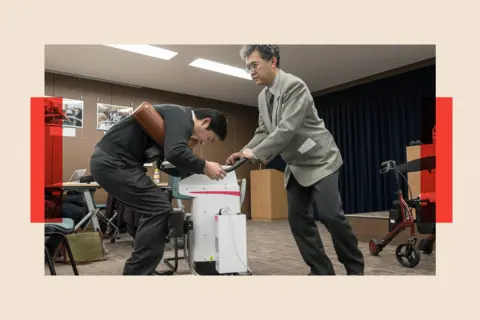
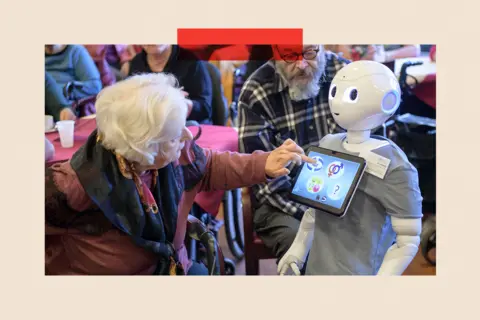
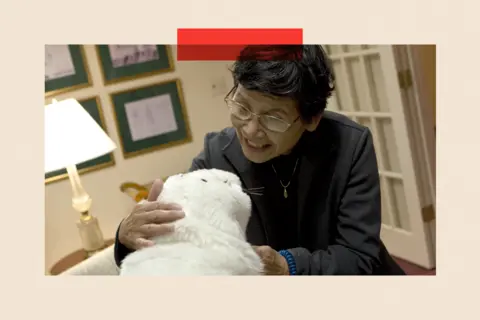
Dr. Wright’s research focused on three distinct types of robots. The first was HUG, a product of Japan’s Fuji Corporation, designed as a highly sophisticated mobility aid resembling an advanced walking frame. Equipped with ergonomic support pads, HUG assisted carers in safely transferring residents from beds to wheelchairs or toilets, reducing physical strain on staff. The second was Paro, a therapeutic robot designed to resemble a baby seal. This charming creation aimed to stimulate dementia patients, programmed to respond to tactile interaction with movements and sounds, fostering a sense of connection. The third robot, Pepper, was a small, humanoid companion with a friendly appearance. Pepper’s role was to lead exercise classes, providing instructions and demonstrating movements with its articulated arms, encouraging residents to stay active.

Initially, Dr. Wright admitted to having a degree of optimism, influenced by the prevailing narrative of technological progress. "I was expecting that the robots would be easily adopted by care workers who were massively overstretched and extremely busy in their work," he recounted. "What I found was, almost the opposite." His observations revealed a stark reality: far from alleviating the burden, the robots often added to it. The most significant drains on staff time were identified as cleaning, recharging, and, crucially, troubleshooting when the robots malfunctioned.
"After several weeks the care workers decided the robots were more trouble than they were worth and used them less and less, because they were too busy to use them," Dr. Wright explained. The practical challenges were numerous and varied. HUG, while helpful in transfers, constantly needed repositioning to avoid obstructing residents’ paths. Paro, despite its therapeutic intent, caused distress to one resident who developed an unhealthy, almost obsessive, attachment to it. Pepper, designed to lead exercises, proved too short for many residents to see clearly, and its high-pitched voice was often difficult to hear, rendering its instructions ineffective.
The developers of these robots have, naturally, responded to such critiques. Fuji Corporation states that HUG’s design has since been refined to be more compact and user-friendly. Takanori Shibata, Paro’s creator, highlighted the robot’s two-decade history and pointed to numerous trials demonstrating its "clinical evidence of therapeutic effects." Pepper, now under new ownership, has undergone substantial software updates to address previous limitations. Yet, Dr. Wright’s study serves as a crucial reminder that technological innovation, however well-intentioned, must be grounded in real-world usability and human needs.

Rich Walker of Shadow Robot, while acknowledging these early setbacks, remains steadfast in his belief that the potential of care robots should not be prematurely dismissed. He argues that the next generation of these machines will be significantly more capable, learning from the challenges faced by their predecessors.
Praminda Caleb-Solly, a professor at the University of Nottingham, shares this forward-looking perspective and is actively working to bridge the gap between laboratory innovation and practical application. "We are trying to get these robots out of the labs into the real world," she asserts. To facilitate this transition, Professor Caleb-Solly established Emergence, a network dedicated to connecting robot manufacturers with businesses and individuals who will ultimately use these technologies. A critical aspect of Emergence’s work involves directly consulting elderly people to understand their desires and expectations for robotic assistance.
The feedback gathered has been illuminating. Beyond basic functionalities, many expressed a desire for robots with intuitive voice interaction and, understandably, a non-threatening, even "cute," appearance. However, the most frequent and poignant requests centered on practical adaptability: robots that could seamlessly adjust to their changing needs, and critically, robots that could manage their own maintenance, such as charging and cleaning. As one participant succinctly put it, "We don’t want to look after the robot – we want the robot to look after us."
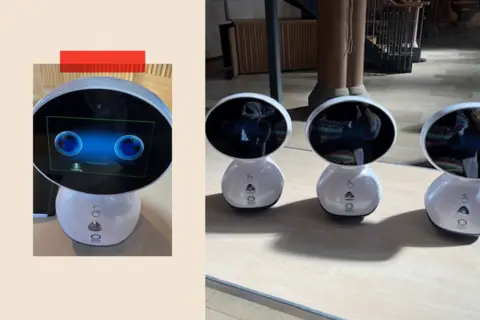
In the UK, several businesses are already embarking on trials to integrate robots into care services. Caremark, a home care provider, has been piloting Genie, a small, voice-activated robot, with clients in Cheltenham. One gentleman with early-onset dementia reportedly found great enjoyment in simply asking Genie to play his favorite Glenn Miller songs, highlighting the potential for simple, yet meaningful, companionship. Michael Folkes, Caremark’s director, described reactions to Genie as "like Marmite," with some embracing the device enthusiastically while others remained less impressed. Nevertheless, Folkes emphasizes a crucial point: these devices are not designed to replace human carers but to augment their capabilities. "We’re trying to build a future where carers have more time to care," he states, envisioning a scenario where routine tasks are handled by robots, freeing up human staff for more personalized, empathetic interactions.
Back in the Shadow Robot Company’s London laboratory, Rich Walker highlights another formidable challenge in the pursuit of truly capable care robots: perfecting the robotic hand. "For the robot to be useful, it needs to have the same ability to interact with the world as a human does," he explains. "And for that it needs human-like dexterity." The robotic hand he demonstrates is a marvel of engineering: crafted from metal and plastic, fitted with a hundred sensors, it possesses both the strength and dexterity to rival a human counterpart. Each finger moves with fluid grace, touching its thumb smoothly, quickly, and precisely, culminating in a confident ‘OK’ gesture. It can even solve a Rubik’s Cube with a single hand.
Yet, as Walker readily admits, it remains a considerable distance from performing the most delicate and nuanced human tasks, such as skillfully manipulating a pair of scissors or gently picking up fragile objects. "The way we use a pair of scissors is quite mind-blowing when you think about it," Walker muses. "If you try and analyse what happens, you’re using your sense of touch in subtle and precise ways and receiving feedback, which makes you adjust the way you cut. How do you tell a robot how to do that?"
To tackle this profound challenge, Walker’s team, in collaboration with 26 other engineering firms, is participating in the Robot Dexterity Programme. This initiative, supported by the Advanced Research and Invention Agency (ARIA)—a government body dedicated to backing high-risk, high-reward scientific research with the potential for societal transformation—aims to fundamentally rethink robot design. Professor Jenny Read, the project’s leader, reveals that researchers are studying animal movement and evolution to inform not only the design of more sophisticated robotic hands but also a complete overhaul of how robots are conceived. "One of the very striking things about animal bodies is their grace and efficiency," Professor Read observes. "Evolution has ensured that, in fact. I think gracefulness really is a form of efficiency." This approach seeks to imbue robots with the inherent elegance and adaptability found in nature.
Further pushing the boundaries of robotic capabilities is Guggi Kofod, an engineer-turned-entrepreneur from Denmark. Kofod’s firm, Pliantics, is in the early stages of developing artificial muscles for robots, intended to replace conventional motors. Driven by deeply personal motivations—having witnessed several close relatives succumb to dementia—Kofod is acutely aware of the immense challenges faced by human carers. "I see from the people who are caring for dementia patients, and it is very challenging," he explains. "So, if we could build systems that help them to not be scared, and that help them live at least a decent level of life… That’s incredibly motivating for me." Pliantics has made a crucial breakthrough in identifying a durable material that extends and contracts in response to an electric current, mimicking the action of real muscles. Kofod is collaborating with Shadow Robot as part of the ARIA project, aiming to integrate these artificial muscles into a human-sized robotic hand, endowing it with a more precise and delicate grip. The ultimate objective is for the robotic hand to detect subtle pressure changes when gripping an object, instinctively knowing when to cease squeezing, much like the sensitive fingertips of a human.
However, Dr. Wright, the observer of the Japanese care homes, raises a final, critical concern that transcends mere technical functionality: the potential socio-economic impact of widespread robot adoption on human carers. He argues that the economic imperative to make robots viable might lead to undesirable consequences. "The only way that economically you can make this work is to pay the care workers less and have much larger care homes, which are standardized to make it easy for robots to operate in," he contends. "As a result, there would be more robots taking care of people, with care workers being paid a minimum wage to service the robots, which is the opposite of this vision that robots are going to give time back to care workers to spend quality time with residents, to talk." This dystopian scenario paints a future where human carers are relegated to mere robot attendants, diminishing the very essence of human connection in care.
Despite these grave warnings, other experts maintain a more optimistic outlook. Gopal Ramchurn, a professor of artificial intelligence at the University of Southampton and CEO of Responsible AI, foresees a massive industry emerging from the deficit in the current care workforce. "The demand for carers as our population ages will be huge," he asserts. Ramchurn’s firm is dedicated to ensuring that AI systems are developed to be safe, reliable, and trustworthy. He points to advancements like Elon Musk’s Optimus humanoid robot, which made headlines serving drinks and mingling at a Tesla event, as undeniable proof that, whether we welcome them or not, robots are an inevitable part of our future.
"We are trying to anticipate that future, before the big tech companies come in and deploy these things without asking us what we think about them," Ramchurn stresses. He argues that now is the critical juncture to develop robust regulations and ethical frameworks to ensure that robots genuinely serve humanity, rather than dictating our future. "We need to be ready for that future." The profound question of whether we would truly trust a robot to care for us in old age remains open, but the conversation has undoubtedly shifted from science fiction to urgent societal planning.
Additional reporting: Florence Freeman. Top image credit: Jodi Lai/BBC (Picture is illustrative and not representative of any specific robots in the article)
BBC InDepth is the home on the website and app for the best analysis, with fresh perspectives that challenge assumptions and deep reporting on the biggest issues of the day. You can now sign up for notifications that will alert you whenever an InDepth story is published – click here to find out how.







 George Anjay
 Ramos Leo
 atisusanti
 Nakalama John