Nana Banana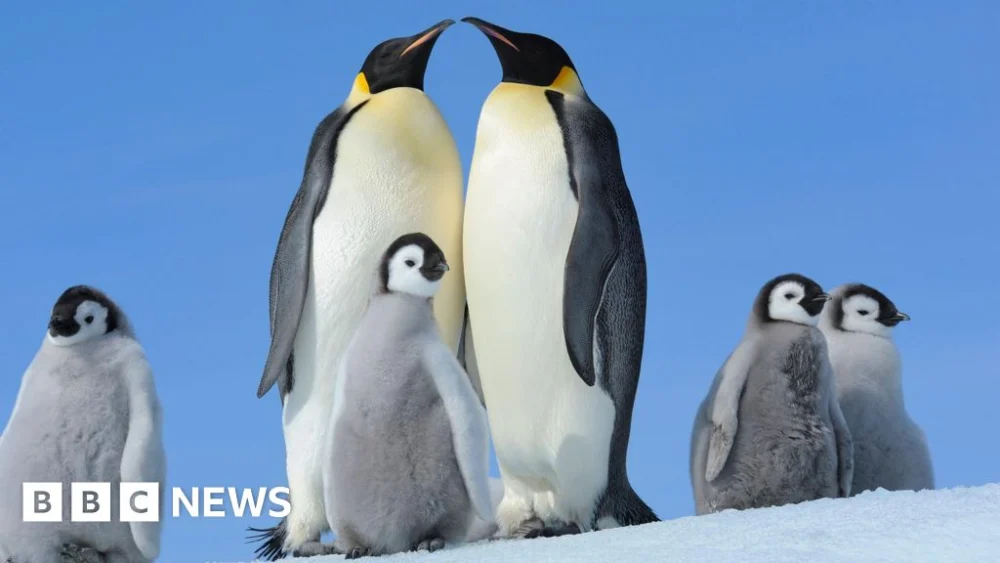
For the majestic Emperor penguin, an iconic resident of Antarctica’s unforgiving landscape, the annual ritual of renewing their vital feather coat is a matter of life and death. This "catastrophic moult," as it’s known, is a non-negotiable part of their survival strategy, replacing worn, battle-scarred feathers with new, perfectly insulated, and waterproof plumage. However, a groundbreaking and deeply concerning discovery by scientists reveals that this essential biological process is now placing the species in unprecedented peril, as the Antarctic environment rapidly transforms under the relentless assault of a warming climate. The very act designed to ensure their survival may now be condemning thousands to a frozen demise.
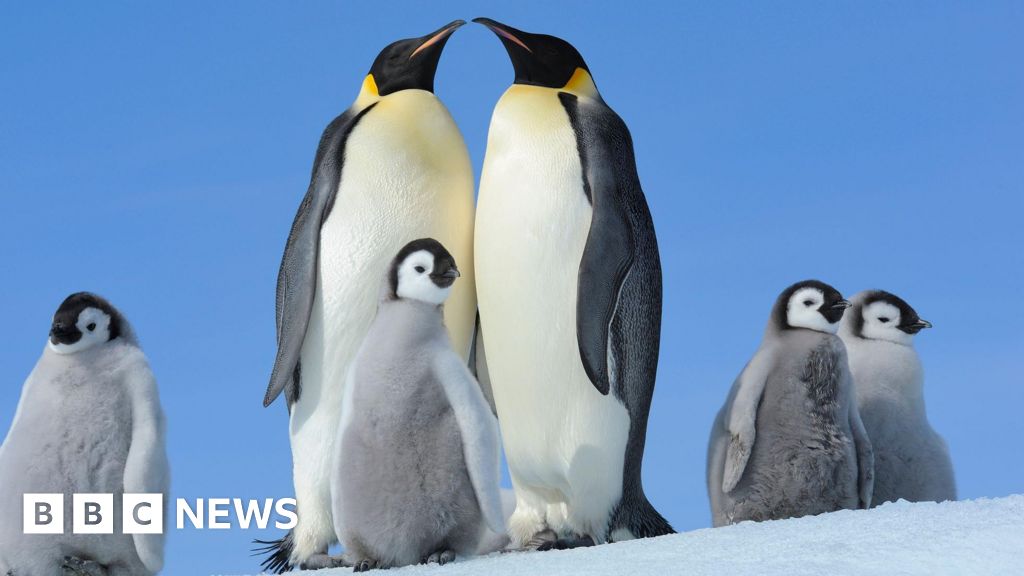
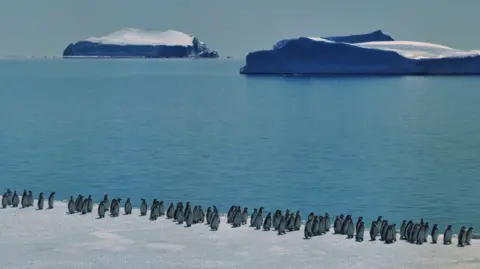
Each year, Emperor penguins must locate and remain on stable platforms of floating sea ice for a critical period, long enough to completely shed and regrow their feathers. This intensive physiological undertaking leaves them incredibly vulnerable. Their feathers, arguably the most complex and best insulating of any animal, are their primary defence against the extreme cold of the Antarctic waters and air. During the moult, as the old feathers are pushed out by new ones, this insulation is severely compromised, rendering the birds temporarily non-waterproof. This means that for several weeks, they cannot enter the icy ocean to hunt for food or escape predators. They are forced to fast, relying solely on fat reserves accumulated beforehand, losing up to 50% of their body mass in the process. This 30-40 day period is arguably the most dangerous time for adult Emperor penguins, as immersion in water without their waterproof protection almost certainly leads to hypothermia and death.
The alarming findings come from Dr. Peter Fretwell, a climate and science reporter at the British Antarctic Survey, who has dedicated two decades to studying Emperor penguins. His research, recently published in the scientific journal Communications Earth & Environment, provides compelling evidence of the devastating impacts of the recent, unprecedented collapse in Antarctic summer sea ice between 2022 and 2024. Dr. Fretwell and his team utilize high-resolution satellite imagery to track penguin colonies and monitor their activities, a method that has proven invaluable for observing these remote populations. It was through this lens that the shocking truth began to emerge.
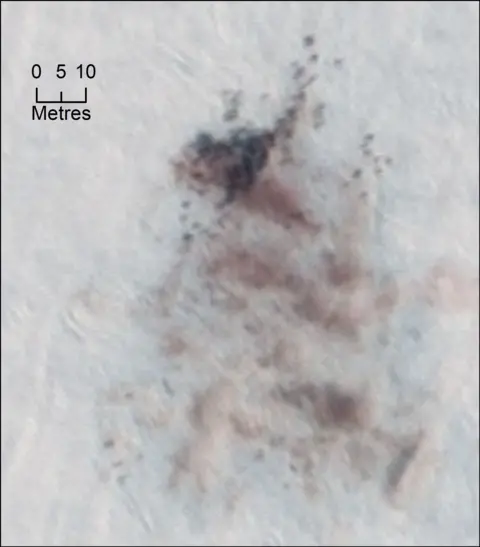
Dr. Fretwell’s breakthrough came from an unexpected source: large, brown smudges visible in satellite pictures from 2019-2025, particularly in an area known as Marie Byrd Land in West Antarctica. These weren’t geological features or anomalies; they were extensive mounds of shed feathers, direct evidence of successful moulting events. These "feather carpets" indicated where thousands of penguins had safely completed their annual renewal. "This was really an ‘oh my God’ moment," Dr. Fretwell recounts, describing the profound realization of what the changing landscape meant for the penguins. "You could see this was something game-changing for Emperor penguins. Suddenly you’re thinking, well, have we got time to save them?" The very presence of these feather piles had, until then, provided a reassuring sign of healthy colonies.
The stability of sea ice is paramount for Emperor penguins, serving not only as their moulting platforms but also as essential breeding grounds and foraging bases. The region of West Antarctica, the focus of this study, is home to a significant portion – an estimated 30-40% – of the global Emperor penguin population, making the area critical for the species’ overall health. For years, the sea ice extent around Antarctica remained relatively stable, even expanding in some areas, offering a buffer against global warming trends. However, this pattern dramatically reversed in recent years. In 2022, Antarctic summer sea ice began an alarming decline, plummeting from an average of 2.8 million square kilometers to an unprecedented record low of 1.79 million square kilometers in 2023. This catastrophic reduction continued through 2024, with only a modest recovery observed in West Antarctica in 2025. This rapid and severe loss of their crucial habitat is overwhelmingly attributed to anthropogenic climate change, warming both the atmosphere and the surrounding ocean.
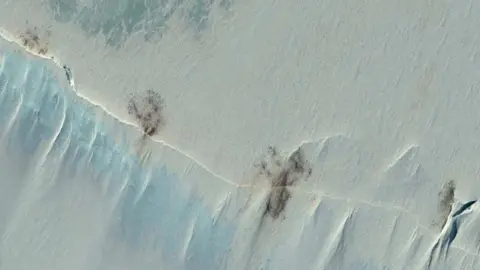
The stark contrast between stable years and the crisis period is chilling. In 2019, 2020, and 2021, when sea ice conditions were relatively stable, satellite images consistently revealed significant feather mounds, signifying thousands of penguins successfully completing their moult. These mounds were clear indicators of thriving, healthy populations undertaking their vital annual transformation. But when Dr. Fretwell scrutinized the satellite images for the years following the sea ice collapse, the picture was drastically different and deeply disturbing. "There should have been lots of penguins there, but actually we could only see 25 groups," he stated, noting that a "group" can range from a few dozen to a thousand birds. "Again this year the sea ice hasn’t been too bad, but I can only see a handful of penguins really." The absence of the tell-tale brown smudges, combined with the dramatically reduced number of visible penguin groups, paints a grim picture.
Dr. Fretwell and his colleagues now harbor grave fears that most of the missing penguins have perished. Without stable ice platforms, many would have been forced into the water during their moult, or exposed to severe weather without the protection of their new, waterproof coats, leading to widespread freezing and drowning. While some penguins may have attempted to migrate to other locations, such as East Antarctica, in search of suitable moulting sites, such forced relocation comes with its own severe consequences. Long-distance travel consumes vast energy reserves, further depleting their already strained bodies, and can disrupt critical breeding cycles, ultimately leading to significant population losses even for those who survive the journey. The Emperor penguin is already considered among the most threatened species in the world, and these new findings amplify their precarious situation.
In the face of such dire circumstances, scientists are exploring potential avenues for adaptation. One possibility is that Emperor penguins might learn to moult on shallow ice shelves, which are more permanent than floating sea ice. Dr. Fretwell has observed some groups attempting this shift, offering a glimmer of hope. However, this adaptation is not without its costs. Moulting on ice shelves could alter their breeding and feeding patterns, potentially exposing them to different risks, such as increased predation or reduced access to food sources, as their foraging grounds might be further away. Such a behavioural shift would represent a fundamental change in their life history, with unpredictable long-term consequences for their health and reproductive success. While adaptation is a testament to the resilience of life, it’s a desperate measure when traditional habitats vanish, and it often comes with significant trade-offs.
The emotional toll of these findings on the scientific community is palpable. Dr. Fretwell admits, "It is the only piece of science I’ve ever done that’s really emotionally got me." The rapid and dramatic nature of the decline, rather than a slow, gradual erosion, underscores a critical message about global warming: its effects are not always linear or predictable. There are tipping points, moments of abrupt and catastrophic change that can devastate ecosystems and species with terrifying speed. The plight of the Emperor penguins serves as a stark reminder of the accelerating crisis in the polar regions and the urgent need for global action to mitigate climate change.
The next steps in understanding the full extent of this tragedy involve comparing these findings with an imminent population count of Emperor penguins in the Ross Sea region, where the birds migrate to and from. This comprehensive data will provide a clearer picture of the actual numbers of deaths and the overall impact on the species. The results of this ongoing research could dramatically alter the predicted extinction dates for Emperor penguins, pushing them much closer to the present. Dr. Fretwell’s haunting question echoes the urgency felt by conservationists worldwide: "Now I’m asking, is that coming forwards towards us? Is it the end of the century?" The fate of these magnificent birds, intrinsically linked to the health of the planet’s frozen frontiers, hangs precariously in the balance, a powerful indicator of the broader ecological crisis unfolding across our warming world.




 Roy Suryo
 George Anjay
 Ramos Leo
 atisusanti