Nana Banana
Cornwall’s landscape is undergoing a remarkable transformation, spearheaded by the quiet return of a creature absent for centuries: the Eurasian beaver. The county’s first fully licensed wild beaver release marks a pivotal moment in Britain’s ambitious rewilding story, promising to reshape river ecosystems and offer a natural defence against the escalating threat of flooding. Early evidence from similar projects across the UK strongly suggests these industrious animals are already demonstrating their capacity to profoundly alter riverine environments, slow the flow of water, and help safeguard towns and villages from the increasing frequency and intensity of flood events.
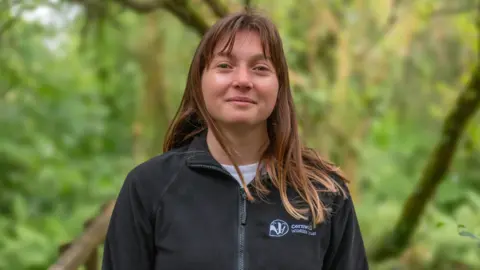
In a landmark initiative, four pairs of beavers – eight individuals in total – were carefully released into designated areas within the Par and Fowey river catchments in February. This followed an extensive period of preparation, spanning several years, undertaken by the Cornwall Wildlife Trust (CWT). The selection of these specific locations was highly strategic, as explained by CWT Beaver Officer Lauren Jasper. These sites were chosen not only for their robust habitat suitability at the headwaters of the river systems and excellent potential for dam construction but also crucially, due to an existing and well-documented local flood risk. Jasper highlighted, "We know within Par, there is a flood risk as well in the park community, so it seemed like a really suitable place to focus our efforts to start with." The deliberate placement of these ecosystem engineers in areas where their natural behaviours can yield the most significant benefits underscores a proactive approach to natural flood management.
Natural England, the government’s adviser for the natural environment, granted the necessary licences for both the Cornwall release and another significant reintroduction at the National Trust’s Holnicote Estate in Exmoor, Somerset. These recent releases build upon the foundational success of earlier regional projects. Notably, the Devon Wildlife Trust (DWT) pioneered England’s first truly licensed wild beaver trial on the River Otter, which ran from 2015 to 2020. This groundbreaking project conclusively proved that beavers could not only survive and thrive in a wild English landscape but also deliver a wide array of substantial environmental benefits, paving the way for wider acceptance and reintroduction efforts.
Beavers are often celebrated as nature’s original engineers, and for good reason. Their innate ability to construct dams, excavate ponds, and create intricate burrow systems fundamentally reshapes waterways. These activities collectively slow the flow of water, effectively store vast quantities of carbon within saturated wetland soils, and create vibrant, biodiverse new wetlands teeming with life. The impact of these activities has been meticulously studied. Professor Richard Brazier, a hydrologist at the University of Exeter, has been at the forefront of monitoring the Devon project. He confirms that the River Otter scheme has already yielded measurable positive impacts, with anecdotal and scientific evidence suggesting that nearby villages, such as East Budleigh, have experienced significantly reduced flooding, alongside improvements in other areas of the catchment.
"They’re renowned for building dams that hold back the flow of water," Prof. Brazier elaborated. "They create wonderful systems of ponds which store water, often right at the top of catchments. In doing so, the water flows down through the catchments more slowly. It doesn’t occupy the floodplains where certain villages have been built, and other infrastructure like roads and railways now sit." This natural, decentralised flood management system is a stark contrast to expensive, hard-engineered flood defences, offering a more sustainable and ecologically beneficial solution. Prof. Brazier further cited evidence from another mature beaver site downstream of the Forest of Dean, which demonstrated similar benefits, with multiple dams effectively reducing flood peaks during heavy rainfall events. He anticipates the same positive outcomes for the newly released populations: "With the new releases in Cornwall and in west Somerset, we’re going to see exactly the same behaviour because beavers do such a good job of keeping the water in the headwaters, where the rains falls heavily, and slowing that flow down through the bottom of the catchments where people live."
The early signs from Cornwall are incredibly promising. Within a short period of their release, two of the newly introduced beavers have already paired up and begun the crucial work of constructing a dam. Lauren Jasper views this as a strong indicator that the animals are "really happy on the site, keen to make it their home and develop it into their territory." While acknowledging that it is still too early to definitively quantify the long-term impact of these latest releases, the Cornwall Wildlife Trust is optimistic. As the project progresses and develops over the next decade, they anticipate an increase in beaver sightings across the catchment, signaling a growing and thriving population that will continue to enhance the local environment.
A significant legislative milestone occurred in October 2022, when legislation was enacted to grant wild-living beavers European Protected Species (EPS) status. This crucial recognition firmly establishes them as native wildlife in Britain, affording them the highest level of legal protection. Under the Conservation of Habitats and Species Regulations 2017, it is now a criminal offence to deliberately capture, injure, kill, or disturb beavers, or to damage or destroy their breeding or resting places, without a specific licence. This legal safeguard is vital for the long-term success and expansion of beaver populations.
Prof. Brazier describes beavers as the "original water manager," highlighting their profound evolutionary adaptation to cope with extremes of weather, from torrential downpours to prolonged droughts. He explained, "Through building that resilience through its evolution, it has become very adept at coping, managing with this kind of flooding we’ve seen recently. As humans, we need to take note of how this animal behaves because it’s been around for a long time. It’s clearly successful at dealing with flash floods and periods of drought in summer times… We can learn from that." Their natural engineering provides a blueprint for climate change adaptation, offering a sustainable and resilient approach to water management.
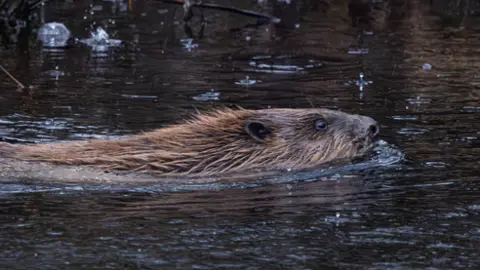
The success of the River Otter project has been particularly influential. In August 2020, the government officially announced that the Eurasian beavers, whose initial origin was unknown, living wild on the River Otter, would be permitted to remain permanently. Furthermore, they were encouraged to expand their population into neighbouring catchments, solidifying their place in the English landscape. The trial began in 2015 with the release of two family groups. By its conclusion, the Devon Wildlife Trust estimated that approximately 15 family groups were thriving along the catchment. As part of its licence, DWT was also able to introduce additional beavers to bolster genetic diversity, ensuring the long-term health of the population. Today, Prof. Brazier believes that hundreds of beavers could now be present across the wider region, a testament to the species’ remarkable recovery and adaptability.
The process of reintroduction is a meticulous and highly regulated one. Natural England will only consider wild releases in circumstances where beavers can demonstrably support clear positive outcomes. These include the restoration of natural processes, a tangible contribution to flood management strategies, improvements in water quality, or the strengthening of genetic diversity within existing populations. The Cornwall Wildlife Trust’s application, for instance, was the culmination of many months of intensive surveying, sophisticated hydrological modelling to predict potential impacts, and extensive engagement with local landowners and communities. This collaborative and evidence-based approach is fundamental to ensuring the success and public acceptance of such projects.
The absence of beavers from the South West for over 500 years means their return brings about noticeable, and sometimes surprising, changes to the landscape. Their activities can lead to felled trees, altered watercourses, and rising water levels around their dams. For those accustomed to a human-managed environment, these natural processes can initially be unsettling. Prof. Brazier acknowledges this challenge, stating that beavers "challenge our assumptions about what ‘natural’ landscapes look like." He adds, "In most cases, it is a human-made landscape, so when beavers come in, they start to make it the way nature wants it to be." While acknowledging potential conflicts, he reassures that "There’s definitely a challenge, but it’s not without solutions. It’s really easy to manage."
However, these changes are not universally welcomed. The National Farmers Union (NFU) has previously voiced concerns regarding the potential impact of beavers on productive farmland. NFU Deputy President David Exwood articulated these reservations: "The NFU recognises that, in the right location, beavers can provide certain benefits and some farmers and landowners may be interested in beaver reintroduction opportunities. However, we are concerned about the negative impacts beavers can have on productive farmland, as well as the management requirements, costs and risks involved." These concerns often centre on the potential for flooding of agricultural land, damage to valuable crops, or the felling of commercially important trees. The government has responded by stating that the return of beavers will be carefully managed, with measures put in place to mitigate any adverse impacts on farming, food production, and existing infrastructure. This careful management involves strategies like installing ‘beaver deceivers’ to control water levels, protecting specific trees, and, in rare cases, relocating problematic individuals.
For those curious about the presence of these nocturnal engineers, spotting signs of beavers can range from subtle to overtly visible. Rather than always constructing large, conspicuous dams, beavers sometimes opt to burrow into riverbanks, creating intricate tunnel systems that are less obvious. However, often the evidence of their work is much more apparent. Lauren Jasper advises, "You may see the stereotypical pencil point trees that they’ve started to fell or to coppice." As herbivores, beavers feed on a wide variety of vegetation, so "you’ll often see piles of sticks with the bark chewed off," she added. Anyone who suspects they have beavers on their land is strongly encouraged to contact their local beaver officer or wildlife trust. Both the Cornwall Wildlife Trust and the Devon Wildlife Trust offer rapid advice and support if the animals are causing "unwanted impacts." Beyond managing potential issues, reporting sightings is crucial for conservation efforts. "It’s also always good for us to know where the beavers are," Jasper emphasised. "So we’re always urging people to report them to us." This data helps monitor population spread, habitat use, and overall ecological impact.
Ultimately, beavers play an indispensable role in helping to restore nature. By creating their complex wetland systems, they naturally clean water by filtering pollutants and trapping sediments, capture and store atmospheric carbon, effectively slow the flow of floodwaters, retain water during dry periods, and support an incredible abundance of diverse wildlife. Evidence from monitored sites across Britain conclusively demonstrates their capacity to filter agricultural runoff, improve water clarity, and make entire river systems significantly more resilient to the increasing extremes of a changing climate. After centuries of absence, these industrious animals are beginning to reclaim their ancient and vital role in shaping the British landscape – and in doing so, they are fundamentally reshaping how we approach and think about managing water in a warming world. Their return offers a powerful, living lesson in ecological resilience and a hopeful vision for a more naturally managed future.



 Roy Suryo
 George Anjay
 Ramos Leo
 atisusanti