Nana Banana
Authored by Science Editor Rebecca Morelle, the initial report highlighted this pivotal shift. Originally, NASA’s blueprint for the Artemis program envisioned a crewed flyby of the Moon with Artemis II, scheduled for April, directly followed by the historic lunar landing on Artemis III in 2028. However, this sequential approach has been revised. The new Artemis III mission, now slated for 2027, will involve a crew heading to low-Earth orbit to conduct crucial practice drills, specifically focusing on the intricate maneuver of docking with a lunar lander. This additional flight is presented not as a delay to the overall lunar return timeline, with NASA still targeting 2028 for the actual human landings, potentially even two, under the new designations of Artemis IV and V.
NASA Administrator Jared Isaacman, addressing a media briefing, articulated the rationale behind this strategic adjustment. He emphasized the necessity of bridging the extensive gaps between key missions, stating a desire to avoid protracted intervals that could introduce unforeseen challenges and diminish crew proficiency. Isaacman underscored that the extra flight to low-Earth orbit would serve as an invaluable proving ground for critical technologies and operational procedures before attempting a high-stakes Moon landing. This new step is designed to meticulously test the integrated systems of the Orion capsule and the Human Landing System (HLS) in a less demanding environment.
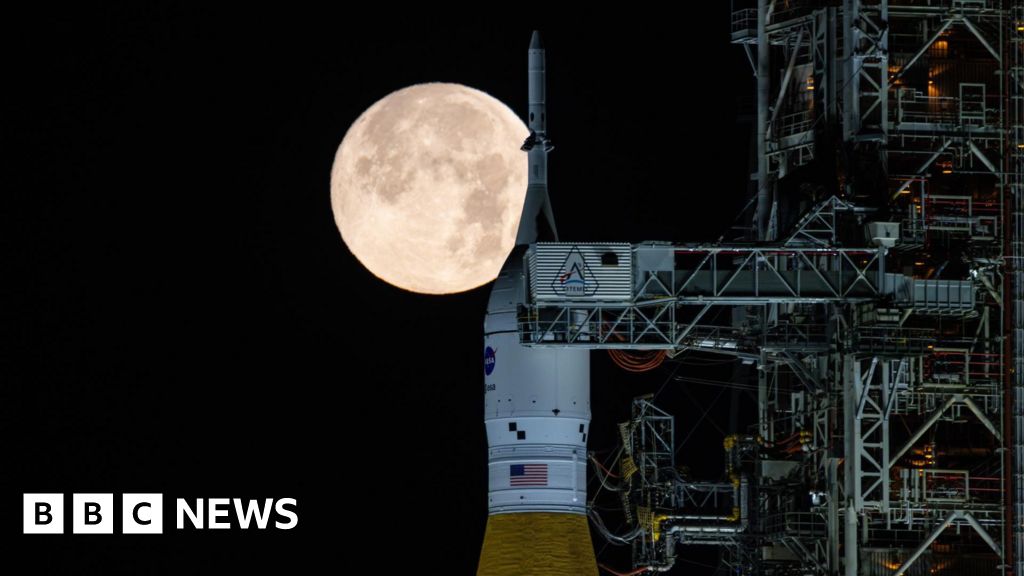
Concurrently with this programmatic update, NASA also provided insights into the status of the Artemis II mission. This pivotal flight, which will see four astronauts circumnavigate the far side of the Moon before returning to Earth, faced a recent setback. While an initial launch target of March had been set, the discovery of a helium leak within the Space Launch System (SLS) rocket necessitated a delay. The colossal rocket has since been transported from its launchpad back to the iconic Vehicle Assembly Building (VAB) at the Kennedy Space Center in Florida, where engineers are meticulously working on repairs. Consequently, the earliest window for the Artemis II launch has shifted to April, with the precise date contingent upon the duration and success of the technical remediation efforts. The four intrepid astronauts selected for this trailblazing mission—Victor Glover, Jeremy Hansen, Reid Wiseman, and Christina Koch—continue their rigorous training, embodying the spirit of this new era of lunar exploration.
Administrator Isaacman did not mince words regarding the previous architecture, describing it as "not a pathway to success." He elaborated on the inherent risks of such a leap: "You don’t go from one uncrewed launch of SLS [Artemis I], wait three years, go around the Moon [Artemis II], wait three years and land on it." This direct progression, he argued, lacked the necessary intermediate steps to build confidence and refine procedures. The decision to send the Orion capsule, the spacecraft designed to transport astronauts to the Moon, and a lunar lander into low-Earth orbit for a docking exercise is a calculated move to significantly reduce mission risks. Isaacman expressed a strong preference for testing these integrated systems in the relative safety of low-Earth orbit rather than the unforgiving environment of the Moon. Furthermore, this additional flight presents an opportune moment to test next-generation spacesuits that astronauts will don on the lunar surface, ensuring their functionality and comfort before critical operations.
However, NASA’s ambitious lunar plans continue to grapple with a significant, unaddressed element: the selection and readiness of the Human Landing System (HLS) itself. This crucial component, responsible for safely transporting astronauts from lunar orbit to the Moon’s surface and back, remains a work in progress. Elon Musk’s SpaceX company holds the primary contract to develop one such lander, envisioned to be flown to the Moon aboard its colossal Starship rocket. Nevertheless, persistent delays in the development and testing of the Starship vehicle have prompted NASA to request a new, streamlined plan from SpaceX, aiming to accelerate the return to the Moon. In a move to foster competition and ensure redundancy, NASA has also engaged rival company Blue Origin, owned by Jeff Bezos, tasking them with submitting an accelerated proposal for their own lunar lander design. The flexibility inherent in the new Artemis III docking mission in low-Earth orbit means it could potentially involve testing one or both of these prospective landers, providing invaluable real-world data and operational experience.
The urgency underpinning NASA’s revised strategy is amplified by the intensifying geopolitical race for lunar dominance. China, a formidable contender in space exploration, has publicly declared its aim for a crewed lunar landing by 2030, and its space program has demonstrated consistent and impressive progress towards this goal. Both the United States and China are strategically focusing their lunar landing efforts on the Moon’s south pole. This region is of immense scientific and strategic interest due to the potential presence of water ice in permanently shadowed craters, a vital resource for future sustained human presence, including potential lunar bases. The competition for these prime locations underscores the renewed "Space Race" dynamic, adding another layer of pressure and motivation to NASA’s efforts.
The Artemis program, with its multi-billion-dollar budget and multi-year timeline, represents a generational undertaking. The addition of an extra mission, while mitigating risk, will undoubtedly incur additional costs and demand sustained political and public support. The complexity of integrating private contractors like SpaceX and Blue Origin into NASA’s grand vision, each with their own developmental timelines and technical challenges, requires meticulous management and agile planning. Yet, the long-term vision extends far beyond the Moon, with the Artemis program serving as a foundational stepping stone for eventual human missions to Mars. The decision to introduce the new Artemis III mission is a testament to NASA’s commitment to safety and mission success, reflecting a pragmatic adjustment to ensure that when humanity does finally step foot on the Moon again, it does so with the utmost confidence and preparedness. This strategic shift, while seemingly adding a step, ultimately aims to solidify the foundation for a sustainable and enduring presence on our closest celestial neighbor, charting a definitive course for the future of human space exploration.




 Roy Suryo
 George Anjay
 Ramos Leo
 atisusanti