Nana Banana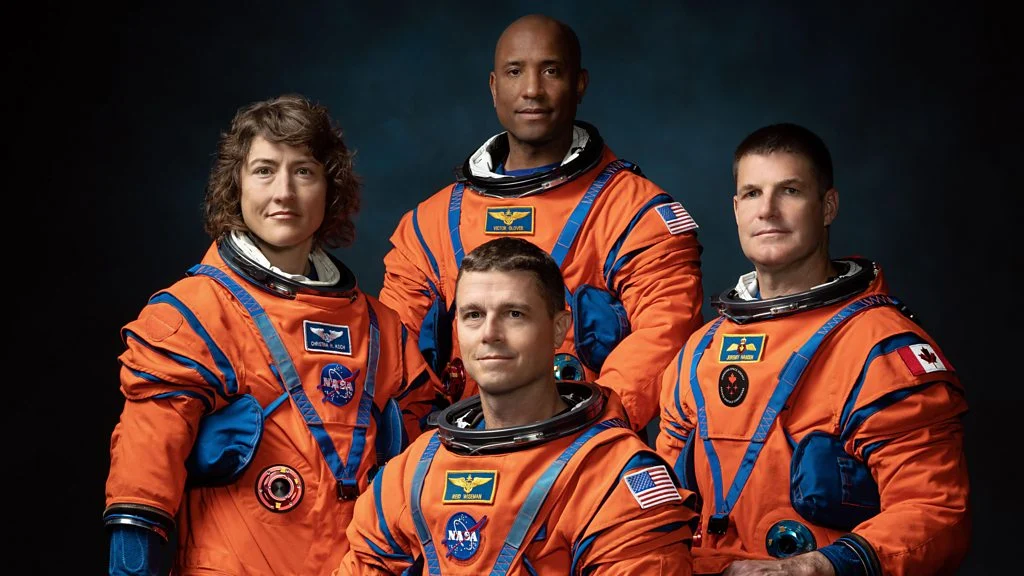
Fifty years after humanity last set foot on the lunar surface with the concluding Apollo missions, the world is witnessing a dramatic resurgence of interest in Earth’s closest celestial neighbour, igniting what many experts are calling a new space race. This renewed pursuit, far from being a mere echo of the Cold War era’s prestige-driven expeditions, is fundamentally driven by ambitions for long-term lunar presence, resource utilization, and the Moon’s strategic role as a staging ground for deeper space exploration, particularly to Mars. The BBC World Service’s "The Global Story" recently dedicated an episode to this unfolding narrative, broadcast on February 23, 2026, offering a compelling 26-minute exploration of these profound developments.
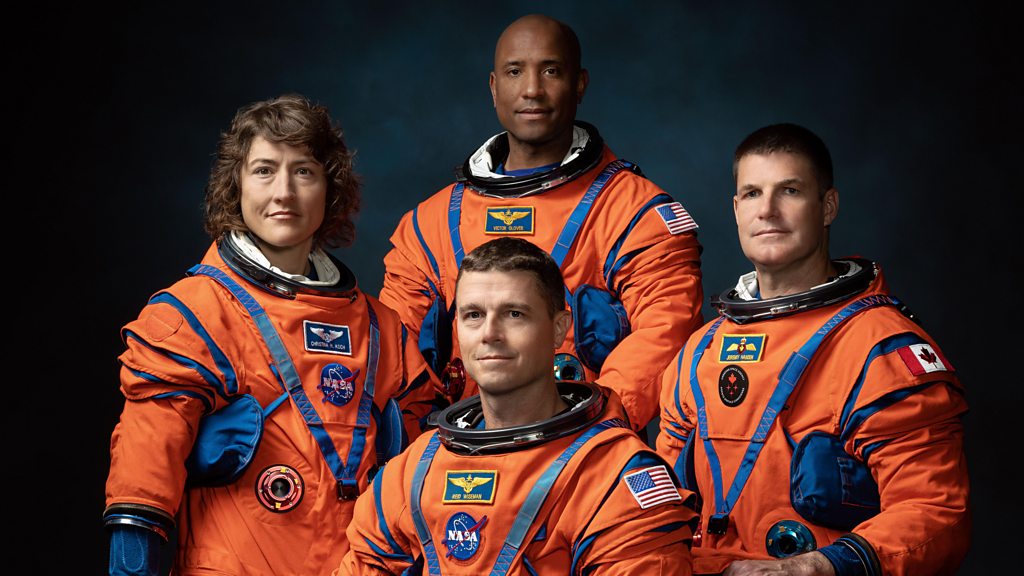
At the forefront of this new era is NASA’s ambitious Artemis program. Building upon decades of technological advancement and lessons learned from the Apollo era, Artemis aims not just to return humans to the Moon, but to establish a sustainable presence there. The pivotal mission currently in preparation is Artemis II, a crewed test flight designed to propel its four astronauts farther from Earth than any human has traveled in over half a century. This monumental journey, a crucial precursor to an actual lunar landing, will validate the Orion spacecraft’s life support systems, navigation, and re-entry capabilities, ensuring the safety of future lunar explorers. The crew, comprising a diverse team of astronauts, represents a significant step forward in inclusivity for space exploration, with the program slated to land the first woman and first person of colour on the Moon. The Artemis program, however, is not a unilateral American endeavour. It has garnered significant international collaboration, with agencies like the European Space Agency (ESA), the Canadian Space Agency (CSA), and the Japan Aerospace Exploration Agency (JAXA) contributing critical modules, services, and scientific instruments, underscoring a shared vision for lunar exploration.
Simultaneously, with a less publicised but equally determined stride, China has been steadily advancing its own comprehensive plans for crewed Moon landings and the establishment of a lunar research station. While NASA’s efforts often grab international headlines, China’s national space agency has meticulously executed a series of robotic missions under its Chang’e program. These missions have successfully achieved lunar orbit, landed on both the near and far sides of the Moon, and even returned lunar samples to Earth, demonstrating a rapidly maturing technological capability. These robotic precursors are paving the way for ambitious human missions, with China openly stating its intention to establish a permanent scientific outpost on the Moon, potentially in collaboration with Russia, by the 2030s. The quiet but persistent progress of the Chinese program has undoubtedly added a competitive edge to the global lunar agenda, fueling the narrative of a renewed space race.
This emerging competition is, as many experts highlight, fundamentally different from the original space race of the 20th century. While prestige and national pride remain significant motivators, the driving forces now extend far beyond mere symbolic victories. A primary focus is on the Moon’s vast, untapped resources. Scientific investigations have confirmed the presence of significant quantities of water ice in permanently shadowed craters at the lunar poles. This water ice is not just vital for sustaining human life on the Moon – providing drinking water and oxygen – but critically, it can be electrolysed into hydrogen and oxygen, the fundamental components of rocket fuel. This prospect transforms the Moon into a potential "gas station" for deep-space missions, drastically reducing the cost and complexity of future expeditions to Mars and beyond. Beyond water, other resources like Helium-3, a rare isotope with potential for clean fusion energy on Earth, and various rare earth elements, are also being considered as future targets for extraction.
Establishing a long-term presence on the Moon involves more than just brief visits. It encompasses the construction of habitats, research stations, and infrastructure that can support continuous human habitation and scientific work. Such a base would serve as an unparalleled laboratory for studying the lunar environment, developing technologies for off-world living, and conducting astronomical observations free from Earth’s atmospheric interference. It would also act as a crucial proving ground for human resilience and adaptation in extreme environments, preparing astronauts for the even more challenging journey to Mars. The Moon’s lower gravity and proximity make it an ideal testbed for advanced robotics, additive manufacturing (3D printing with lunar regolith), and closed-loop life support systems that will be essential for self-sustaining Martian colonies.
The vision of using the Moon as a "stepping stone to Mars" is central to both NASA’s and China’s long-term strategies. By leveraging lunar resources for fuel, life support, and building materials, future Mars missions could be launched from lunar orbit, significantly reducing the mass that needs to be lifted from Earth’s deep gravity well. This approach could make Martian exploration more feasible, sustainable, and cost-effective, ultimately accelerating humanity’s journey to becoming a multi-planetary species.
The implications of this new space race are far-reaching. It’s not just about scientific discovery or technological advancement; it carries significant geopolitical weight. The establishment of lunar bases and the potential control over vital resources could shape international relations and establish new norms for space governance. While there is a strong emphasis on cooperation within programs like Artemis, the parallel and competitive developments from nations like China underscore the complex interplay of collaboration and rivalry that defines this new era. Furthermore, the burgeoning private sector is playing an increasingly vital role, with companies like SpaceX, Blue Origin, Astrobotic, and Intuitive Machines developing their own lunar landers, launch vehicles, and services, injecting commercial interests and innovative approaches into the lunar economy. This private involvement could accelerate development and lower costs, but also raises questions about commercial exploitation and regulatory frameworks.
Rebecca Morelle, the BBC’s Science Editor, whose insights were featured in the "The Global Story" episode, eloquently articulates the multifaceted nature of this new lunar ambition. Her analysis likely delves into the technological leaps that differentiate this race from its predecessor, such as advanced robotics, artificial intelligence, and sophisticated material sciences that make sustainable lunar living a tangible reality. She would undoubtedly highlight the economic incentives driving nations and private entities towards lunar resource extraction, and the potential for a thriving "cislunar" economy. Morelle’s perspective would also touch upon the ethical considerations and the need for international agreements to prevent conflict and ensure equitable access to space resources, echoing the spirit of the Outer Space Treaty. The discussion would undoubtedly frame the lunar frontier as not just a scientific challenge, but a grand geopolitical and economic venture that will define the coming decades.
The "Official Artemis crew portrait" by Josh Valcarcel/NASA Handout/EPA-EFE/REX/Shutterstock, which accompanied the original episode details, perfectly encapsulates the human element at the heart of this renewed drive. It serves as a powerful reminder that while technology and resources are crucial, it is human ambition, ingenuity, and courage that truly propel humanity towards the stars.
This compelling narrative, expertly produced by Valerio Esposito and Cat Farnsworth, with James Shield as Executive Producer, Travis Evans handling the mix, and China Collins as Senior News Editor, offers a timely and essential deep dive into a truly global story. Available for over a year on BBC Sounds, the episode provides an invaluable resource for anyone seeking to understand the profound shift in humanity’s relationship with the Moon and the exciting, complex future of space exploration. The new race to the Moon is not just a chapter in human history; it is a testament to our enduring spirit of discovery, a strategic imperative, and a foundational step towards a truly multi-planetary future.




 George Anjay
 Nakalama John
 atisusanti
 Ramos Leo