
 Nana Banana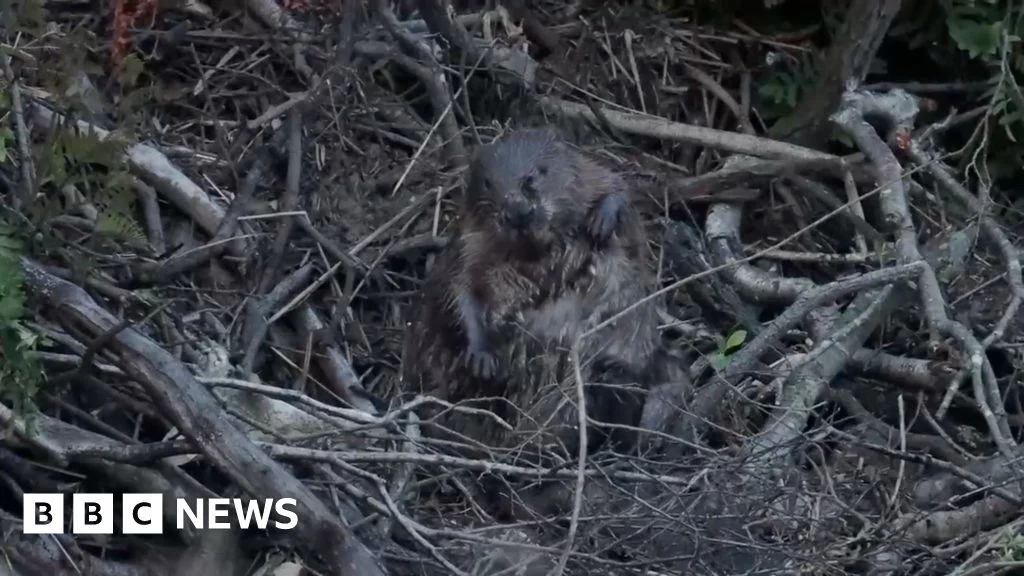
After a year punctuated by unexpected challenges, dramatic movements, and moments of profound sadness, it appears that one of the two licensed pairs of beavers set free has finally settled into a new, thriving home. However, the journey has been far from straightforward. The past twelve months have been a testament to the unpredictable nature of reintroductions, compelling conservationists and dedicated volunteers to adapt and learn at every turn. Following the tragic death of one of the beavers last summer, the search continues for signs of his mate, adding a poignant note to the otherwise encouraging narrative of resilience and adaptation.
Indeed, if there is one overarching lesson conservationists and volunteers have gleaned over the past 12 months, it is unequivocally to expect the unexpected. The meticulously planned return of wild beavers to Studland had been years in the making, involving extensive ecological surveys, habitat preparation, and community engagement. Yet, even before the official release, nature had thrown its first curveball. In a startling discovery in 2024, a pair of unlicensed beavers were found already living at Little Sea lake, precisely the spot earmarked for the official release. Their origins remained a mystery – perhaps escapees from a nearby enclosure, or adventurous pioneers having dispersed from another reintroduction site. This unforeseen arrival immediately complicated matters, setting the stage for a year of unforeseen twists and turns and having lasting consequences for what was intended to be Britain’s first ever wild, unrestricted beaver release.
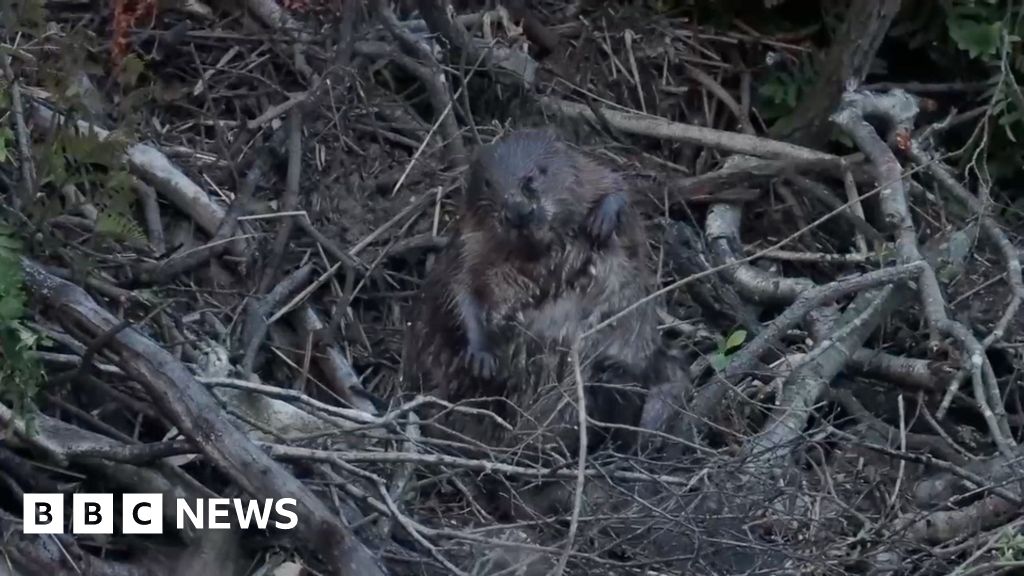
Stretching across 33 hectares (80 acres), Little Sea is by no means a cramped freshwater lake; it offered ample space and rich aquatic vegetation. However, beavers are highly territorial animals, fiercely defending their established territories from intruders. Despite the two newly licensed pairs being released away from the already established, unofficial residents, it quickly became apparent that the new arrivals were not made welcome. The existing beavers, having carved out their own niche, likely viewed the newcomers as a threat to their domain, leading to aggressive encounters that forced the released pairs to seek new horizons.
National Trust project manager Gen Crisford recalls the immediate aftermath of the release: "They almost immediately went and found themselves a home at a local ‘swimming pool’ at Studland sewage treatment works." This was certainly not the idyllic, wild wetland habitat envisioned for the reintroduction. A sewage treatment facility, while containing water, presented numerous risks, from potential exposure to chemicals to the obvious lack of natural food sources and safe burrowing sites. "That’s not an ideal place for them to be," Crisford explained, "so we had to say sorry you can’t stay there either so we kicked them out of there too." It was a delicate operation to safely remove and relocate the beavers once more, highlighting the hands-on and reactive nature of managing these pioneering rewilding projects.
Before their temporary stay at the sewage works, one of the females embarked on an even more astonishing adventure. "In April we got a call from someone in Swanage saying they thought they’d seen a beaver – which was a big surprise," recounts Gen Crisford, still marveling at the audacity of the journey. The National Trust believes this intrepid female swam an astonishing 5km (three miles) around the iconic Old Harry Rocks on the dramatic Purbeck coast after leaving her lodge, possibly chased off by another territorial beaver. She was discovered in a small stream by public toilets in the very heart of Swanage town centre, seemingly quite content to begin making herself at home. This unexpected public appearance generated significant local buzz, but also raised concerns. The female was at too much risk in such an urbanised environment, vulnerable to traffic, human interference, and outside the designated licensed area for the project. With careful planning and execution, the escapee was successfully recaptured and returned to Little Sea, only to be reunited with her mate and, as noted, swiftly relocate to the sewage works.
But it proved third time lucky for this particular pair. Although they were on the move again after being removed from the sewage works, they would finally find a suitable and permanent home, where they could truly begin to transform the landscape. This new, undisclosed location, carefully chosen to provide optimal conditions and minimize disturbance, became the stage for their remarkable ecological work. While this was indeed good news for one pair, a very hot summer and a subsequent disaster were just around the corner for the other.
As the South of England was gripped by the warmest summer on record, Studland began to suffer from a severe lack of rain. The drought conditions led to significantly dropping water levels across the reserve, including in the northern part of Little Sea where the remaining new pair had attempted to settle. "In July it seemed like these animals were looking somewhere else to go," Crisford grimly recalls. In their desperate search for deeper water and new territory, a tragic decision was made. "Instead of finding one of the available wet habitats not far from there, unfortunately the male went to the sea and attempted a sea swim but didn’t survive." The loss of this animal was a significant blow to the project and a stark reminder of the harsh realities and risks inherent in wildlife reintroductions, especially in the face of increasingly extreme weather patterns. Beavers, while excellent freshwater swimmers, are not adapted to the rigours of saltwater and the open sea, making his attempt a perilous one. The area is still being monitored for signs of the female mate, but so far, she has not been seen, leaving conservationists with a sense of lingering hope mixed with concern.
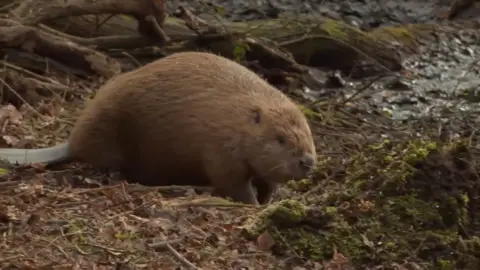
Meanwhile, at their new secret location, the settled pair of beavers have become true architects of their environment. A formerly shady brook, enclosed by dense trees and offering limited ecological value, has been dramatically opened out to form a vibrant, expansive wetland area. This transformation is driven by the construction of an impressive 35-metre (115ft) long dam, which now expertly holds back the water, creating deeper channels and stiller pools for the beavers to navigate and thrive in. The ecological benefits are already profoundly evident: the once-uniform stream has been diversified into a mosaic of habitats, increasing water retention in the landscape, filtering sediments, and creating conditions ripe for a surge in biodiversity.
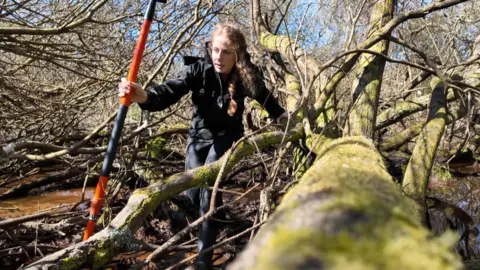
All around their new territory, tree stumps bear the tell-tale signs of busy beaver activity, gnawed into characteristic points with fresh teeth marks still clearly visible. Fallen trees dot the landscape, repurposed as building materials for their lodge and dams, or serving as food. These natural engineers are not only altering hydrology but also creating essential microhabitats for countless other species. Trail cameras strategically placed throughout the area have captured a rich tapestry of other wildlife moving into and benefiting from the newly created wetland. From an elusive otter, which the beaver pair appear to tolerate, to a magnificent hunting barn owl gracefully patrolling the water’s edge, the ecosystem is demonstrably richer. Most excitingly, early this year, the trail cameras captured the settled pair mating, sparking immense hope among the team that kits could be on the way this summer, further cementing the beavers’ return to Dorset.
For Gen Crisford and her dedicated team, the evident success of the settled beavers and the remarkable transformation of their habitat more than compensate for the initial challenges and the run-around given by the more troublesome individuals. "All things said it’s been a really positive year," she affirms, acknowledging the bittersweet nature of the journey. "Obviously the death of one of the animals is something we’re sad about." However, she places this loss within a broader, realistic context: "It isn’t unusual for re-introduction projects and so I think we just have to take that in our stride and that won’t stop us from continuing."
The Studland project, despite its early hurdles, has provided invaluable lessons for future reintroductions across the UK. It underscores the importance of flexibility, rigorous monitoring, and understanding the complex dynamics of wild animals. The beavers’ ability to create new wetlands not only benefits biodiversity but also offers crucial natural solutions to pressing environmental challenges like drought and flooding, by slowing water flow and improving water quality.
Looking ahead, the National Trust remains committed to the long-term vision of beaver reintroduction. "So the next step is to look at our larger landscape," Crisford concludes, her voice imbued with determination. "And there are some other locations there where we’ll be looking to do releases in the future." The beavers of Dorset, through their struggles and triumphs, have become pioneers, laying the groundwork for a future where these remarkable creatures once again play their vital role in shaping Britain’s natural world, one dam at a time.


 Roy Suryo
 Nakalama John


 atisusanti