Nana Banana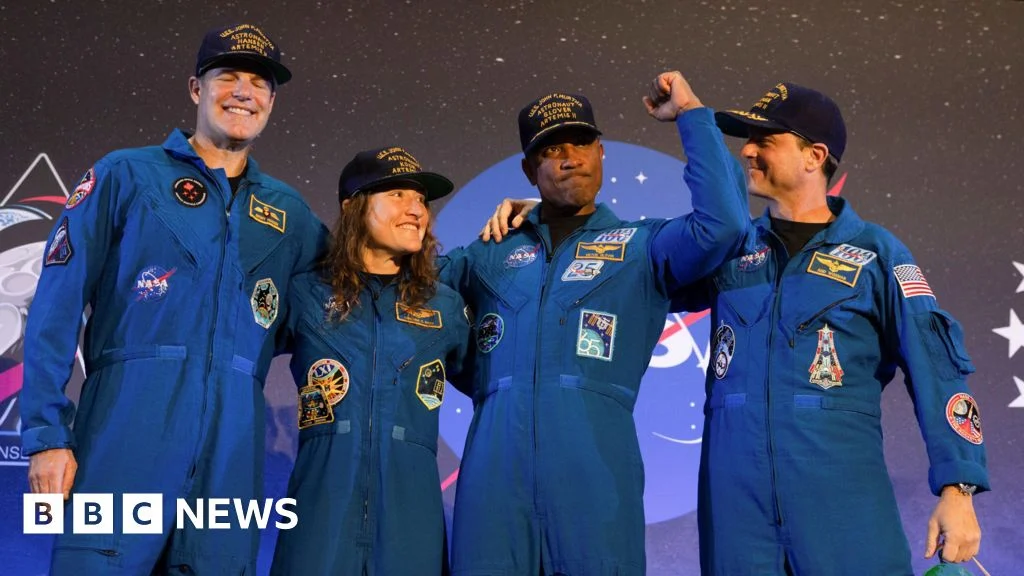
Commander Reid Wiseman encapsulated the profound impact of their journey, stating simply yet powerfully, "This mission was the most special thing I ever went through in my life." His words resonated with the collective awe inspired by their nine-day odyssey, a sentiment undoubtedly shared by his crewmates: pilot Victor Glover, mission specialist Christina Koch, and Canadian astronaut Jeremy Hansen. For Wiseman, a seasoned astronaut with previous experience aboard the International Space Station, to describe Artemis II in such superlative terms underscored the unique nature and unparalleled significance of traversing the vast expanse of cislunar space. The mission was not just a technical test; it was a deeply personal and transformative experience for each individual, pushing the boundaries of human endurance and perspective.
The astronauts were finally reunited with their families on Saturday, a moment charged with emotion and long anticipation. While the mission was a triumph for science and exploration, it also represented a period of immense separation and sacrifice for the families of the crew members. The embraces shared at the welcome ceremony spoke volumes, a powerful testament to the human element at the core of space exploration – the deep bonds that ground these extraordinary individuals even as they reach for the stars. The support and understanding of their loved ones are an invisible, yet indispensable, component of every successful space mission.
The Artemis II mission itself was a critical waypoint in NASA’s ambitious program to return humans to the Moon, establish a sustainable lunar presence, and ultimately pave the way for human missions to Mars. Launched aboard the most powerful rocket ever built, the Space Launch System (SLS), from Kennedy Space Center’s Launch Complex 39B, the Orion spacecraft carried its precious human cargo on a precisely choreographed trajectory. Their journey took them on a free-return trajectory around the Moon, reaching a maximum distance of approximately 230,000 miles (370,000 kilometers) from Earth. This unprecedented distance broke the record set by Apollo 13 in 1970, affirming Artemis II’s place in history as the furthest humans have ever traveled into space.
The objectives of Artemis II were multifaceted and critical for future deep-space endeavors. Primarily, the mission served as a crewed flight test of the Orion spacecraft’s life support systems, navigation, communication capabilities, and re-entry procedures. It was designed to thoroughly evaluate how Orion performs with humans onboard, ensuring the safety and habitability of the spacecraft for the more complex lunar landing missions that will follow. The crew meticulously monitored various systems, conducted in-flight tests, and provided invaluable human feedback on everything from crew accommodations to emergency procedures. Their insights will directly inform the design and operational protocols for Artemis III and subsequent missions.
The crew was a meticulously selected group, representing the pinnacle of astronaut training and experience. Commander Reid Wiseman, a U.S. Navy aviator, brought his extensive test pilot background and previous ISS command experience to the forefront, guiding the mission with steady leadership. Pilot Victor Glover, also a U.S. Navy aviator and a veteran of SpaceX Crew-1 mission to the ISS, provided critical expertise in spacecraft operations and was integral to testing Orion’s flight control systems. His presence also highlighted the increasing diversity within NASA’s astronaut corps, inspiring a new generation.
Mission specialist Christina Koch, renowned for her record-breaking 328-day continuous stay aboard the ISS, contributed her vast experience in long-duration spaceflight and scientific operations. Her expertise was vital in assessing the long-term habitability and operational efficiency of Orion. Completing the quartet was Jeremy Hansen, a Canadian Space Agency (CSA) astronaut, marking a significant milestone for international collaboration in deep-space exploration. As the first Canadian to venture beyond low-Earth orbit, Hansen’s participation underscored the global nature of the Artemis program and the shared human desire to explore the cosmos. This diverse crew, representing different backgrounds and skill sets, exemplified the collaborative spirit essential for such ambitious undertakings.
During their nine-day voyage, the crew experienced breathtaking views of both their home planet and the lunar sphere. They conducted live broadcasts, sharing their unique perspective of a crescent Earth against the blackness of space and the rugged, pockmarked surface of the Moon. These visual communications not only provided valuable public outreach but also served as critical tests of Orion’s deep-space communication systems. The experience of seeing Earth as a fragile blue marble, suspended in the cosmic void, is often described as profoundly transformative by astronauts, instilling a renewed sense of responsibility for planetary stewardship.
The mission trajectory involved a translunar injection burn, propelling Orion out of Earth’s orbit and towards the Moon. After performing a lunar flyby, the spacecraft executed a trans-Earth injection burn to begin its journey back. The journey home culminated in a precise splashdown in the Pacific Ocean, a testament to the accuracy of NASA’s navigation and guidance systems. Following splashdown, the Orion capsule and its crew were recovered by a joint team from NASA and the U.S. Navy, transported back to land, and then flown to Houston for initial medical evaluations and the eagerly awaited family reunions.
Artemis II built directly upon the success of Artemis I, an uncrewed test flight that thoroughly validated the SLS rocket and Orion spacecraft in deep space before entrusting them with human lives. The successful completion of Artemis II now clears the path for Artemis III, the mission that aims to land the first woman and the next man on the Moon, specifically targeting the lunar South Pole, an area believed to contain significant water ice reserves. This mission represents a monumental step towards establishing a sustained human presence on the Moon, a foundational element of the broader Artemis program’s vision.
The welcoming ceremony in Houston was more than just a celebration of a mission completed; it was a profound acknowledgment of humanity’s enduring spirit of exploration. It highlighted the extraordinary dedication of thousands of engineers, scientists, and support staff across NASA, its international partners, and private industry who made this mission possible. The return of the Artemis II crew serves as a powerful inspiration for future generations, reminding us that the boundaries of what is possible are constantly being redefined. As humanity looks towards a future on the Moon and beyond, the safe return of Reid Wiseman, Victor Glover, Christina Koch, and Jeremy Hansen to Planet Earth in Houston stands as a beacon of progress and a promise of even greater achievements to come in the grand adventure of space exploration.




 George Anjay
 Nakalama John
 atisusanti
 Ramos Leo