Nana Banana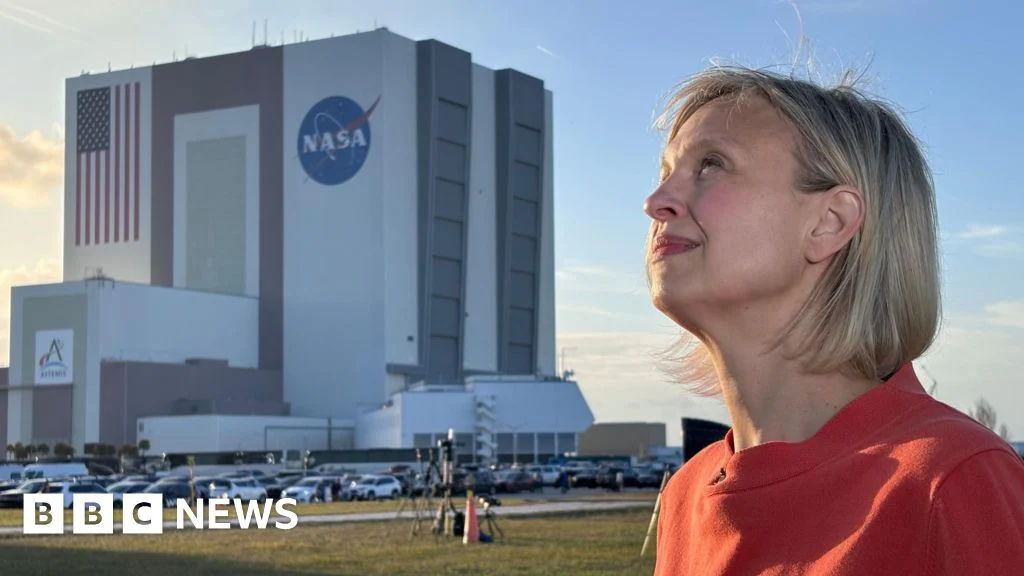
Before they embarked on their incredible ascent into space, the crew – Reid Wiseman, Victor Glover, Christina Koch, and Jeremy Hansen – conveyed a surprising calm. They told us that on launch day, astronauts are often the most composed individuals in the entire operation. However, for me, standing amidst the buzzing energy of the Kennedy Space Center in Florida, alongside my dedicated BBC News science team, Alison Francis and Kevin Church, my excitement was a barely contained force. It was an impossible emotion to suppress, and as the mighty Space Launch System (SLS) rocket ignited its colossal boosters and engines, thrusting skywards with an unimaginable power, my spontaneous reaction to the spectacle even went viral.
The launch itself was a truly visceral experience, an assault on the senses that imprinted itself indelibly on my memory. The burning white brightness of the engines, so intense you couldn’t tear your eyes away, etched itself onto the retina. Then came the deafening roar, a sonic wave that took seconds to travel across the distance, hitting you with a physical force that vibrated through your very bones, a profound resonance that passed right through you, shaking the ground beneath your feet. But more than the incredible noise or blinding light, what truly defied comprehension was the knowledge that four precious human beings were strapped into their seats, perched atop that 98-meter-tall behemoth, on an unfathomable journey to the Moon. It was a moment of profound awe and vulnerability.
As the Orion spacecraft climbed higher, breaking free of Earth’s embrace, the crew got their first glimpse of home from far above. It was Victor Glover who eloquently articulated the universal sentiment, telling the world, "Planet Earth, you look beautiful." Soon after, with a precise burn of their spacecraft’s main engine, they bid farewell to our blue marble and commenced their quarter of a million-mile journey, a path no humans had trod for over half a century.
The early days of the mission saw the crew adapting to the peculiar sensation of microgravity. Live video feeds streamed back to Earth from inside their capsule offered a candid, often humorous, glimpse into their daily lives. It was immediately apparent how incredibly crammed together they were, living, working, eating, and sleeping in a space no larger than a minibus. There was virtually no privacy, not just from each other, but from the millions of people worldwide who were following their every twist and turn with an insatiable curiosity.
Perhaps one of the most unexpected, yet utterly human, aspects of their journey concerned their Universal Waste Management System, more commonly known as the toilet. This troublesome lavatory, a marvel of engineering that cost an eye-watering $23 million to design, unfortunately developed plumbing problems. And so, we, along with the rest of the world, were treated to intimate details about the impact this was having on the astronauts. At a media briefing, questions were posed about the status of their "number ones and number twos." And if you, like me, really wanted to know – and I confess, I absolutely did – the update was that it was "go" for "number twos," but for "number ones," collapsible contingency urine devices had been deployed. In simpler terms: bags with funnels. Such mundane realities underscore the immense challenges of sustaining human life in space.
Our own base of operations, the Johnson Space Center in Houston, allowed us to spend considerable time in Mission Control – the veritable nerve center of the entire operation. Here, rows upon rows of engineers and flight controllers sat intently, eyes glued to their screens as a relentless torrent of data poured in. They meticulously monitored every single system of the spacecraft, from its intricate navigation pathways to the life support systems that kept the crew alive. This vigilance was not merely routine; it was absolutely vital. It is crucial to remember that Artemis II was a test flight, the very first time humans had flown on both the powerful SLS rocket and the advanced Orion spacecraft. And with a test flight, especially one pushing the boundaries of human endurance and technology, come very real, inherent risks.
Speaking to Canadian astronaut Jeremy Hansen for the "13 Minutes Presents: Artemis II" podcast while he was in quarantine before the launch truly brought the gravity of these risks home. He confided in me that he had had to speak to his wife and three children about the very real possibility that he might not return. Commander Reid Wiseman also shared that he had had incredibly honest conversations with his two daughters about the dangers involved in this ambitious endeavor, having raised them as a single father since his wife passed away six years prior. This personal loss led to one of the most poignant and emotionally resonant moments of the entire mission.
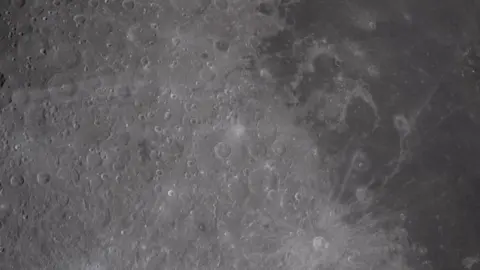
As the crew neared their celestial destination, the Moon growing ever larger and more detailed in their spacecraft’s windows, new features began to emerge on the lunar surface. In a deeply moving gesture, they chose to name a particular crater – a bright, distinct spot visible even from Earth – after Reid’s late wife, Carroll. The scene that followed, broadcast back to Earth, saw the crew, all visibly moved to tears, coming together to embrace their commander and friend. And back in Houston, a similar wave of emotion swept through Mission Control; there wasn’t a dry eye in the house, and that certainly included my BBC team. It was a powerful reminder of the human heart beating at the core of this technological marvel.
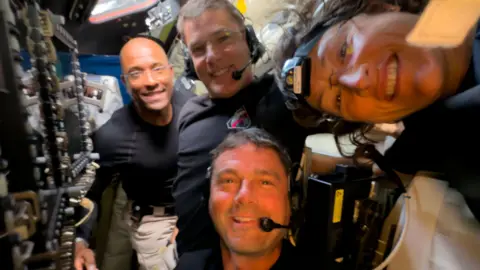
Every single person we encountered at Nasa – from its administrator, Jared Isaacman, to their fellow astronauts, and the legions of dedicated scientists and engineers – cared profoundly about this quartet. They had been rooting with every fiber of their being for their success and safe return. After breaking the legendary Apollo 13’s record for the furthest distance ever traveled into space by humans, the Artemis astronauts continued their journey, pushing the boundaries even further. They captured thousands of images and recorded evocative audio descriptions of the stark, bleak beauty of the lunar surface as it silently passed beneath them, ultimately voyaging an astonishing 252,756 miles from Earth.
The legacy of the Apollo program runs deeply through the veins of this Artemis mission. Messages from revered Apollo astronauts Charlie Duke and Jim Lovell – recorded before Lovell’s passing last year – were played to the astronauts during their flight, a poignant link across generations of space explorers. However, some voices have questioned whether this is merely a nostalgia trip. Why, they ask, spend such immense time, effort, and an estimated $93 billion to go back to the Moon when the US has already been there?
Nasa’s administrator, Jared Isaacman, passionately explained that he intends for his space agency to build upon Apollo’s achievements, not simply repeat them. He laid out a comprehensive raft of lunar exploration plans, including a crewed landing planned for 2028, the establishment of a sustainable Moon base, and, in the longer term, setting his sights firmly on sending humans to Mars. Yet, the debate persists: do astronauts truly need to explore the Moon when sophisticated orbiters, rovers, and landers can perform many of the scientific tasks? Isaacman was adamant that humans must be an integral part of the mix, telling me that exploration is fundamentally ingrained in human DNA. But he also acknowledged, with a sobering candor, that this inherent drive comes with undeniable risk.
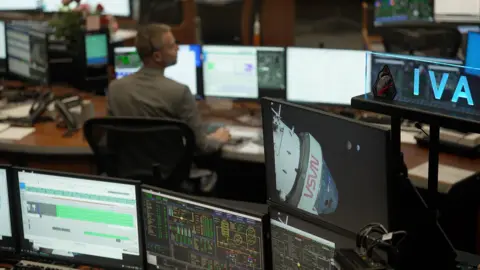
Nowhere was this risk more acutely apparent than in the final, formidable challenge for the Artemis crew: their return to Earth.
It was the ultimate test of their mission, and arguably the biggest one. Victor Glover vividly described re-entry as "riding a fireball through the atmosphere." As the Orion capsule hurtled back towards Earth, protected only by its advanced heat shield, it experienced temperatures half as hot as the surface of the Sun – a searing inferno designed to burn away the outer layers while preserving the precious cargo within. Watching this white-knuckle ride from the confines of Mission Control was an anxiety-inducing experience, particularly during the agonizing six very long minutes when communications with the capsule completely dropped out as it closed in on Earth, engulfed in a shroud of superheated plasma. The collective relief in the room was palpable, a physical wave, when a small, bright white dot was finally spotted high above the Pacific Ocean, and Commander Wiseman’s voice, clear and strong, rang out through the speakers at Mission Control: "Houston, We have you loud and clear."
With the capsule now descending majestically beneath its enormous parachutes, it gently splashed down in the vast expanse of the Pacific Ocean. The intensely focused and calm atmosphere in Mission Control instantly shattered as the room erupted with joyous celebrations. The Houston team, along with the thousands of engineers, scientists, and support staff who had dedicated years of their lives to this project, had safely brought their friends, their colleagues, their heroes, home.
The Artemis astronauts have undoubtedly undergone an extraordinary experience, one they have already acknowledged will take a considerable time to fully absorb. And, of course, they now share an extraordinary, unbreakable bond with each other. I had the unique opportunity to speak to the crew in space as their monumental voyage was nearing its conclusion. I asked them what they would miss most about their time in orbit. Without a moment’s hesitation, Christina Koch replied that she would miss the camaraderie, stating simply that the crew were now like family.
They embarked on this journey relatively unknown to the wider world. Now, Reid Wiseman, Victor Glover, Christina Koch, and Jeremy Hansen have returned as household names, their faces and voices forever linked to this historic endeavor. It truly feels as though Kevin, Ali, and I have been granted a front-row seat to history in the making. We have been genuinely taken aback by how profoundly this mission has captivated so many people, diligently reporting around the clock to keep pace with everyone’s insatiable appetite for the latest news from space. For a few brief, glorious days, these astronauts transported millions around the world away from the everyday realities of planet Earth, allowing us to ride along with them on their epic journey. And if Nasa achieves its ambitious exploration plans – and if other nations follow suit – we will all undoubtedly be back for more.




 George Anjay
 Nakalama John
 atisusanti
 Ramos Leo