George Anjay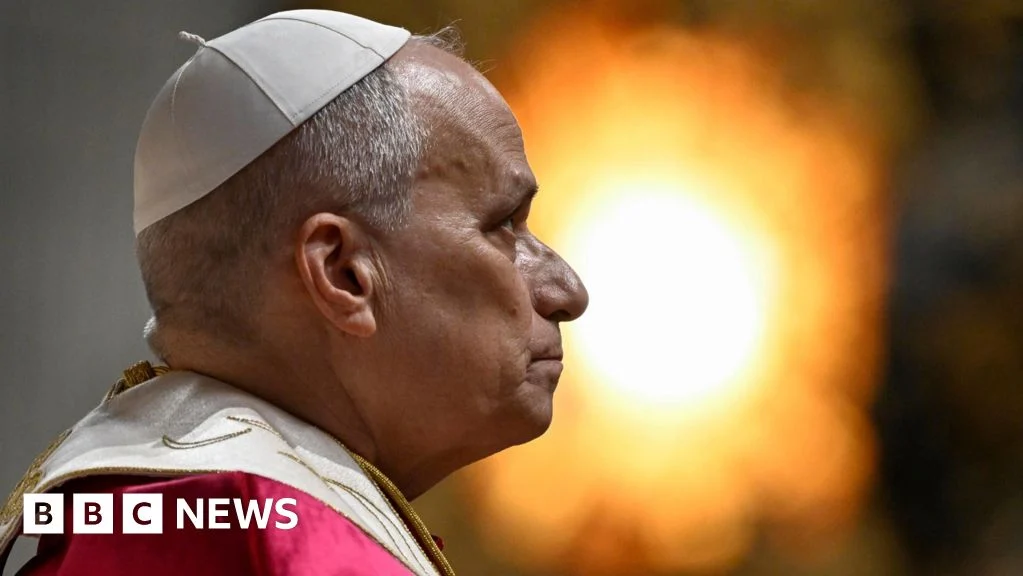
In an unprecedented and sharply worded broadside, former President Donald Trump has unleashed a torrent of criticism against Pope Leo, lambasting the pontiff’s stance on US immigration policy and the ongoing conflict in Iran. The extraordinary attack, delivered via Trump’s Truth Social platform and amplified in subsequent remarks to reporters, signals a deepening rift between the former president and a prominent global religious figure. Trump’s pronouncements underscore his characteristic willingness to challenge established norms and engage in direct confrontation, even with spiritual leaders commanding significant international influence.
The former president, who himself commands a substantial following among a segment of the American population, declared the Pope to be "WEAK on Crime and terrible for Foreign Policy." This assertion was later softened in tone but not in substance when Trump told journalists that he was "not a big fan" of the pontiff. The Catholic Church holds a significant presence in the United States, with over 70 million adherents, representing approximately 20% of the nation’s population. Notably, this demographic includes Vice President JD Vance, a figure whose political alignment often mirrors that of Trump. The timing of Trump’s invective is particularly noteworthy, coinciding with Pope Leo’s extensive 11-day journey across Africa, marking his second significant foreign excursion since assuming the papacy last year.
In his Sunday missive, Trump urged the pontiff to "get his act together," going on to describe him as "weak on nuclear weapons." This particular criticism appeared to be a pointed reference to Iran’s ongoing pursuit of nuclear capabilities, a development that has been cited by the United States and its allies, including Israel, as a primary justification for military action against Tehran. Adding a layer of personal animus to his critique, Trump speculated that Pope Leo’s election to the papacy was a strategic move by the Vatican, orchestrated "because he was American, and they thought that would be the best way to deal with President Donald J Trump." He further insinuated a quid pro quo, stating unequivocally, "If I wasn’t in the White House, Leo wouldn’t be in the Vatican."
When pressed by reporters to elaborate on his provocative Truth Social post, Trump doubled down on his criticisms, stating, "I don’t think he’s doing a very good job, he likes crime, I guess." He elaborated on this theme, characterizing the Pope as "a very liberal person, and he’s a man who doesn’t believe in stopping crime." Trump also broadened his attack to include the Pope’s perceived stance on international security, accusing him of being "a man who doesn’t believe we should be toying with a country that wants a nuclear weapon so they can blow up the world." This framing directly links the Pope’s opposition to the war in Iran with a perceived lack of resolve against a nuclear-armed adversary, a stance that Trump consistently champions.
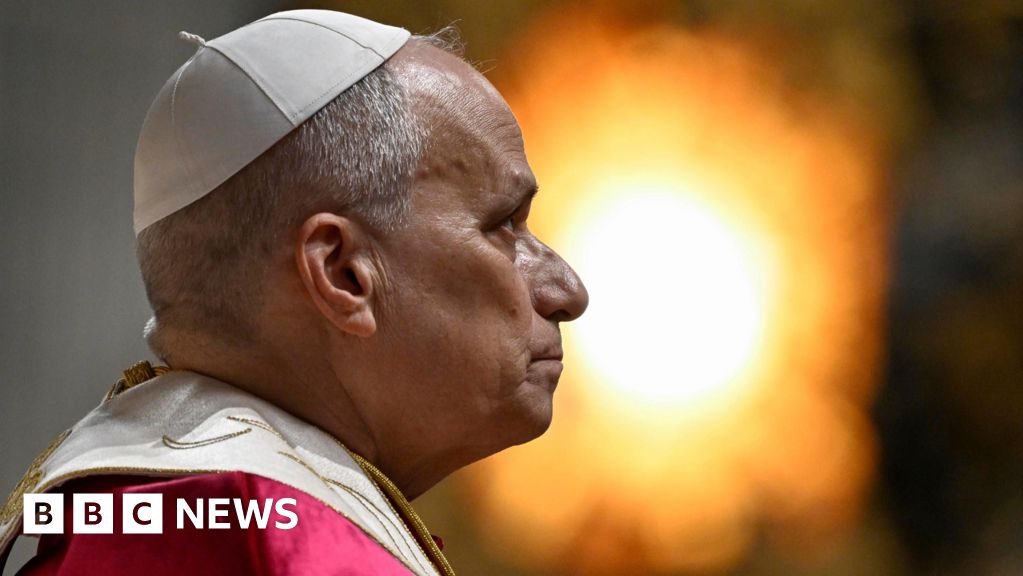
The unprecedented nature of a former US president publicly attacking the head of the Catholic Church did not go unnoticed and immediately drew sharp condemnation from religious scholars and observers. Massimo Faggioli, a prominent Vatican expert, drawing a stark historical parallel, was quoted by Reuters as saying, "Not even Hitler or Mussolini attacked the Pope so directly and publicly." This comparison highlights the gravity and historical context of Trump’s remarks, placing them in a category of extreme opposition previously reserved for totalitarian regimes.
Pope Leo has consistently used his public addresses to advocate for global peace and de-escalation, particularly in the volatile Middle East. His calls for restraint have frequently served as a direct counterpoint to the more aggressive rhetoric and actions of leaders like Trump. During a period when Trump issued threats of military retaliation against Iran, famously stating that "a whole civilization will die tonight," Pope Leo responded by unequivocally denouncing the statement as "truly unacceptable." This established a clear moral and diplomatic chasm between the two figures on the critical issue of conflict resolution.
In his Easter address, a sermon typically focused on themes of hope and resurrection, Pope Leo broadened his message to address the pervasive nature of violence and indifference in the contemporary world. Without explicitly naming any nations, he lamented that "people were growing accustomed to violence and indifferent to thousands of deaths." He issued a powerful plea for peace, urging, "Let those who have weapons lay them down. Let those who have the power to unleash wars choose peace." This universal call for disarmament and conflict resolution stands in direct contrast to Trump’s more nationalistic and interventionist foreign policy approach.
Furthermore, Pope Leo has been a vocal critic of Trump’s stringent immigration policies, questioning the moral consistency of individuals who claim to be "pro-life"—a term commonly associated with opposition to abortion—while simultaneously supporting what he has described as the "inhuman treatment of immigrants." This critique directly challenges the ethical framework of a significant portion of Trump’s political base and aligns with the broader humanitarian concerns that have characterized Pope Leo’s papacy. His approach is widely seen as a continuation of the humanitarian tradition established by his predecessor, Pope Francis. It is worth recalling that Pope Francis himself engaged in a public dispute with Trump during the 2016 presidential campaign, stating that Trump was "not Christian" due to his anti-immigrant rhetoric. Trump’s response at the time was to dismiss the late pontiff as "disgraceful," demonstrating a pattern of antagonism towards papal criticism. The current exchange with Pope Leo suggests that this pattern of conflict is set to continue, with significant implications for the intersection of faith, politics, and international relations.

 Nakalama John
 Ramos Leo
 Nana Banana