
 George Anjay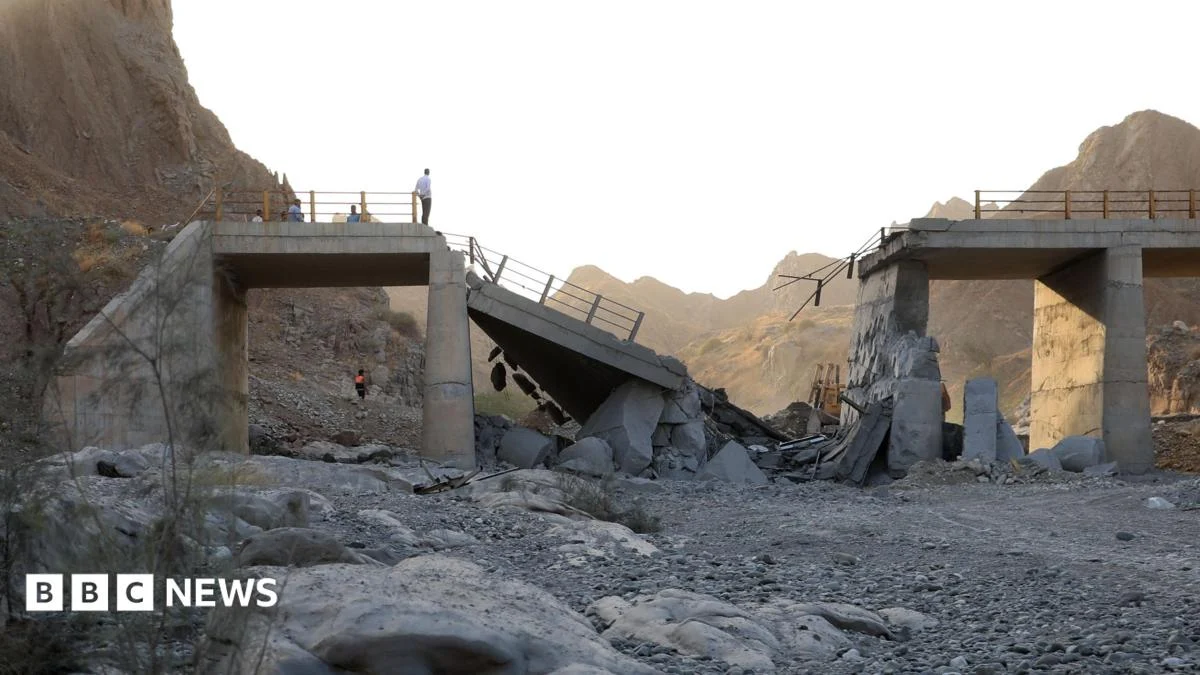
The escalating shadow war between the United States and Iran erupted into direct, retaliatory strikes over the weekend, following the deaths of two American service members in a Jordanian attack. The United States launched a significant wave of air strikes on Saturday night, meticulously targeting Iran’s coastal surveillance and air defense facilities, according to official pronouncements from US military officials. These strikes, described as a direct response to the deadly assault in Jordan, underscore the intensifying cycle of violence that threatens to destabilize the region further.
US Central Command (Centcom) confirmed that its forces successfully engaged and neutralized key Iranian military capabilities. Simultaneously, Iranian state media reported that Qeshm Island, strategically located in the vital Strait of Hormuz, had been subjected to attacks. Centcom explicitly stated that its targets included elements of Iran’s Islamic Revolutionary Guard Corps (IRGC), the very entity it holds responsible for the attack that tragically claimed the lives of two US troops in Jordan on Friday. The grim toll from that incident also includes another service member who remains missing, adding a layer of agonizing uncertainty to the unfolding crisis.
In a swift and defiant response to the latest American offensive, Iran’s army announced that it had carried out drone attacks on two US bases in Kuwait, as reported by Iranian state media. This tit-for-tat exchange highlights the increasingly direct nature of the confrontations, with both nations accusing each other of striking critical infrastructure in recent days. The narrative of escalation is further cemented by Iran’s own claims, detailed on Saturday, of executing "large-scale attacks with kamikaze drones" against an American military "depot at Camp Udairi" and another at "Ali Al Salem Air Base in Kuwait," according to the IRGC-affiliated Tasnim news agency.
The US strikes, occurring on the eighth successive night of retaliatory actions, were explicitly designed, as stated by Centcom, "to further degrade Iran’s ability to threaten commercial shipping in the Strait of Hormuz." This strategic objective underscores the broader geopolitical implications of the conflict, which extends beyond immediate military engagements to encompass control over vital maritime arteries. The statement from Centcom further elaborated on the punitive intent behind the strikes, declaring them to be "to swiftly punish Islamic Revolutionary Guard Corps forces who launched attacks against American service members in Jordan last night." This declaration leaves no room for ambiguity regarding the US administration’s resolve to hold Iran accountable for the fatalities.
These recent exchanges follow a particularly volatile week marked by a significant resurgence of hostilities. Washington had previously reimposed its blockade on Iranian ports, a move that intensified economic pressure on Tehran. In response, Iran had declared the Strait of Hormuz closed, a dramatic assertion of control over a chokepoint crucial to global oil supply. These actions effectively signaled the collapse of a preliminary ceasefire agreement, which had only been in place for less than a month, underscoring the fragility of any attempts at de-escalation.
Earlier on Saturday, Centcom had released a somber statement detailing the tragic losses in Jordan. "Two US service members in Jordan were killed in action as US Central Command (Centcom) and partner forces defended against Iranian ballistic missile and drone attacks," the statement read. "Additionally, one service member is currently missing." The statement emphasized a commitment to respecting the grieving families, stating, "Out of respect for the families, Centcom will withhold additional information, including the identities of the fallen warriors, until 24 hours after the next of kin have been notified." This measured approach to releasing casualty information reflects the gravity of the situation and the profound human cost of the conflict.
The loss of life in Jordan elicited a strong reaction from US Defence Secretary Pete Hegseth, who took to the social media platform X to express his condolences and reaffirm American resolve. "Godspeed, heroes," Hegseth posted. "Their sacrifice only stiffens our resolve." This sentiment encapsulates the broader mood within the US military and political establishment, suggesting that the recent attacks will not be met with passive acceptance.
The grim tally of American casualties in the broader conflict has now reached sixteen. This grim milestone was marked by the declaration of death for an American Navy pilot who had been missing earlier in the month. This represents the second increase in the US death toll this week alone, a stark indicator of the intensifying nature of the conflict and the rising stakes involved.
The current conflagration can be traced back to a preliminary deal struck between Washington and Tehran in June, aimed at de-escalating the conflict. However, the agreement proved to be exceedingly fragile, unraveling within weeks. President Donald Trump’s declaration on July 8th that the agreement was "over" marked a decisive turning point, signaling the end of any immediate prospect for a peaceful resolution and paving the way for the current cycle of intense military engagement. The latest exchange of strikes represents a significant escalation, pushing the United States and Iran closer to a direct confrontation with potentially devastating regional and global consequences. The strategic importance of the Strait of Hormuz, coupled with the political will of both nations to project power and retaliate, creates a volatile environment where further escalation remains a distinct and alarming possibility. The intricate web of alliances and rivalries within the Middle East means that any further deterioration of the situation could draw in additional actors, transforming a bilateral conflict into a wider regional conflagration. The international community watches with bated breath, hoping for a de-escalation that currently seems increasingly distant.



 Nakalama John
 atisusanti
 Ramos Leo
 Roy Suryo
 Nana Banana