
 Nana Banana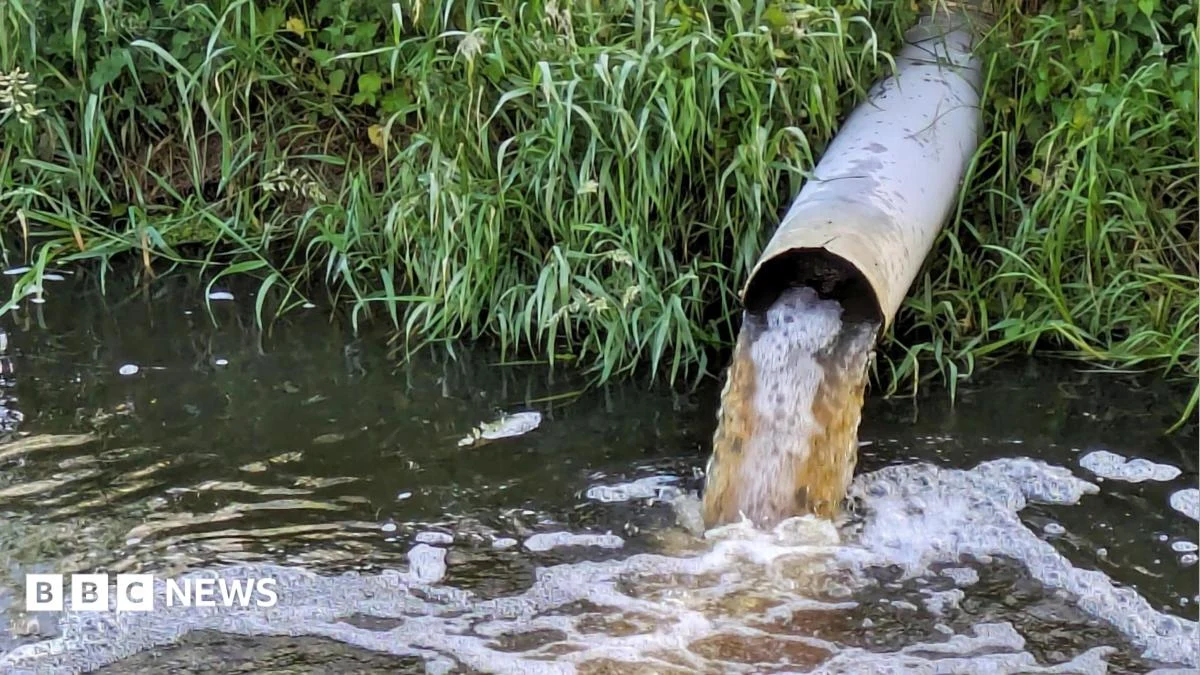
The genesis of this groundbreaking research lies in a confidential leak earlier this year. A source within the EA provided Professor Hammond with internal documents related to a significant 2021 court case against Southern Water, which faced prosecution for illegal sewage spilling. Crucially, these documents contained an internal EA definition of "heavy rain" conditions, a critical threshold for legitimate sewage discharges. Accompanying internal EA papers clarified that water companies are permitted to spill sewage only when "heavy" rain occurs, meaning beyond what is considered "normal" weather conditions. This distinction is vital, as it defines the permissible scope for storm overflow activations, which are designed to prevent sewage systems from being overwhelmed during extreme rainfall, thus protecting homes and businesses from internal flooding.
Armed with this previously secret definition, Professor Hammond embarked on a comprehensive analysis of publicly available water company spill data. His investigation focused on more than 350 storm overflow outlets across England, encompassing all the largest sewage treatment works and a carefully selected, representative sample of smaller ones. This extensive dataset covered all nine of England’s water companies, collectively serving over 30 million people, providing a robust and geographically diverse basis for his conclusions. Hammond meticulously cross-referenced the timing of sewage spills with localized rainfall data, applying the EA’s internal "heavy rain" definition to determine whether the discharges occurred under legally permissible conditions.
The results of his analysis were nothing short of damning. Professor Hammond found that approximately 86% of the raw sewage spilling hours he examined took place when there had not been heavy rain. This crucial detail strongly indicates that these discharges could be potentially illegal under the very definition used internally by the Environment Agency itself. The scale of this potential illegality is unprecedented, suggesting that the vast majority of sewage spills are not, as often claimed, a last resort during truly exceptional weather events, but rather a routine occurrence in more commonplace conditions.
The analysis further revealed that no water company in England performed well under Hammond’s scrutiny. Even the best-performing company exhibited a potential illegality rate exceeding 70% over the last two years, underscoring the systemic nature of the problem across the entire industry. This indicates a deeply embedded issue, challenging the narrative that spills are isolated incidents or primarily linked to extreme weather.
Professor Hammond did not mince words in expressing his outrage. Speaking to BBC News, he stated, "It’s totally outrageous, both from the point of the water companies who are exploiting the weak regulation but also from the Environment Agency’s point of view, where they’ve not been doing their job properly." His strong condemnation highlights a dual failure: water companies potentially exploiting regulatory loopholes to avoid necessary infrastructure investments, and the Environment Agency failing in its duty to robustly enforce existing environmental laws. This exploitation, according to Hammond, allows companies to defer costly upgrades to their aging sewer networks and treatment facilities, passing the environmental and public health burden onto communities and ecosystems.
This is not the first instance where the Environment Agency’s enforcement regime has faced severe criticism and scrutiny. In 2024, the Office for Environmental Protection (OEP), an independent public body established to hold government and public authorities to account on environmental law, issued a scathing report. The OEP ruled that the EA was not applying legislation properly regarding when sewage could be legally discharged. Specifically, the OEP found that the EA was allowing water companies to spill sewage in "normal" weather conditions, rather than adhering to the legal requirement for spills to occur only in "exceptional circumstances." The term "exceptional circumstances" is generally understood to refer to events that are rare, unpredictable, or of unusual severity, far beyond routine rainfall or typical storm events. The OEP’s findings underscored a fundamental misalignment between the law’s intent and its practical application by the regulator.
In response to the OEP’s report and mounting public pressure, the Environment Agency issued new guidance last year, detailed in its Storm Overflow Assessment Framework 2025. This guidance explicitly stated that spills should not take place during normal weather. However, despite this apparent clarification, the EA’s subsequent actions and communications have maintained an air of ambiguity. In an email exchange with the BBC, the EA notably refused to explicitly confirm that spills should only occur during "exceptional circumstances." Instead, its spokesperson stated that the agency would "always take action" if there had been a breach of the law. This cautious phrasing, avoiding the direct use of "exceptional circumstances," raised concerns that the EA might still be reluctant to fully adopt the stricter interpretation advocated by the OEP and environmental campaigners.
The EA spokesperson further elaborated on the complexities of pursuing legal action: "However, to meet the strict legal requirements needed to pursue a criminal conviction we must consider a wide range of factors including specific site and permit conditions, as well as rainfall totals." While acknowledging the need for robust evidence in legal cases, critics argue that this statement can be interpreted as providing a rationale for infrequent prosecutions, potentially allowing water companies to operate within a grey area. When pressed to provide details of completed or ongoing enforcement action related to spills in "normal" weather, the EA spokesperson declined, citing "ongoing legal proceedings," a response that further fueled perceptions of a lack of transparency and proactive enforcement.
The consequences of these potentially illegal sewage spills are far-reaching and severe. Raw sewage contains a cocktail of harmful substances, including human waste, bacteria (such as E. coli), viruses, microplastics, and chemicals from households and industries. When discharged into rivers, lakes, and coastal waters, it poses significant threats to environmental health. It depletes oxygen levels, leading to fish kills and harming aquatic biodiversity, disrupting delicate ecosystems. It can also fuel algal blooms, further degrading water quality and creating dead zones. For human health, the risks are equally concerning. People engaging in water sports like swimming, surfing, or kayaking are exposed to dangerous pathogens, leading to illnesses ranging from gastrointestinal infections to more severe conditions. Contaminated shellfish can also pose a threat to consumers. Economically, these spills impact tourism, recreational industries, and commercial fishing, which rely on clean water.
In response to Professor Hammond’s analysis, a spokesperson for Water UK, the industry body representing all the major water and wastewater companies in England, provided their perspective. They stated, "As confirmed by the High Court and the Office for Environmental Protection, discharges should only occur in ‘exceptional circumstances’ or if preventing them is technically possible but would involve excessive cost." This statement is significant for two reasons. Firstly, it acknowledges the legal precedent for "exceptional circumstances," aligning with the OEP’s stance. However, it then introduces a critical caveat: spills are permissible if preventing them would involve "excessive cost." This "excessive cost" clause has long been viewed by campaigners as a loophole that allows companies to justify continued discharges rather than investing sufficiently in infrastructure upgrades.
Water UK’s spokesperson concluded by reiterating the industry’s stated ambition: "In any case, we want to end all discharges and are working to end them as fast as we physically can." While this commitment sounds positive, its credibility is undermined by Professor Hammond’s findings of widespread potential illegality. If 86% of current spills are occurring outside of heavy rain conditions, the pace and sincerity of the industry’s efforts to "end all discharges" are called into question. Critics argue that without robust enforcement and clear, unambiguous regulatory frameworks, such statements risk being perceived as aspirational rather than reflective of tangible progress. The phrase "as fast as we physically can" also lacks specific timelines or concrete investment commitments, leaving room for continued delays.
The issue is further complicated by the broader regulatory and financial landscape. Ofwat, as the economic regulator, balances environmental protection with ensuring water companies can finance their operations and investments. There is ongoing debate about whether Ofwat’s regulatory framework adequately incentivizes companies to prioritize environmental improvements, especially when significant infrastructure upgrades are required. Many of England’s sewer systems are Victorian-era networks, struggling to cope with increased population, urban development, and the growing intensity of rainfall events due to climate change. Upgrading this infrastructure represents a multi-billion-pound challenge.
Public pressure, galvanized by environmental groups like Surfers Against Sewage and growing media attention, has played a crucial role in bringing this issue to the forefront of the political agenda. There is increasing demand for government intervention, stricter penalties for polluters, and clearer targets for reducing and ultimately ending sewage discharges. The findings from Professor Hammond’s research, supported by leaked internal documents, add significant weight to these calls, suggesting that the problem is not merely one of insufficient infrastructure but also of potential regulatory failure and a lack of accountability.
In conclusion, Professor Hammond’s new research provides compelling evidence that the majority of sewage spills in England may be occurring illegally, contravening the Environment Agency’s own internal definition of "heavy rain." This revelation exposes a systemic issue within England’s water sector, pointing to potential exploitation of weak regulation by water companies and a failure of robust enforcement by the Environment Agency. The findings reignite calls for urgent, decisive action from regulators and government to clarify legal definitions, enforce environmental laws stringently, and compel water companies to make the necessary investments to protect England’s precious waterways and public health. The future of England’s rivers and coastlines hinges on a shift from ambiguous guidelines and perceived loopholes to unambiguous compliance and genuine environmental stewardship.




 Roy Suryo

 Nakalama John
 atisusanti
 Ramos Leo
