
 Nakalama John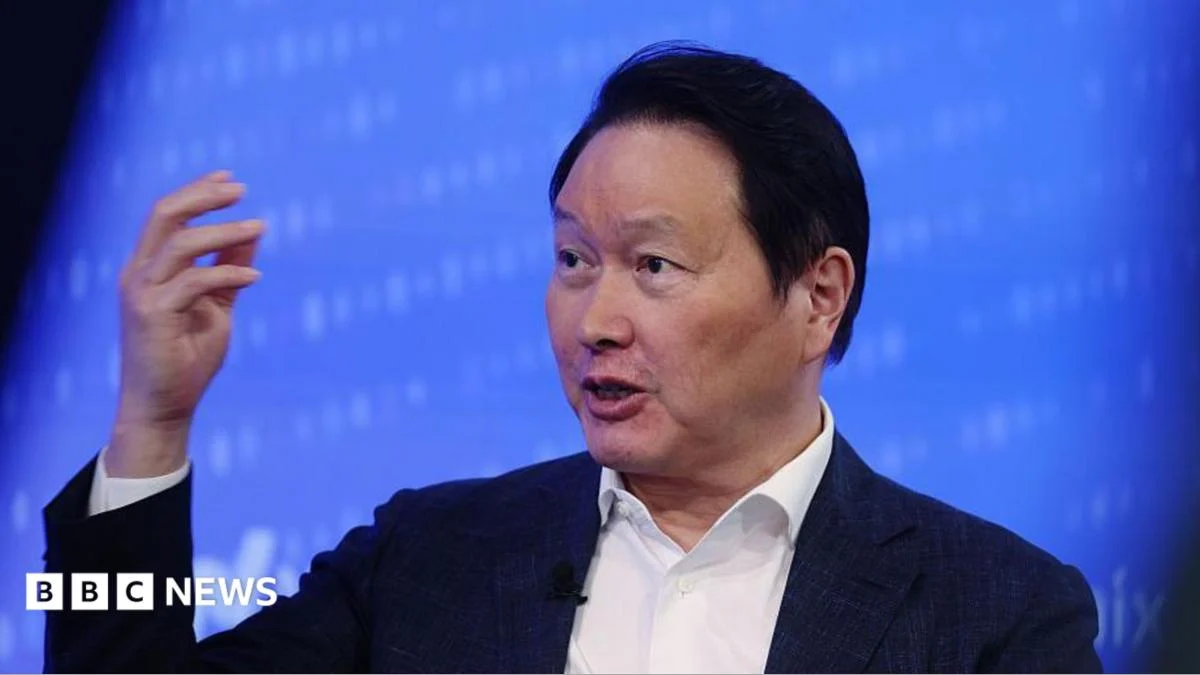
The chairman of South Korean corporate behemoth SK Group, Chey Tae-won, has been ordered by a high court to pay his ex-wife, Roh Soh-yeong, a staggering 944 billion won (£483 million; $644 million) in what local media has sensationally dubbed the "divorce of the century." This landmark ruling, issued by the Seoul High Court, represents the largest divorce settlement ever recorded in South Korea, underscoring the immense wealth concentrated within the nation’s powerful family-owned conglomerates, known as chaebols. While the award is substantial, it is still below the initial 1.38 trillion won that Chey was ordered to pay Roh in a lower court ruling in 2024. This latest verdict, however, is not necessarily final, as both parties retain the right to appeal to the Supreme Court, ensuring that the legal saga captivating South Korea may yet continue.
The protracted legal battle spans more than a decade, tracing its origins back to the public revelation in 2015 that Chey had fathered a child with another woman outside of his marriage. This admission shattered his 35-year union with Roh Soh-yeong, the daughter of former South Korean President Roh Tae-woo, a powerful political figure who governed the country from 1988 to 1993. Their marriage, solemnized in 1988, was seen at the time as a strategic alliance between a rising business dynasty and a prominent political family, a common practice among South Korea’s elite designed to consolidate power and influence. Chey publicly apologized for his affair and sought a divorce, but Roh initially resisted, expressing hopes for reconciliation. Eventually, she filed a counter-suit, seeking a substantial portion of Chey’s assets and alimony, setting the stage for one of the most closely watched legal disputes in the nation’s history.
The complexity of the case largely revolved around the division of assets and the concept of "spousal contribution" to wealth accumulation, particularly within a chaebol structure where family connections and political influence are often intertwined with business success. During the initial trial in 2024 at the Seoul Family Court, Roh’s legal team mounted a compelling argument that her father, the former President Roh Tae-woo, had provided significant assistance to Chey and the SK Group during its formative and expansionary years. They presented evidence suggesting that Roh Tae-woo had funnelled approximately 30 billion won from his alleged slush fund to Chey in 1991, a critical period for the conglomerate’s growth. The family court concurred with this assessment, acknowledging the former president’s "special contribution" and ruling that his political clout and financial backing were instrumental in Chey’s rise and SK Group’s expansion into lucrative sectors. Based on this, the court ordered Chey to pay Roh 1.38 trillion won.
However, the legal landscape shifted significantly last year when the Supreme Court overturned this verdict. The highest court ruled that the funds purportedly provided by Roh Tae-woo were illegally obtained and, as such, could not be considered legitimate marital assets subject to division. This decision sent the case back to the Seoul High Court for a re-evaluation of the asset division, effectively removing a key pillar of Roh’s initial claim. The subsequent ruling by the Seoul High Court, which resulted in the 944 billion won settlement, reflects a revised calculation of Chey’s marital assets and Roh’s contribution, albeit without factoring in the illicit funds. This new amount is likely based on a more conventional assessment of the couple’s jointly acquired wealth during their 35-year marriage, acknowledging Roh’s role as a spouse and mother of their three children, and her personal efforts in establishing various cultural institutions.
SK Group, at the heart of this high-stakes divorce, is far more than just a business entity; it is one of South Korea’s most formidable chaebols, family-owned conglomerates that have historically dominated and shaped the nation’s economic landscape. Starting modestly as Sunkyong Textiles in 1953, the group diversified rapidly, expanding into a vast array of industries including petrochemicals, energy, telecommunications, and semiconductors. Today, it stands as the second-largest chaebol in South Korea, trailing only the mighty Samsung Group. Its ubiquitous presence is felt across the country, from SK Telecom providing mobile phone services to millions, to SK Energy fueling vehicles at its petrol stations, and SK Innovation driving advancements in batteries and chemicals.
The group’s global prominence has particularly surged in recent years due to its subsidiary, SK Hynix. This semiconductor giant has found itself at the epicentre of the artificial intelligence (AI) boom, becoming a critical supplier of high-bandwidth memory (HBM) chips – essential components for AI accelerators like those produced by Nvidia. As the demand for AI technology skyrocketed, so too did SK Hynix’s value and strategic importance. In May, the chipmaker’s market capitalization on the South Korean stock exchange soared, reaching over 100 trillion won, a testament to its pivotal role in the global tech supply chain. This unprecedented growth in SK Hynix’s valuation has significantly bolstered the overall standing of SK Group and elevated Chairman Chey Tae-won’s profile on both domestic and international stages.
Chey’s leadership and the group’s technological prowess have earned him considerable recognition. Just last month, South Korean President Lee Jae Myung publicly commended Chey, alongside Samsung chairman JY Lee, during the unveiling of a landmark national AI investment plan. President Lee lauded them as "Heroes of Korean People," acknowledging their crucial contributions to the nation’s technological advancement and economic prosperity. This high praise underscores the immense influence and perceived national importance of chaebol leaders like Chey Tae-won.
In response to the verdict, Chey’s legal team issued a statement expressing that "Chairman Chey Tae-won is deeply sorry in that [the divorce] proceedings so far have caused concern to many people." They added, "We will share specific response to the verdict after we closely review the ruling," clearly indicating that an appeal to the Supreme Court is a strong possibility. For Roh Soh-yeong, while the awarded sum is less than initially sought, it still represents a historic victory, recognizing her long-term contribution to the marriage and family wealth. The BBC has contacted SK Group for further comment on the ruling and its potential implications.
This "divorce of the century" has not only gripped South Korea due to the sheer magnitude of the wealth involved but also because it shines a spotlight on the intricate relationship between family, power, and capital within the chaebol system. The case has sparked intense public debate about the fairness of asset division in high-net-worth divorces, particularly when one spouse’s family connections have played an undeniable role in the accumulation of that wealth. Regardless of the final outcome of any appeals, this ruling will undoubtedly set a precedent for future divorce settlements among South Korea’s elite, further shaping the legal and social landscape surrounding the nation’s most powerful families.



 Roy Suryo

 atisusanti
 Ramos Leo
