
 Nakalama John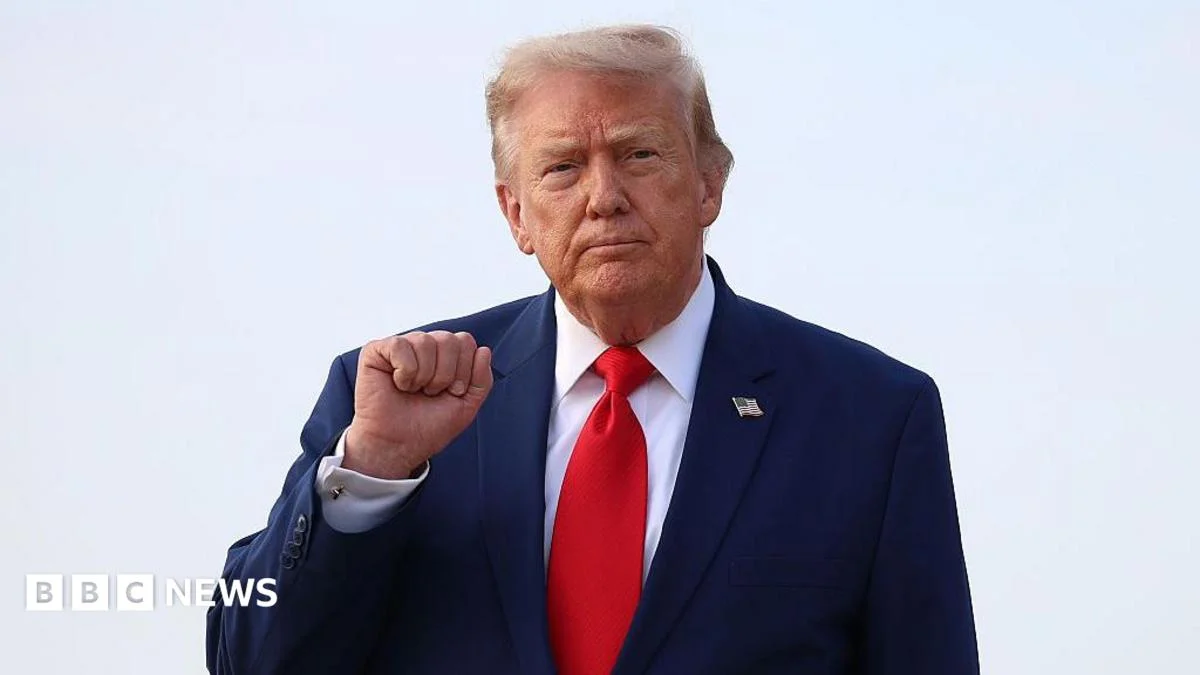
The journey to justify the erection of a formidable tariff wall around the United States has been a protracted and ideologically winding road for President Donald Trump, extending even to the nation’s closest allies. Initially, the rationale for these protectionist measures was couched in terms of domestic crises, from the harrowing opioid epidemic gripping American communities to the complex challenges posed by illegal migration. These pretexts, while emotionally charged, often struggled to find direct and robust legal or economic linkages to broad-based trade levies. As his administration progressed, and certainly through a hypothetical second term, the justifications for imposing trade duties on key partners seemed to evolve with bewildering rapidity, a new one emerging almost monthly, each designed to shore up a particular political or economic agenda.
Many of these early attempts to impose tariffs faced significant headwinds. Some were swiftly overturned by domestic courts, which found them lacking in statutory authority or constitutional basis. Others buckled under the weight of economic reality, proving counterproductive or simply ineffective in achieving their stated goals. Even the internal logic of certain proposals often unravelled upon closer scrutiny, exposing inconsistencies or inherent contradictions. Yet, the persistent drive for protectionism remained a core tenet of the Trump administration’s trade policy.
In a significant strategic pivot, President Trump has now deployed a new and particularly potent justification: effectively accusing dozens of trade partners of engaging in trade of goods produced using forced labour. This move represents a sophisticated legal and moral manoeuvre, transforming what might otherwise be seen as arbitrary trade barriers into a defence of human rights and ethical supply chains. As one astute industry figure aptly characterised it, these are "tariffs in search of an authority." By framing the issue around forced labour, President Trump’s administration seeks to insulate these tariffs from challenges emanating from Congress or the courts, leveraging a potent moral imperative that resonates deeply with public sentiment and international law. It presents a seemingly unassailable moral high ground, making it considerably harder for domestic or international bodies to contest the legitimacy of such levies without appearing to condone exploitative labour practices.
What is particularly striking about this latest iteration of tariff policy is its uncanny resemblance to previous rounds of duties, supposedly imposed for entirely different reasons. The practical application of these forced labour tariffs often mirrors the country-specific targets and product categories of earlier, economically driven protectionist measures. This raises questions about whether the "forced labour" rationale is a genuine shift in policy or merely a more robust legal wrapper for pre-existing protectionist inclinations.
For the United Kingdom, the immediate impact initially appeared to be a mixed bag. The "good news," if it can be called that, is that the overall tariff regime applying to UK goods effectively remains much the same as before. There hasn’t been a sudden, dramatic escalation or a new set of punitive tariffs specifically targeting British exports under this new forced labour pretext. However, this seemingly stable status quo masks a significant and concerning shift in the relative competitive landscape.
What has fundamentally changed is the position of the UK’s nearest neighbours in the European Union. The EU has managed to secure a considerably more favourable arrangement with the US under this new framework, placing its member states in a demonstrably better situation than the UK. While both the UK and the EU ostensibly face a baseline 10% tariff rate on certain goods, the devil, as always, is in the detail of application. The EU’s 10% is a relatively flat rate, applied broadly and with a degree of predictability. In contrast, the UK’s 10% tariff will apply alongside other, pre-existing tariffs on a diverse range of goods, particularly impacting sectors like footwear and textiles. This layering of duties means that for specific, often labour-intensive, British exports, the cumulative tariff burden can be significantly higher and more complex to navigate, eroding their competitive edge.
The British government has, of course, been proactive in seeking to mitigate these impacts, securing a series of effective "side deals" with the US. These agreements have provided crucial exemptions or favourable terms for specific sectors, including vital industries like medicines, steel, aluminium, and cars. In a diplomatic coup, the intervention of King Charles himself is credited with helping to safeguard the lucrative whisky trade, a significant UK export. These targeted agreements undoubtedly soften the blow for critical parts of the British economy, demonstrating a pragmatic approach to trade diplomacy.
However, despite these diligent efforts and the specific concessions secured, a broader analysis of the overall trade-weighted effective tariff rates reveals a concerning trend. While the article initially presents potentially confusing numbers – suggesting the EU’s effective rate (8.5%) could end up a bit lower than the UK’s (6.8%) – this numerical comparison requires careful interpretation in light of the qualitative disadvantages faced by the UK. The key takeaway from trade experts like William Bain of the British Chambers of Commerce is that the structure of the deals and the specific exemptions granted to the EU translate into a tangible competitive advantage for EU exporters into the US in several key sectors. The UK’s lower overall average might be a result of specific, high-value sectors (like those covered by side deals) skewing the average, while other sectors face disproportionately higher cumulative tariffs or greater administrative burdens due to the complexity of the regime. The EU’s flat rate offers greater predictability and simplicity, which are invaluable for businesses navigating international trade.
The initial optimism surrounding "post-Brexit trade freedoms," which many hoped would allow the UK to strike nimbler, more advantageous deals independently, appears to have been short-lived in this context. While Brexit theoretically opened doors for the UK to forge its own trade path, the practical reality of navigating the US’s evolving protectionist landscape has proven challenging, with the EU now seemingly outmanoeuvring the UK in this critical area. The perceived "world-beating" potential of the UK’s independent trade strategy now looks considerably diminished, at least regarding its relationship with the US.
The fundamental reason for the EU’s better treatment under the new forced labour tariff regime is clear and stark: the European Union has proactively passed comprehensive legislation banning goods produced using forced labour from entering its markets. The UK, by contrast, has not. It is crucial to underscore that this distinction is not an accusation by the US that forced labour is being used within UK supply chains. Rather, it is about the presence, or absence, of specific, mirroring legislation designed to combat forced labour in global supply chains, akin to the US ban on such products. The EU’s legislative action provides a clear and robust framework that aligns with the US’s stated moral imperative, thus earning it more favourable treatment.
This situation presents an interesting and potentially challenging question for the UK government: will it now be compelled to pursue an EU-style ban on forced labour goods? Such legislation is widely recognised as a potent, albeit indirect, tool to target countries like China, particularly concerning the deeply troubling human rights situation and alleged use of forced labour in its Xinjiang province.
The UK’s stance on this issue has been cautious and nuanced. Last October, the government publicly affirmed its "firm opposition to the use of state-imposed forced labour" but indicated it was "considering how best to reflect this position," citing "operational and legal complexities." This cautious approach reflects a delicate balancing act in the UK’s relationship with China. On one hand, there is a strong moral and ethical imperative, alongside pressure from allies, to condemn and act against human rights abuses. On the other, the UK government has simultaneously welcomed significant imports of Chinese cars and is actively exploring a services trade deal with China, indicating a desire to maintain and even deepen economic ties. Imposing a legislative ban on forced labour goods, particularly one that implicitly targets China, could jeopardise these economic ambitions and complicate an already intricate geopolitical relationship.
This particular dilemma for the UK is not isolated but rather a microcosm of broader global shifts driven by the US’s ever-changing tariff strategies. As the US repeatedly alters its rationale and targets for tariffs, the rest of the world is increasingly focusing on diversifying trade relationships and strengthening multilateral ties with each other, rather than remaining solely dependent on US markets. This trend highlights a growing resilience and adaptability among global trading partners. For example, Canada, a close neighbour and major trading partner of the US, has significantly increased its trade with the rest of the world, effectively offsetting any losses incurred from US protectionism.
China’s trade figures further underscore this global realignment. While its total dollar trade with the US remained relatively flat in the first half of this year compared to last, its overall global trade surged by an impressive 21%. This growth included a substantial 14% increase with the EU, an 11% rise with the UK, and a remarkable 24% expansion with African nations. These statistics demonstrate a clear pivot by China towards other markets, lessening its reliance on the US and highlighting the diminishing impact of US tariffs on its overall trade trajectory.
Against this backdrop, the pressure on the UK to legislate for a formal ban on forced labour products is likely to intensify. Successive British governments have historically preferred a lighter, voluntary due diligence regime for companies, relying on corporate social responsibility rather than statutory mandates. This approach, while less interventionist, now appears insufficient to secure the same level of favourable trade treatment from the US as the EU has achieved.
The UK faces a critical juncture. Will the US’s new tariff regime effectively force a change in UK legislation, compelling it to adopt a more stringent, EU-style ban on forced labour goods? And if so, what might the US be prepared to offer in return for such alignment – perhaps further side deals, broader tariff exemptions, or even progress on a comprehensive free trade agreement? Alternatively, the UK may opt to maintain its current, precarious geopolitical position, sticking to its existing, sector-specific deals in medicines, metals, and cars, and continuing its delicate balancing act between human rights concerns, economic interests, and its relationship with China. Each path carries significant implications for the UK’s trade policy, its moral standing on the global stage, and its strategic alliances in an increasingly complex world. The era of the UK’s trade deal with the US looking "world-beating" has undeniably faded, replaced by a nuanced challenge requiring difficult choices.



 Roy Suryo

 atisusanti
 Ramos Leo
