
 George Anjay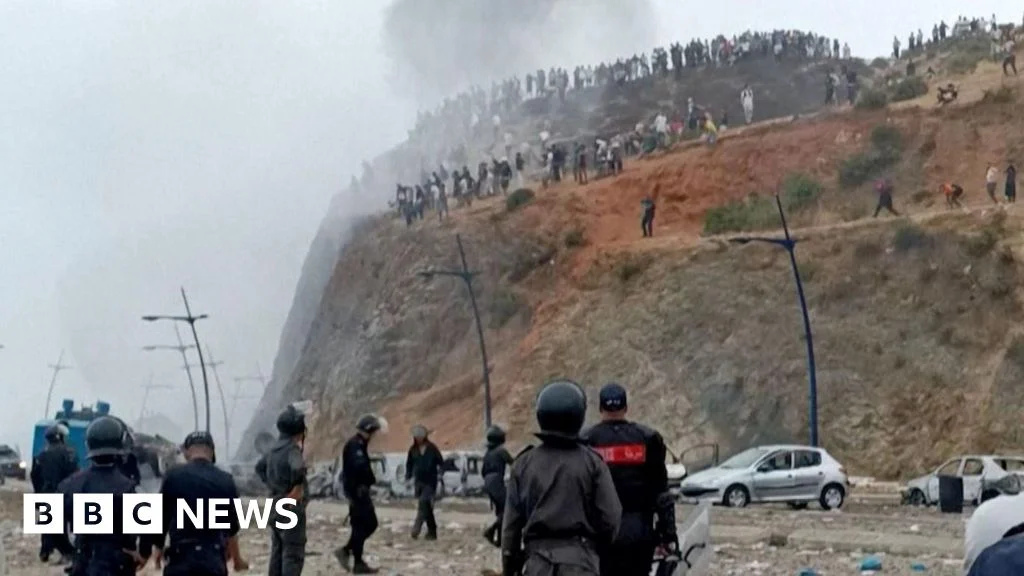
A staggering influx of approximately 60,000 individuals, primarily from sub-Saharan African nations, breached Spain’s North African enclave of Ceuta from Morocco on July 30th, marking one of the most significant and chaotic migration events in recent European history. The unprecedented surge saw desperate migrants employing a range of daring and perilous methods to overcome the heavily fortified border, with many braving the treacherous Mediterranean waters by swimming or utilizing makeshift inflatable rafts, while others, in a display of sheer desperation, sprinted through a breach in the border fence. The sheer scale of the operation, coordinated and executed with remarkable speed, overwhelmed the limited resources of both Spanish and Moroccan border authorities, creating a humanitarian crisis that unfolded over several hours.
The immediate aftermath was characterized by scenes of confusion and distress as thousands of migrants, many of them women and children, found themselves on Spanish soil, disoriented and exhausted. Spanish officials, grappling with the sudden and overwhelming influx, stated that the vast majority of those who successfully reached the enclave have since been repatriated back to Morocco. However, the human cost of this desperate exodus was tragically underscored by Spain’s Interior Minister, Fernando Grande-Marlaska, who confirmed on Saturday that the death toll had tragically risen to at least 67 individuals. This grim figure represents the confirmed fatalities, with fears that the actual number of those lost at sea or succumbing to the arduous journey could be considerably higher, a stark reminder of the extreme risks undertaken by those seeking a better life.
In a visible response to the escalating situation, Spanish authorities were observed on Saturday actively engaged in reinforcing border security measures. Police personnel were seen diligently installing a substantial 500-meter (1,640-foot) floating barrier, a clear attempt to impede further crossings and deter future attempts. Simultaneously, groups of migrants were being systematically escorted back towards the Moroccan border, a process that was carried out under the watchful eyes of both national police and Guardia Civil. The deployment of such measures highlights the immediate challenge faced by Spain in managing its external frontiers and controlling irregular migration flows.
Ceuta, a Spanish autonomous city perched precariously on Morocco’s northern coast, has long served as a potent and often volatile focal point for migrants attempting to reach Europe. Its geographical proximity to the African continent, separated only by a narrow strait, makes it a highly sought-after entry point for those fleeing conflict, poverty, and persecution in their home countries. The enclave’s unique status as a European territory on African soil has historically made it a magnet for desperate individuals seeking refuge and opportunity. However, the sheer volume and coordinated nature of the July 30th breach far surpassed anything previously witnessed, exposing the vulnerabilities in existing border control mechanisms and the enduring pull of Europe as a destination.
The motivations behind this mass migration are deeply rooted in the complex socio-economic and political realities of sub-Saharan Africa. Many of the individuals attempting to reach Ceuta are driven by a desperate search for economic opportunities, fleeing chronic unemployment, widespread poverty, and the lack of basic services in their home nations. Political instability, ongoing conflicts, and the pervasive threat of violence in several African countries further compel individuals and families to embark on perilous journeys in pursuit of safety and a chance for a more secure future. The allure of Europe, with its perceived stability, economic prosperity, and respect for human rights, remains a powerful draw, even in the face of immense danger.
The methods employed by the migrants to breach the border underscore their profound desperation and resourcefulness. The arduous swim across the Strait of Gibraltar, a journey fraught with the perils of strong currents, cold water, and exhaustion, was a chosen path for many. Others relied on inflatable dinghies, often overcrowded and lacking proper safety equipment, to navigate the waters. The sight of individuals scaling the formidable border fence, a multi-layered barrier designed to deter such incursions, further illustrates the lengths to which these migrants were willing to go. This desperate ingenuity, born out of a yearning for a better life, presents a stark challenge to border security.
The humanitarian implications of this event are profound. The large number of individuals, including vulnerable populations like women and children, who undertook such a dangerous journey, raises serious questions about international protection obligations and the efficacy of existing asylum systems. The reported fatalities are a tragic testament to the human cost of irregular migration and the need for comprehensive solutions that address the root causes of displacement. The treatment and processing of those who successfully reached Ceuta, and their subsequent repatriation, are also crucial aspects of the unfolding humanitarian crisis.
The incident also highlights the intricate and often strained relationship between Spain and Morocco in managing migration flows. Morocco, as a frontline state, plays a crucial role in controlling the flow of migrants attempting to reach Europe. However, the sheer scale of this breach suggests a potential lapse in coordination or an overwhelming of Moroccan border patrol capabilities. The effectiveness of future border management will likely depend on continued and strengthened cooperation between the two nations, as well as a broader European strategy to address the underlying drivers of migration.
The installation of the floating barrier signifies a reactive measure, a tangible attempt to physically reinforce the border in the immediate aftermath of the crisis. While such measures may offer a temporary deterrent, they do not address the fundamental reasons why tens of thousands of people are willing to risk their lives to reach Europe. The long-term solution requires a multi-faceted approach that includes addressing poverty, conflict, and lack of opportunity in origin countries, as well as establishing safe and legal pathways for migration and asylum.
The geographical location of Ceuta, an enclave surrounded by Moroccan territory, makes it a unique and challenging point of entry. The enclave’s status as Spanish territory on the African continent has historically positioned it as a critical juncture for migration. This incident serves as a stark reminder of the persistent challenges faced by European nations in managing their external borders and the complex humanitarian issues that arise from global inequalities and displacement.
The ongoing story, as indicated by the linked article, suggests that the situation remains fluid and requires continued attention. The response from Spanish authorities, including the deployment of additional security forces and the implementation of new border control measures, indicates a commitment to preventing future large-scale breaches. However, the underlying pressures that drive migration are unlikely to dissipate in the short term.
The broader implications of this event extend beyond Spain and Morocco, resonating across the European Union. It underscores the need for a unified and comprehensive European approach to migration, one that balances border security with humanitarian concerns and addresses the root causes of displacement. The recurring challenges posed by migration flows to enclaves like Ceuta and the Canary Islands demand sustained political will and collaborative efforts to find sustainable and humane solutions. The narrative of tens of thousands of migrants entering Ceuta is not merely a border security issue; it is a profound human story of desperation, hope, and the enduring quest for a better life, demanding a response that is both firm and compassionate. The continuous struggle for security and opportunity on both sides of the Mediterranean continues to shape the geopolitical landscape, with events like this serving as critical flashpoints for international attention and policy debate.




 atisusanti
 Nana Banana
 Nakalama John

 Ramos Leo