George Anjay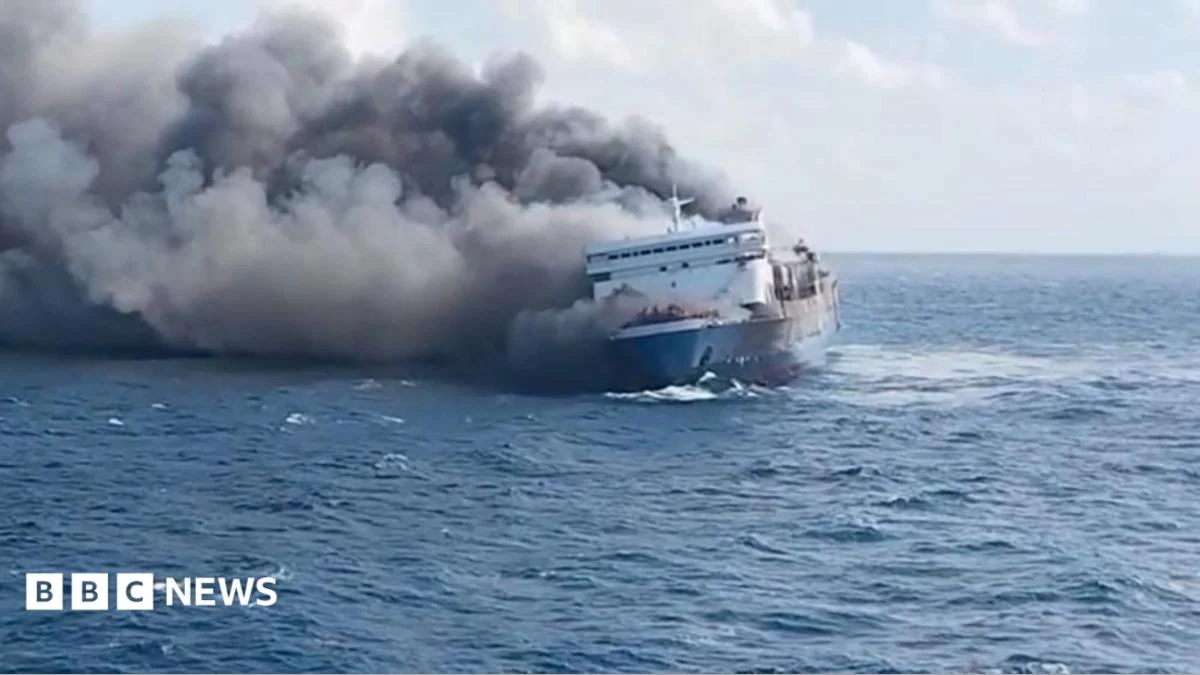
A catastrophic inferno ripped through an Indonesian ferry, leaving a trail of devastation at sea, with five lives confirmed lost and a harrowing 41 individuals still unaccounted for. The ill-fated vessel, believed to be carrying at least 250 passengers, erupted in flames while navigating the treacherous waters off Madura Island. The KMP Mutiara Sentosa 2, a vital artery connecting the nation’s bustling second-largest city, Surabaya in East Java, to the vibrant hub of Makassar in South Sulawesi, became a scene of desperate survival as the blaze raged uncontrollably.
The alarm was first raised by the ship’s captain, who alerted authorities to the unfolding disaster as the ferry cut through the waves. Basarnas, the National Search and Rescue Agency, was among the first to receive the distress call, initiating a swift and urgent response to the unfolding maritime tragedy. Preliminary reports indicated that the fire had taken hold of the vessel between the crucial hours of 06:00 and 07:00 local time, plunging the early morning journey into unimaginable chaos. By 08:24, the Surabaya Search and Rescue office had officially received confirmation of the blaze, sparking a full-scale mobilization of rescue assets.
Graphic footage, disseminated by Indonesian news outlet iNews, painted a stark and terrifying picture of the ordeal. Scenes of sheer panic unfolded as large numbers of passengers, clad in life jackets, were seen desperately seeking refuge in what appeared to be a lifeboat, their faces etched with fear and uncertainty. Other chilling clips captured individuals scrambling down the side of the burning ferry, a desperate exodus from the inferno that was rapidly consuming their vessel. The KMP Mutiara Sentosa 2, once a symbol of connectivity, was now a towering pyre, spewing thick plumes of smoke into the sky, a grim testament to the unfolding disaster.
Basarnas, in a bid to keep the public informed and to coordinate rescue efforts, shared a video on its TikTok platform, accompanied by a somber statement detailing the unfolding crisis. The agency confirmed that the ferry was "almost entirely engulfed in flames" as the rescue operation intensified. Survivors, some clinging precariously to the ship’s bridge and bow, were seen awaiting rescue, their hope dwindling with each passing moment as the fire continued its relentless advance. The exact cause of the devastating fire remained a mystery, a question that would undoubtedly be the subject of intense investigation in the aftermath of this maritime catastrophe.
The harrowing images broadcast to the world depicted scenes of profound desperation. In some of the footage, individuals could be seen bravely leaping into the turbulent sea, a last resort in their desperate bid for survival. Crowds of people, adorned in their bright orange life jackets, congregated in the water, a desperate beacon of humanity amidst the smoke and flames. Lifebuoys were unceremoniously thrown to those struggling in the waves, offering a fragile lifeline as they were gradually ferried to safety aboard a rescue vessel. The sheer scale of the evacuation, with hundreds of lives hanging in the balance, underscored the magnitude of the disaster.
The KMP Mutiara Sentosa 2, a passenger and vehicle ferry operated by PT Atosim Lampung Pelayaran, was a critical link in the Indonesian maritime network. Its route between Surabaya, a major port city, and Makassar, a key economic center in South Sulawesi, is heavily utilized by both passengers and cargo. The ferry, built in 1990, was a common sight on these busy sea lanes, a workhorse of Indonesian inter-island transport. Its capacity often exceeded 250 passengers, and it was also capable of carrying vehicles, adding another layer of complexity to the potential number of individuals on board. The sudden and violent nature of the fire raised immediate questions about the vessel’s safety protocols, maintenance records, and the adequacy of emergency procedures in place.
As rescue teams worked tirelessly against the clock, the grim reality of the situation began to crystallize. The initial reports of missing individuals, a number that would later be confirmed as 41, sent shockwaves through the nation. Families across Indonesia anxiously awaited news of their loved ones, their hopes diminishing with each passing hour. The search and rescue operation, a massive undertaking involving multiple agencies and vessels, scoured the waters around Madura Island, a region known for its strong currents and unpredictable weather patterns. The vastness of the ocean, coupled with the ferocity of the fire, presented formidable challenges to the rescue efforts.
The National Transportation Safety Committee (NTSC) of Indonesia, an independent body responsible for investigating transportation accidents, was expected to launch a thorough inquiry into the incident. Investigations into ferry fires in Indonesia have historically revealed a complex interplay of factors, including aging vessel infrastructure, inadequate fire suppression systems, human error, and potential cargo-related hazards. The KMP Mutiara Sentosa 2, having been in service for several decades, would undoubtedly be a focal point of scrutiny. The Indonesian Ministry of Transportation, facing mounting pressure to ensure the safety of its vast maritime fleet, would be compelled to address systemic issues that may have contributed to this tragedy.
Eyewitness accounts, once survivors were brought to safety, began to paint a more detailed, albeit harrowing, picture of the moments leading up to and during the fire. Passengers described a sudden, acrid smell of smoke, followed by panicked shouts and the rapid spread of flames. The disorientation and chaos of the evacuation, as individuals fought for their lives, were a recurring theme in their testimonies. The sheer terror of being trapped on a burning vessel, with limited escape routes and the vast ocean below, was an experience that would undoubtedly leave indelible psychological scars on those who survived.
The incident served as a stark reminder of the inherent risks associated with maritime travel, particularly in a nation with an archipelago of over 17,000 islands, where ferries are a primary mode of transportation. Indonesia has a troubled history with ferry accidents, often attributed to overcrowding, poor maintenance, and adverse weather conditions. The loss of life and the significant number of missing persons in this latest incident underscore the urgent need for enhanced safety regulations, rigorous inspections, and a commitment to investing in modern, well-maintained vessels.
As the search for the missing continued, the focus also shifted to the survivors, who were being treated for injuries and trauma. Aid organizations and medical personnel were deployed to provide support and assistance to those affected by the disaster. The emotional toll on the survivors, having witnessed such a horrific event and lost friends and family, would require extensive psychological care in the days and weeks to come.
The Indonesian government, in the wake of this tragedy, pledged to conduct a comprehensive investigation and to implement measures to prevent similar incidents in the future. The Ministry of Maritime Affairs and Fisheries, along with the National Disaster Management Agency, were actively involved in coordinating the response and providing support to the affected communities. The loss of life and the ongoing uncertainty surrounding the fate of the missing cast a dark shadow over the nation, prompting a collective reflection on the critical importance of maritime safety and the need for unwavering vigilance in safeguarding lives at sea. The recovery of the remaining missing individuals, if possible, remained the paramount concern, as the nation grappled with the devastating consequences of the KMP Mutiara Sentosa 2 inferno.


 Nakalama John
 Ramos Leo
 Nana Banana