George Anjay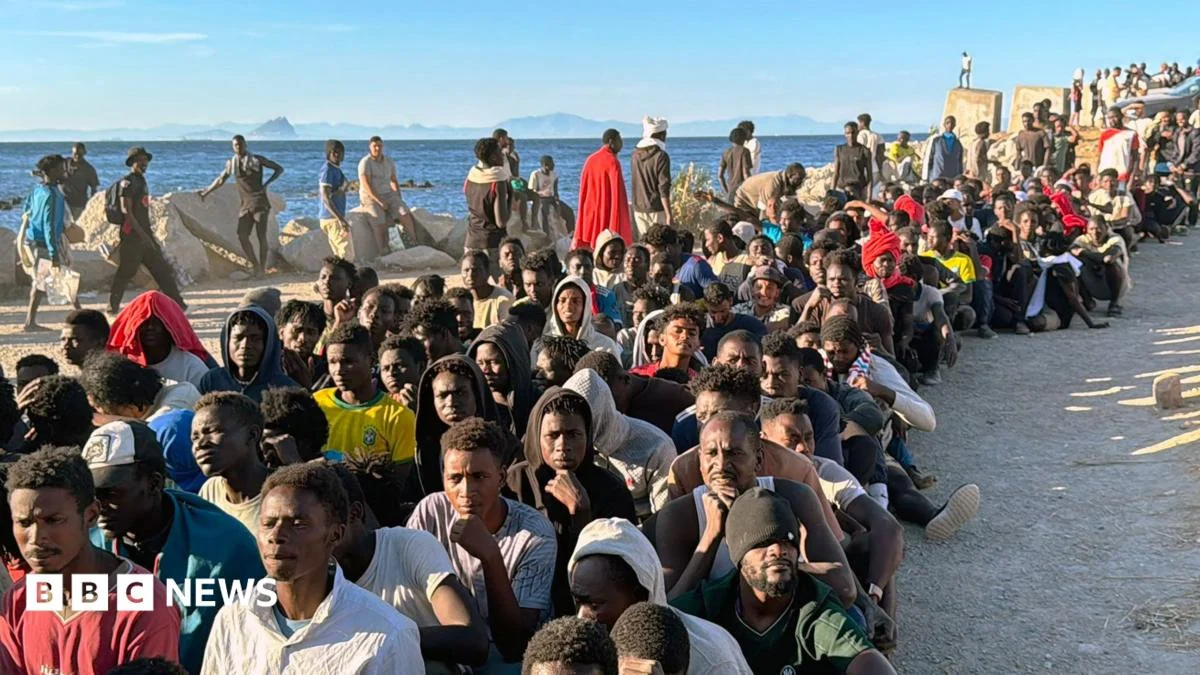
Spain vehemently denounced Italy’s action, labeling it "unjustified" and "discriminatory against the Spanish population." Madrid issued a firm ultimatum, demanding the reversal of these measures by Sunday, August 9th. Failure to comply, Spain declared, would lead to the introduction of "proportionate measures to protect the interests and dignity of its citizens." The specific nature of these repriskerad is not yet public knowledge, leaving a degree of uncertainty regarding the precise form Spain’s retaliation might take.
Italy, however, has been swift and resolute in its response to Spain’s ultimatum. Rome has unequivocally stated that it will not entertain "ultimatums or impositions" from Madrid. Furthermore, Italy has indicated its intention to maintain the enhanced border checks until at least August 15th. This decision is reportedly based on intelligence suggesting that Spain anticipates "a new wave of migration" targeting Ceuta around that time.
While Italy’s intelligence points to an impending new wave of arrivals, Spain has not officially confirmed such an anticipation. Reports circulating, however, particularly from El Pais, suggest that social media activity originating from Moroccan users indicates plans for another coordinated attempt to cross into Ceuta. The Spanish Prime Minister’s office has acknowledged that the situation is being closely monitored, but publicly stated that a repeat of last week’s scale of crossings is not expected.
The precise catalyst behind the mass migration attempt into Ceuta remains somewhat ambiguous. However, the European Union’s Migration Commissioner, Magnus Brunner, has put forth the theory that criminal networks, adept at spreading disinformation, were instrumental in orchestrating the event. The Spanish government has largely concurred with this assessment, suggesting that these networks exploited vulnerabilities and disseminated misleading information to encourage the perilous journey.
The surge of migrants into Ceuta occurred in the immediate aftermath of a significant ruling by Spain’s Supreme Court. The court decreed that migrants intercepted at sea while attempting to reach Ceuta or Melilla could not be summarily deported back to Morocco. This judicial decision has been cited by Morocco as a primary factor in the crisis, with an unnamed government source briefing local media that "the deterrent element of the system collapsed and the dam gave way, not under the weight of the criminals, but of a judge’s decision." This statement highlights a profound disagreement over responsibility and the underlying causes of the migrant surge.
The Spanish exclaves of Ceuta and Melilla have historically been a source of diplomatic friction between Spain and Morocco. Morocco does not recognize Spanish sovereignty over these territories, adding a layer of complexity to any negotiations or cooperative efforts concerning border security and migration management. The sheer volume of individuals who managed to swim to Ceuta simultaneously has inevitably raised questions about the effectiveness, or perhaps the intentionality, of Moroccan border guards in preventing such a mass exodus.
The Ceuta crisis has not only strained bilateral relations but has also exposed and exacerbated existing diplomatic rifts within the European Union, particularly among nations that participate in the open-border Schengen area. Italy’s decision to partially suspend the agreement found support from Finland and Denmark, further underscoring the divergence of opinions and approaches to migration management within the bloc. Adding to the diplomatic discord, the Czech Republic has even called for the temporary suspension of Spain’s membership in the Schengen area, a testament to the severity of the perceived breach in security protocols.
Meanwhile, reports from Moroccan media indicate a resurgence of online calls for another coordinated mass border-crossing attempt, mirroring the circumstances that preceded last week’s unprecedented influx. This suggests that the underlying issues and motivations driving these migration attempts remain potent and that the situation in Ceuta could remain volatile.
The humanitarian impact of the crisis is also a significant concern. On Friday, Spanish Youth Minister Sira Rego revealed that nearly 1,400 minors, including "very young boys and girls," remained in Ceuta following last week’s crossings. She acknowledged that the system had been overwhelmed but stated that efforts were underway to bring the situation under control. The minister emphasized that the priority has been placed on addressing the needs of the most vulnerable cases, highlighting the logistical and administrative challenges involved in processing such a large number of unaccompanied minors. The protracted nature of these procedures, she explained, is a consequence of the scale of the influx and the necessary due diligence in ensuring the well-being and safety of these young individuals. The ongoing presence of these minors underscores the long-term implications of the crisis and the need for sustained humanitarian and logistical support.




 Nakalama John
 Ramos Leo
 Nana Banana